

Spartacus Blog
The Political Ideas of Rutger Bregman
In In his book, Humankind: A Hopeful History (2021) Rutger Bregman examines the political ideas of Thomas Hobbes and Jean-Jacques Rousseau. In 1651 Hobbes published Leviathan. The book that The Oxford History of Western Philosophy has described as "the greatest work of political philosophy ever written". Hobbes wrote that human beings are driven by fear. The fear of the other. We long for safety and have a "perpetual and restless desire of power after power, that ceaseth only in death". He added "a condition of war of all against all". (1)
Hobbes wrote the book at the end of the English Civil War. His ideas appealed to Oliver Cromwell who was about to make himself into a dictator. However, his ideas also appealed to Charles II who came to power after the death of Cromwell and gave Hobbes a state pension. Hobbes provided a justification of the basic philosophical rationale for an argument that would be repeated many times since the publication of Leviathan by monarchs and military dictators. "Give us power, or civilisation is lost."
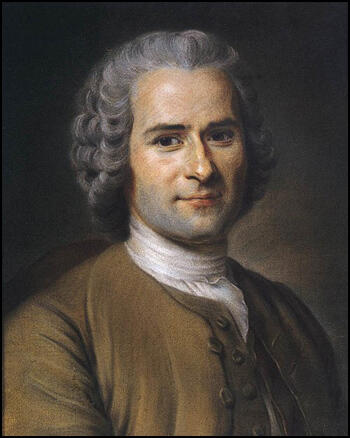
Exactly a hundred years later the French philosopher Jean-Jacques Rousseau, published an article Discourse on the Arts and Sciences (1751). He argued against the ideas of Thomas Hobbes. Rousseau suggested "that man is naturally good, and that it is from these institutions alone that men became wicked." He wrote that the arts and sciences were responsible for the moral degeneration of mankind, who were basically good by nature.
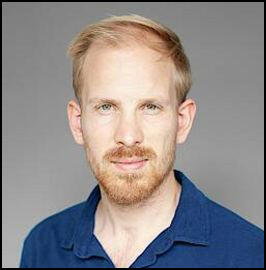
Rousseau suggested it was the invention of private property that was the start of the problem: "The first man, who, after enclosing a piece of ground, took it into his head to say, "This is mine," and found people simple enough to believe him, was the true founder of civil society. How many crimes, how many wars, how many murders, how many misfortunes and horrors, would that man have saved the human species, who pulling up the stakes or filling up the ditches should have cried to his fellows: Be sure not to listen to this imposter; you are lost, if you forget that the fruits of the earth belong equally to us all, and to the earth itself to nobody!" (2)
Rutger Bregman makes it clear that he is more attracted to the ideas of Rousseau that Hobbes. He asks his readers to imagine that the whole history of life on earth spans just one calendar year, instead of four billion. "Up until about mid-October, bacteria had the place to themselves. Not until November did life as we know it appear, with buds and branches, bones and brains. And we humans? We made our entrance on 31 December, at approximately 11 p.m. Then we spent about an hour roaming around as hunter-gatherers, only getting around to inventing farming at 11:58 p.m. Everything else we call ‘history' happened in the final sixty seconds to midnight: all the pyramids and castles, the knights and ladies, the steam engines and rocket ships." (3)
Neanderthals and Homo Sapiens
40,000 years ago, two separate groups struggled to take power of the world. Neanderthals and Homo Sapiens. Neanderthals were stronger than Homo Sapiens. The brain volume and ratio to body size averaged higher than Homo Sapiens. The Neanderthal brain was, on average, 15 per cent larger than our brains are now. (4)
Yet, Homo Sapiens survived whereas Neanderthals became extinct. However, because of inter-breeding it is estimated that up to 4% of the genetic blueprint of present-day non-Africans came from Neanderthals. It is believed that there is a connection between these genes and human illnesses, "such as type 2 diabetes, long-term depression, lupus, billiary cirrhosis - an autoimmune disease of the liver - and Crohn's disease." (5)
Some scientists, supporting the ideas of Thomas Hobbes, have suggested the reason for this was although we were not stronger or smarter than the Neanderthals, maybe we were just meaner. Israeli historian, Yuval Noah Harari, has suggested: "It may well be that when Sapiens encountered Neanderthals, the result was the first and most significant ethnic-cleansing campaign in history." (6) Pulitzer Prize winner, Jared Diamond agrees: "murderers have been convicted on weaker circumstantial evidence". (7)
Bregman points out that "Blushing is the only human expression that is uniquely human!... It is people showing they care what others think, which fosters trust and enables cooperation." Another way we differ from every other primate, more than two hundred species in all, is we have whites in the eyes. Other primates produce melanin that tints their eyes, this obscures the expression in their eyes. Imagine what it was like if everybody wore sunglasses all the time. Brian Hare, professor of evolutionary anthropology at Duke University, suspects our unusual eyes evolved to enable us to become more social as it reveals more about our inner thoughts and emotions. (8)
Another way we differ from other primate groups is that we have eyebrows. Chimpanzees and other primates have large brow ridges. Scientists think that protruding ridge may have impeded communication, because we now use our eyebrows in all kinds of subtle ways. For example, study your partner to see the role that eyebrows play in expressing surprise, sympathy or disgust. (9)
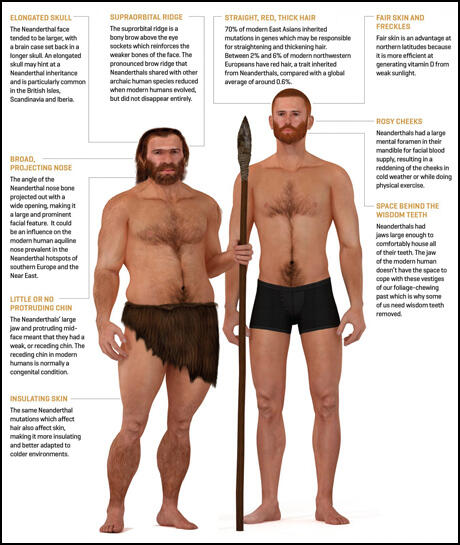
Neanderthal's had brains that were bigger individual, but collectively they weren't as bright. Bregman argues: "On his own, a Homo neanderthalensis may have been smarter than any one Homo sapien s, but the sapiens cohabited in larger groups, migrated from one group to another more frequently and were better imitators. If Neanderthals were a super-fast computer, we were an old-fashioned PC – with wi-fi. We were slower but better connected." (10)
Neanderthal extinction took place about 39,000 years ago. It is best explained by them being less adaptable to major environmental changes or new diseases introduced by immigrating modern humans. Homo sapiens willingness to cooperate helped them deal better with the new challenges they faced. Bergman argues that this is the evolutionary reason were humans crave togetherness and interaction. "Our spirits yearn for connection just as our bodies hunger for food." (11)
DNA sequencing shows that chimpanzees are humans' closest living relative. It was thought that chimpanzees were regarded as peaceable plant eaters. In 1960 Jane Goodall began studying a group of chimpanzees in Tanzania. Goodall's research demonstrated that chimpanzees share many key traits with humans, such as using tools, having complex emotions, forming lasting social bonds and passing on knowledge across generations, which redefined the traditional view that humans are uniquely different from other animals. Goodall commented: "During the first ten years of the study I had believed… that the Gombe chimpanzees were, for the most part, rather nicer than human beings… Then suddenly we found that chimpanzees could be brutal - that they, like us, had a darker side to their nature." (12)
Jane Goodall discovered that if a group became too large, they would separate into two groups. Goodall observed that once this took place, the two groups became enemies. This resulted in a four-year war that only came to an end when the smaller group was completely wiped out. Goodall described scenes of chimps "cupping the victim's head as he lay bleeding with blood pouring from his nose and drinking the blood, twisting a limb, tearing pieces of skin with their teeth." (13)
Humans' greatest achievement was the ability to live in very large groups peaceably. This has enabled them to develop an advanced form of culture. Steven Pinker has argued that the invention of farming, writing and the state have served to rein in our aggressive instincts, applying a thick coat of civilisation over our nasty, brutish nature. In other words, Thomas Hobbes was right and Jean-Jacques Rousseau was wrong. (14)
Some academics have argued that what has helped us survive is also our greatest flaw. We are capable of terrible acts of cruelty. Other creatures kill to survive. Sometimes humans massacre other humans because of race or ideology. That one group of humans thinks that another group is inferior and deserve to die. The fatal flaw is that we feel more affinity for those who are most like us. As Brian Hare has pointed out: "The mechanism that makes us the kindest species, also makes us the cruellest species on the planet." (15)
Can literature help us to understand the debate between the ideas of Hobbes and Rousseau? Lord of the Flies is the 1954 debut novel of British author William Golding. The plot concerns a group of young British boys who are stranded on an uninhabited island and their disastrous attempts to govern themselves that led to a descent into savagery and death. In 1983 Golding won the Nobel Prize for Literature who stated: "his work illustrates the human condition of the world of today" and others have claimed that it was a good explanation of Thomas Hobbes "veneer civilisation theory". (16)
However, Bregman contrasts this work of literature with a real case that took place in 1965, when a group of schoolboys on a fishing boat from Tonga were marooned on an uninhabited island and considered dead by their relatives. The group not only managed to survive for more than 15 months, but they "had set up a small commune with food garden, hollowed-out tree trunks to store rainwater, a gymnasium with curious weights, a badminton court, chicken pens, and a permanent fire, all from handiwork, an old knife blade, and much determination" according to reports. When the Tongan boys were found by a ship captain, Peter Warner, they were in good health and spirits and had developed an orderly adaptation to their stranding. Warner wrote a film script about the case, but it was rejected for not being dramatic enough. (17)
The Psychology of the Masses
Are there other cases in history that might help us understand if we are naturally competitive or cooperative? In 1936 Nazi Germany decided to give its support to General Francisco Franco who wanted to destroy Spanish democracy and replace it with a fascist state. Adolf Hitler thought it would give him the opportunity to use the latest development in military weapons. He was especially interested in the new, untried, blanket bombing attacks. The idea was that these terror raids would cause mass panic and that citizens would call for their government to surrender. (18)
In 1937 The Psychology of the Masses was republished and the work by the psychologist Gustave Le Bon was used to argue about the impact of this new technology in war. It was argued that psychologically people could not deal with blanket bombing and would demand the government surrendered. In other words, this military tactic would enable an aggressive country to quickly takeover another county by using this military tactic. (19)
The book was read by Adolf Hitler, Benito Mussolini, Joseph Stalin, Winston Churchill and Franklin D. Roosevelt. Even those politicians who did not read the book was influenced by its contents. For example, it played a major role in the appeasement negotiations between Neville Chamberlain and the German government in 1938 and 1939. It was the main reason why Poland, France, Belgium, the Netherlands, etc. quickly surrendered in the early stages of the Second World War.
Britain did not surrender and on 7 September 1940, 348 German bomber planes crossed the Channel to start its blanket bombing campaign. Over the next nine months, more than 80,000 bombs were dropped on London. Entire neighbourhoods were wiped out during the Blitz. A million buildings in London were damaged or destroyed, and more than 40,000 people in the UK lost their lives.
However, according to my mother, Muriel Simkin: "People on the whole were more friendly during the war than they are today - happier even. People helped you out. You had to have a sense of humour. You couldn't get through it without that." There was no mass panic. Rutger Bregman has pointed out: "The psychiatric wards remained empty. Not only that, but public mental health actually improved. Alcoholism tailed off. There were fewer suicides than in peacetime. After the war ended, many British would yearn for the days of the Blitz, when everybody helped each other out." (20)
The same thing happened in 1944 and 1945 when the UK and the United States blanket bombed German towns and cities destroying half of them. However, the evidence suggested that the bombing strengthened the German economy. For example, it was found that 21 devastated towns and cities they investigated production had increased faster than in a control group of 14 cities and towns that had not been bombed. As John Kenneth Galbraith pointed out: "We were beginning to see that we were encountering one of the greatest, perhaps the greatest miscalculation of the war." (21)
Military experts, unfortunately, did not understand this message. Twenty-five years later, US forces would drop three times as much firepower on Vietnam as they dropped in the entire Second World War. Eventually, the US admitted defeat and withdrew from Vietnam, and it became a communist state. (22)
In his book, Humankind: A Hopeful History (2020), Rutger Bregman provides many examples which support Rousseau's view of human nature. He provides evidence that soldiers in battle are reluctant to kill. For example, Samuel Marshall, a colonel in the US Army, interviewed soldiers who had fought in battles in the Second World War and discovered that only around 20% had fired their weapons. In his book, Men Against Fire (1946) Marshall argued "the average and normally healthy individual… has such an inner usually unrealised resistance towards killing a fellow man that he will not of his own volition take life." (23)
George Orwell admitted in Homage to Catalonia (1938) in his book about his involvement in the Spanish Civil War that even though he had volunteered to join the International Brigade in an effort to stop the spread of fascism in a defence of democracy, he was reluctant to kill those trying to kill him: "In this war everyone always did miss everyone else, when it was humanly possible". (24)
The sociologist, Randall Collins, analysed the available evidence of soldiers in combat and calculated that only about 13 to 18 per cent fired their guns is a supporter of Rousseau's view of human nature. "The Hobbesian image of humans, judging from the most common evidence, is empirically wrong… Humans are hardwired for solidarity; and this is what makes violence so difficult." (25)
Several studies have shown that soldiers have always found it difficult to kill the enemy when they are close to them. Although it was an important part of their training less than 1 per cent of injuries during the battles at Waterloo (1825) and the Somme (1916) were caused by soldiers wielding bayonets. (26)
Bregman argues that if you study the evidence: "The overwhelming majority of soldiers were killed by someone who pushed a button, dropped a bomb, or planted a mine. By someone who never saw them…. Most of the time, wartime killing is something you do from far away. You could even describe the whole evolution of military technology as a process in which enemy lines have grown farther apart. From clubs and daggers to bows and arrows, and from muskets and cannon to bombs and grenades. Over the course of history, weaponry has got ever better at overcoming the central problem of all warfare: our fundamental aversion to violence. It's practically impossible for us to kill someone while looking them in the eyes… most soldiers become conscientious objectors when the enemy gets too close." (27)
Stanley Milgram Experiment
Yet how do we explain past events like Adolf Hitler and Nazi Germany. How was it possible for one of the most civilised countries in the world, the land of Immanuel Kant, Johann Wolfgang von Goethe, Ludwig van Beethoven and Johann Sebastian Bach, produced the same people as those who attempted to destroy a whole race of people in the Holocaust? Does this mean that Hobbes was right and Rousseau was wrong?
In 1961 a 28-year-old psychologist, Stanley Milgram, at Yale University, wanted to discover if ordinary Americans would, if they put them in the right conditions, would behave in the same way as SS guards did in the German Extermination Camps. Milgram was Jewish and several members of his extended family had been murdered in Nazi Germany. After the war, relatives of his who had survived Nazi concentration camps and bore concentration camp tattoos stayed with the Milgram family in New York. (28)
Milgram placed a full-page advertisement in a local newspaper: "We will pay you $4.00 for one hour of your time" The advert called for 500 ordinary men to take part in research on human memory. (29) People who replied to the advert were would draw lots to discover who would play the role of the "teacher" and "learner". The teachers were seated in front of a large device which they were told was a shock machine. They were then instructed to perform a memory test with the learner, who was strapped to a chair in the next room. For every wrong answer, the teacher had to press a switch to administer an electric shock. In reality, the learner was a member of Milgram's team, and the machine didn't deliver shocks at all. (30)
The shocks started at 15 volts. But each time the learner gave a wrong answer, a man in a lab coat directed the teacher to raise the voltage. From 15 volts to 30. From 30 volts to 45. At 300 volts the learner started screaming. At 450 volts, labelled "Danger: Severe Shock" the learner pounded on the wall and then went silent. (31)
Milgram asked some forty fellow psychologists to predict how far his test subjects would be willing to go. They estimated that only psychopaths, between 1% or 2% would persist all the way to 450 volts. They were wrong as 65 per cent of the participants had continued right up to the furthest extreme and administered the full 450 volts. (32)
According to Milgram, "the essence of obedience consists in the fact that a person comes to view himself as the instrument for carrying out another person's wishes, and he therefore no longer sees himself as responsible for his actions. Once this critical shift of viewpoint has occurred in the person, all of the essential features of obedience follow." (33)
The research received a lot of attention from the world's media. Walter Sullivan of The New York Times commented that the American people had been asking: "What kind of person, the paper asked, could send millions to the gas chambers? Judging from Milgram's findings, the answer was clear. All of us. (34)
Stanley Milgram agreed and argued that human nature comes with a fatal flaw – a defect that makes us act like obedient puppies and do the most appalling things. "If a system of death camps were set up in the United States one would be able to find sufficient personnel for those camps in any medium-sized American town." (35) Muzafer Sherif suggested that "Milgram's obedience experiment is the single greatest contribution to human knowledge ever made by the field of social psychology, perhaps psychology in general." (36)
In 2013, Gina Perry gained access to the tapes of the Milgram experiment. She discovered that Milgram employed John Williams, a biology teacher, to wear the lab coat. He would make as many as eight or nine attempts to get people to continue pressing higher switches. He even came to blows with one forty-six-year-old woman who turned the shock machine off. Perry claims that "The slavish obedience to authority comes to sound much more like bullying and coercion when you listen to these recordings." (37)
Rutger Bregman points out that when the study was over, Milgram sent participants a questionnaire. One question was: "How believable did you find the situation?" It turned out that only 56 per cent of his subjects believed they were actually inflicting pain on the learner. Milgram did not publish this information until 10 years after the experiment. (38) Milgram himself doubted whether his research was "significant science or merely effective theatre". (39)
Psychologists all over the world have replicated Milgram's experiment with similar results. Some people might well argue that this suggests that Hobbes was right when he said the state needed to control the behaviour of humans. What we do know is that in certain situations a significant proportion of the people obey instructions from people in authority that are clearly immoral and inhumane. It seems to me that it shows that Rousseau was right when he said: "that man is naturally good, and that it is from these institutions alone that men became wicked."
Farming and Empires
Jean-Jacques Rousseau believed that the turning point came with the development of farming and when people took control of the land. Farming settlements could harvest more food per acre. Eventually villages were conquered by towns, towns were annexed by cities and cities were swallowed up by provinces all frantically scaled up to meet the inexorable demands of war. This culminated in the final catastrophic event so lamented by Rousseau. The birth of the state." (40)
In an article published in 1987, Jared Diamond argued that farming, that started about 12,000 years ago, was the worst mistake in the history of the human-race. "Recent discoveries suggest that the adoption of agriculture, supposedly our most decisive step toward a better life, was in many ways a catastrophe from which we have never recovered. With agriculture came the gross social and sexual inequality, the disease and despotism, that curse our existence... Epidemics couldn't take hold when populations were scattered in small bands that constantly shifted camp. Tuberculosis and diarrheal disease had to await the rise of farming, measles and bubonic plague the appearance of large cities. Besides malnutrition, starvation, and epidemic diseases, farming helped bring another curse upon humanity: deep class divisions." With farming came hierarchy and kings, wars, and slavery. (41)
Bregman pointed out that: "Up until the French Revolution (1789), almost all states everywhere were fuelled by forced labour. Until 1800, at least three-quarters of the global population lived in bondage to a wealthy lord. More than 90 per cent of the population worked the land, and more than 80 per cent lived in dire poverty. In the words of Rousseau: ‘Man is born free and everywhere he is in chains.'… If you take the history of civilisation and clock it over twenty-four hours, the first twenty-three hours and forty-five minutes would be sheer misery. Only in the final fifteen minutes would civil society start to look like a good idea." (42)
Throughout history powerful countries have tried to develop empires. As Karl Marx pointed out as individual national economies grow, they seek new markets, raw materials, and opportunities for capital investment beyond their borders. This leads to a global struggle between major capitalist powers to secure exclusive spheres of influence and colonies. Imperialism is an inherent feature of capitalism that inevitably leads to war. (43)
Moral Revolutions in History
Despite the wars, on average, people's lives have gradually got better. This is mainly due to the establishments of democracy where politicians have been forced to think about the needs of the electorate. However, even before we became democratic states, changes were made by the ruling elite that helped those without power. Bregman uses the example of the anti-slavery movement.
In the second of his Reith lectures, How to Start a Moral Revolution, he stated: "Today, I want to zoom in on a small group of thoughtful, committed people who made the same choice. We remember them as the kick-starters of the greatest movement for human rights that this world has ever seen, the fight against the slave trade and slavery. And interestingly enough, this is a profoundly British story. As we all know, the UK built one of the most brutal slave empires. Here in Liverpool, even small shopkeepers eagerly bought shares in this monstrous trade. Yet Britain also became the driving force in banishing the slave trade from the face of the earth. And I believe that that paradox holds a vital lesson. Abolition is not just a chapter of history; it is also a reminder of what ambitious idealists can achieve. And in a moment when Britain is losing confidence, slipping into decline and drowning in nostalgia, it is worth remembering that its proudest achievement was not conquest or wealth or empire, it was the courage to abolish one of the darkest institutions in human history." (44)
Bregman argues that anti-slavery campaigners were involved in a "moral revolution" that finally convinced Parliament to pass legislation to bring an end to the slave trade. It is true that some campaigners, such as the Quakers, did take a moral stance on this issue based on their reading of the Bible. However, the leaders of the Church of England gave its full support to the British slave trade. Its leading clergy had stated its position on numerous occasions. Reference was made to St Paul who suggested that slaves serve their masters "with fear and trembling". It was argued that what St Paul meant was that "liberty could only be expected in the next world." (45)
Another source often quoted was The City of God, a book of Christian philosophy written in Latin by Augustine of Hippo (later St. Augustine) in the early 5th century AD. According to Augustine, "by preserving the institution of slavery mankind could be disciplined and his self-aggrandisement corrected; and because no man was innocent, it was God's will alone who should be master and who should be a slave". (46)
In 1778, the Reverend Raymond Harris produced a wealth of scriptural evidence to support his contention that slavery, and particularly slavery of ethnic minorities, was in accordance with the word of God. He used several passages from the Old Testament that suggested God approved of slavery. He also used the New Testament to support his view of slavery. Harris quoted from Christ's Sermon on the Mount as the basis for his argument that Christianity recognised the existing systems and institutions. "Think not that I am come to destroy the Law of the Prophets; I am not come to destroy but to fulfil." (47)
The Church of England also owned a large number of slaves. Its missionary arm, the Society for the Propagation of the Gospel, were active in those areas where there were slave populations. Some wealthy slave owners, left them to the church when they died. Christopher Codrington, who owned a plantation in Barbados, and in a good year made a profit of £2,000 - roughly £265,000 in today's money. Codrington left 750 slaves to the Church. Soon afterwards the words "SOCIETY" was burned onto the chests of slaves with a red-hot iron. (48)
Rutger Bregman presents William Wilberforce as the leader of this "moral campaign" against slavery. This is untrue. Wilberforce's campaign was against the slave-trade not slavery. In 1824 Elizabeth Heyrick published her pamphlet Immediate, not Gradual Abolition. In her pamphlet Heyrick argued passionately in favour of the immediate emancipation of the slaves in the British colonies. This differed from the official policy of the Anti-Slavery Society that believed in gradual abolition. She called this "the very masterpiece of satanic policy" and called for a boycott of the sugar produced on slave plantations. (49)
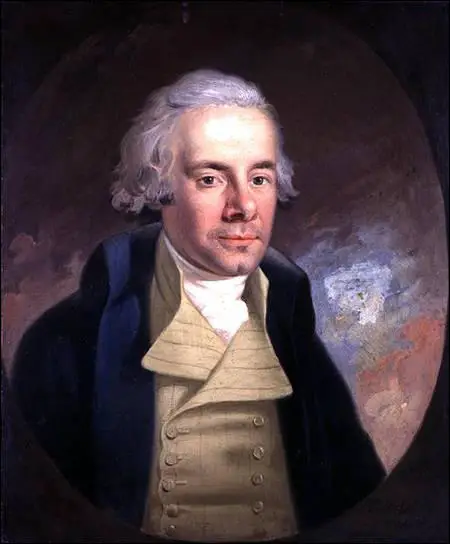
In the pamphlet Heyrick attacked the "slow, cautious, accommodating measures" of the leaders like Wilberforce. "The perpetuation of slavery in our West India colonies is not an abstract question, to be settled between the government and the planters; it is one in which we are all implicated, we are all guilty of supporting and perpetuating slavery. The West Indian planter and the people of this country stand in the same moral relation to each other as the thief and receiver of stolen goods". (50)
The leadership of the organisation attempted to suppress information about the existence of this pamphlet and William Wilberforce gave out instructions for leaders of the movement not to speak on the same platforms as Heyrick and other women who favoured an immediate end to slavery. His biographer, William Hague, claims that Wilberforce was unable to adjust to the idea of women becoming involved in politics "occurring as this did nearly a century before women would be given the vote in Britain". (51)
Bregman argues: "The abolitionists were a small band of renegades, Quakers and evangelicals, who didn't just take on the slave trade. They set out to spark a wider moral revolution. Wilberforce, for example, wouldn't have described his life's mission as fighting slavery. For him, abolitionism was a part of something bigger, the attempt to make goodness fashionable." (52)
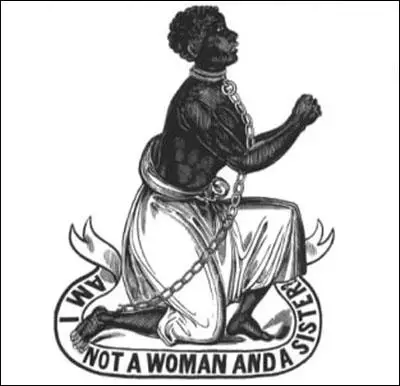
As his critics pointed out at the time William Wilberforce was against the slave trade for economic, rather than moral reasons. Wilberforce held conservative views on most other issues. He opposed parliamentary reform and supported the suspension of Habeas Corpus that resulted in political activists such as Thomas Hardy and John Thelwall being imprisoned. He also supported the government when it passed Combination Acts of 1799–1800. This made it illegal for workers to join together to press their employers for shorter hours or may pay. As a result trade unions were thus effectively made illegal. (53)
Political radicals such as Francis Place hated politicians such as Wilberforce "for their complacency and indifference to poverty in their own country while fighting against the same thing abroad". He described him as "an ugly epitome of the devil". (54) William Hazlitt added: "He preaches vital Christianity to untutored savages and tolerates its worst abuses in civilised states. He thus shows his respect for religion without offending the clergy." (55)
Donald Trump and Silicon Valley
Rutger Bregman correctly states that the world is in crisis. "What we need today is not just bottom-up resistance. We also need a new elite, not of birth, wealth or silly credentials, but of massive positive impact. I'm talking about a skin-in-the-game elite, about people who use what they have, their human, financial and cultural capital, to make a huge difference. Our goal should be to make future historians proud. This is not about left versus right. It's about seriousness versus laziness, determination versus apathy, good versus evil. If we want to preserve the post-war democratic order, we have to prove that our way works. That we're not just a bunch of whiners and nimbies who never get anything done. We have to show that liberal democracy can deliver and that we're willing to fight for it." (56)
In his book, Utopia for Realists (2017) Bregman warns about the power of companies like Amazon who provided support for Donald Trump's campaign: "Innovations in Silicon Valley trigger mass layoffs elsewhere. Just take web-shops like Amazon. The emergence of online sellers led to the loss of millions of jobs in retail… in the age of the chip, the box, and internet retail, being just fractionally better than the rest means you've not only won the battle, but you've also won the war." (59)
Bregman compared what was happening with the rise of fascism: "I recently attended an exclusive Silicon Valley conference. Over dinner, the conversation was dominated by a tech bro who spoke in ways that reminded me of 1930s fascists like Mussolini. I pointed this out to him, and he replied without irony, Yeah, I think we should get a little fascy. This wasn't just one guy. He's part of a broader resurgence of fascism across the Western world. Do we really need to use the F word? Yes, we do. Just as genocide scholars can clearly classify what's happened in Gaza, scholars of fascism can identify the signs of what's rising now. We see armed troops patrolling the streets. We see masked men dragging people into vans. We see raids on the homes of political opponents. We see the rise of a paramilitary force that's loyal to one man alone. It's no coincidence that some of the leading experts of fascism have left the United States. One of them said that the lesson of 1933 is to get out early, not late." (60)
The Fabian Society
Bregman tells us that it is people like those who joined the anti-slavery campaign that can change history. Another group that Bregman likes is the Fabian Society. In October 1883 Edith Nesbit and Hubert Bland decided to form a socialist debating group with their Quaker friend Edward Pease. They were also joined by Havelock Ellis and Frank Podmore and in January 1884 they decided to call themselves the Fabian Society. Podmore suggested that the group should be named after the Roman General, Quintus Fabius Maximus, who advocated the weakening the opposition by harassing operations rather than becoming involved in pitched battles. (61)
Over the next couple of years the group increased in size and included socialists such as Sydney Olivier, William Clarke, Eleanor Marx, Edith Lees, Annie Besant, Graham Wallas, J. A. Hobson, Sidney Webb, Beatrice Webb, Charles Trevelyan, John Clifford, Arthur Ransome, Cecil Chesterton, Ada Chesterton, J. R. Clynes, Harry Snell, Clementina Black, Edward Carpenter, Clement Attlee, Ramsay MacDonald, Emmeline Pankhurst,Walter Crane, Arnold Bennett, Sylvester Williams, H. G. Wells, Hugh Dalton, C. E. M. Joad, Rupert Brooke, Clifford Allen and Amber Reeves.
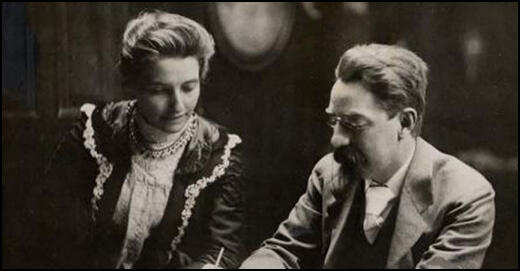
Sidney Webb explained how the Fabian Society differed from other socialist organisations: "We repudiated the common assumption that socialism was necessarily bound up with insurrection, on the one hand, or utopianism, on the other, and we set to work to discover for ourselves and to teach to others how practically to transform England into a social democratic commonwealth... What we Fabians aim at is not the sub-division of property, whether capital or land, but the control and administration of it by the representatives of the community." (62) Beatrice Webb pointed out that they preferred the ideas of Robert Owen to those of Karl Marx. (63)
Bregman described this group as taking part in A Conspiracy of Decency: "From the outset, the mix of patience and subversion gave the Fabians an air of intrigue. And it wasn't long before the brightest young minds of Britain wanted to be a part of it. The Fabian Society became magnet for the most talented and, for lack of a better word, coolest people in Britain…. Most who joined were fresh university graduates who loved to debate. Talk was their medium, and through talk their ideas took shape. When a lecture went down particularly well, it was turned into a pamphlet or a lecture tour, which in turn could spark a lot of media attention… For the next half-century, Fabianism set the tone, and the once unthinkable became reality. Public education, universal healthcare, an eight-hour workday, votes for women, and progressive taxation, with marginal rates for the rich climbing as high as 90% in the 1950s and '60s." (64)
This is of course true, but the reasons that their radical ideas became government policy was that on 27th February, 1900, representatives of all the socialist groups in Britain (the Independent Labour Party (ILP), the Social Democratic Federation (SDF) and the Fabian Society, met with trade union leaders at the Congregational Memorial Hall in Farringdon Street. After a debate the 129 delegates decided to pass Hardie's motion to establish "a distinct Labour group in Parliament, who shall have their own whips, and agree upon their policy, which must embrace a readiness to cooperate with any party which for the time being may be engaged in promoting legislation in the direct interests of labour." To make this possible the Conference established a Labour Representation Committee (LRC). The committee included two members from the ILP (Keir Hardie and James Parker), two from the SDF (Harry Quelch and James Macdonald), one member of the Fabian Society (Edward R. Pease), and seven trade unionists (Richard Bell, John Hodge, Pete Curran, Frederick Rogers, Thomas Greenall, Allen Gee and Alexander Wilkie). (65)
The Liberal Party responded to the formation of the Labour Party by moving to the left and introduced several of the suggested policies of the Fabians in their government that lasted between 1906-1914. This included old age pensions, national insurance, progressive taxation, etc. Other policies advocated by the Fabians were brought in by the Labour government of 1945-51.
Neoliberalism
Rutger Bregman goes onto argue that in time another group was formed to oppose the Fabian's A Conspiracy of Decency. On April 10, 1947, a small group of intellectuals gathered in the Swiss village of Mont Pelerin. They called themselves neoliberals. Among them were philosophers like Friedrich Hayek, Karl Popper and the economist Milton Friedman. They feared that the growing power of the state would usher in a new kind of tyranny, and so they rebelled. As they set about shredding the life's work of their arch-rival, the British economist John Maynard Keynes. (66)
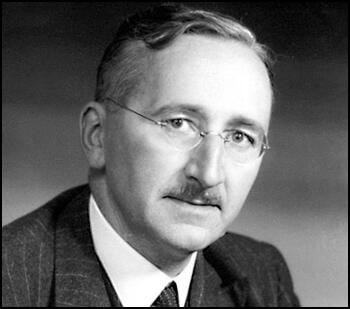
"Like the Fabians, the neoliberals knew that effective resistance would take time. Hayek wrote that the interval between the change in opinion and the corresponding change in policy is usually a generation or even more. And Friedman agreed. He said that people now running the country reflect the intellectual atmosphere of some two decades ago, when they were in college. The neoliberals believed in the primacy of self-interest. Whatever the problem, their answer was the same. ‘Roll back the state. Unleash business.' The government should turn every sector into a marketplace, from healthcare to education. And the neoliberals knew that they were far outside the mainstream, but that only spurred them on." (67)
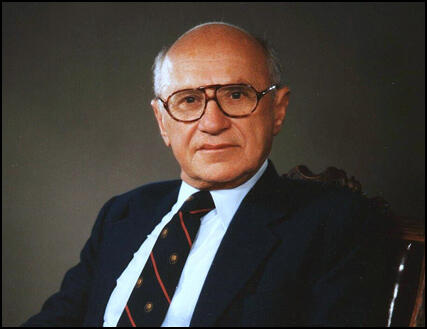
Milton Friedman famously wrote: "There is enormous inertia - a tyranny of the status quo - in private and especially governmental arrangements. Only a crisis - actual or perceived - produces real change. When that crisis occurs, the actions that are taken depend on the ideas that are lying around. That, I believe, is our basic function: to develop alternatives to existing policies, to keep them alive and available until the politically impossible becomes politically inevitable." (68) As Bergman pointed out: "That crisis came in October 1973, when the Organization of Arab Petroleum Exporting Countries (OAPEC) raised oil prices by 70% and imposed an oil embargo on the U.S. and the Netherlands. Inflation went through the roof and the Western economies spiralled into recession. (69)
This was the crisis that the neo-liberals were waiting for and in the subsequent years, a new common sense was born. "The government was the problem. Markets were the solution. Progress meant deregulating, privatising, cutting, globalising. Step by step, state-owned companies were sold, unions weakened, and social benefits cut. Conservative leaders like Ronald Reagan and Margaret Thatcher adopted Hayek and Friedman's once radical doctrines. Soon, their political adversaries followed suit. Bill Clinton declared the era of big government is over, while Tony Blair, with his New Labour, embraced market reforms once associated with the right. And for a while, neoliberalism did seem to work. Inflation was tamed, growth returned, and stock markets soared. But as the decades passed, the price became clear. Hollowed out communities, spiralling inequality, financial crises, and ecological destruction. Today, the ideology that reigned from the 1980s until the pandemic no longer inspires. It is intellectually exhausted, morally bankrupt, and politically toxic. Yet its ghost still lingers, haunting our institutions, constraining our imaginations." (70)
Rutger Bregman commented in Utopia for Realists (2017) that when Margaret Thatcher was asked what she considered to be her greatest victory she replied, "New Labour". As Bregman pointed out: "Under the Leadership of neoliberal Tony Blair, even her social democratic rivals in the Labour Party had come around to her worldview." (71)
Neoliberalism plus the use of technology to reduce the power of the workforce has increased the number of people in the advanced world living in poverty. Bregman quotes the French economist Thomas Piketty as saying the only solution is a worldwide, progressive tax on wealth. If this does not happen the free market will collapse. In other words, "we have to save capitalism from the capitalists". (72)
Artificial Intelligence and Social Media
Rutger Bregman reinforces this point by telling an anecdote from the 1960s told by Walter Reuther about a meeting he had with Henry Ford II: "When Henry Ford's grandson gave labour union leader Walter Reuther a tour of the company's new, automated factory, he jokingly asked, "Walter, how are you going to get those robots to pay your union dues? "Without missing a beat, Reuther answered, "Henry, how are you going to get them to buy your cars?" (73)
According to Bregman the use of AI will only make the situation worse. "Ask the CEOs of the big tech companies, and they'll tell you that the rise of artificial intelligence is a hundred times bigger than the Industrial Revolution, that this may be the very last invention we'll ever make. We are currently in a race to create alien minds, systems that we do not understand, and that we may not be able to control. They are not designed so much as summoned into being."
Bregman adds: "And so, we must ask, will this be the new, worst mistake in the history of the human race? Well, the omens are not good. Just look at what the first wave of big tech has already done to us. Literacy and numeracy scores are plummeting. Teenage depression, anxiety, and suicide attempts are rising. Face-to-face socialising is collapsing as we retreat indoors, eyes glued to screens. Solitude is becoming the hallmark of our age. The bleakest number I've seen is that American teenagers now spend 70% less time hosting or attending parties than in 2003, when I was 15. 70%. Social media promised connection and community, but what it delivered was isolation and outrage. On Instagram, people spend more than 90% of their time watching videos from people they don't know. And platforms reward those who are loudest, angriest, and most extreme. Or, as a recent study in Nature concluded, those with both high psychopathy and low cognitive ability are the most actively involved in online political engagement." (74)
Bregman believes the answer lies in pressure groups formed by intellectuals like those in the Fabian Society. Bregman is particularly fond of the Temperance Society in 1835. At first temperance usually involved a promise not to drink spirits and members continued to consume wine and beer. However, by the 1840s temperance societies began advocating teetotalism. This was a much stronger position as it not only included a pledge to abstain from all alcohol for life but also a promise not to provide it to others. By the end of the 19th century, it was estimated that about a tenth of the adult population were total abstainers of alcohol. (75)
What started out as a religious initiative eventually became a political movement and most leaders of the early Labour Party were also members of the Temperance Society, including its leader, Keir Hardie. His colleague, Philip Snowden, who later became the Chancellor of the Exchequer, wrote in his autobiography: "Under capitalism it was greatly to the benefit of the individual to spend his wages on useful things instead of upon drink, though temperance alone would not touch the real causes of low wages and poverty. The way I put the case in after years, when I often publicly discussed this question, was that drink is an aggravation of every social evil, and, in a great many cases, the prime cause of industrial misery and degradation. The economic waste of expenditure on drink lowers the standard of living and reduces a great many families to destitution, who, if their incomes were usefully spent, would enjoy a reasonable degree of comfort. Universal temperance would undoubtedly bring incalculable benefits and blessings, but so long as the social system is based upon exploitation the mass of the people will remain comparatively poor." (76)
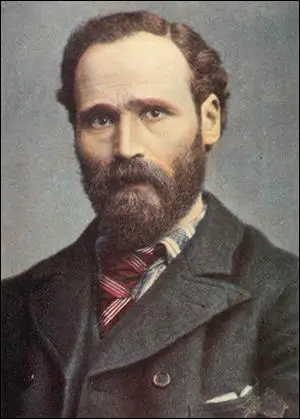
Rutger Bregman argues that the Temperance Society approach to alcohol could be used against social media: "Many abolitionists and suffragettes were also temperance activists. This movement is largely forgotten nowadays, but it holds vital lessons for us. Back then, alcohol was not a casual indulgence but a social catastrophe. There were no warning labels, no age restrictions, no limits on advertising. Saloons dotted every street corner, wages disappeared into the bottle, and families were torn apart by violence and neglect. The alcohol industry profited from human weakness while devastating entire communities. And that is why people rose against it. The temperance movement was one of the largest democratic movements in history, led by women and workers. They believed that real freedom meant being fully present, to choose connection over compulsion. They saw addiction for what it is, the moment when the power of choice no longer exists. And so, they demanded radical measures, higher taxes, stricter licensing, and even total prohibition." (77)
The current evidence suggests that European governments are unwilling to challenge the power of the dominant technology companies based in the United States. Cory Doctorow of the Electronic Frontier Foundation, an American nonprofit dedicated to preserving and promoting human rights on the internet has argued: "I've found myself in dozens of countries working with activists, politicians and civil servants to untangle the complex technical questions raised by the internet, and every one of our discussions ended in the same place. ‘OK,' they'd say, ‘you've definitely laid out the best way to regulate tech, but we can't do it.' Why not? Because - inevitably - the US trade rep had beaten me to every one of those countries and made it eye-wateringly clear that if they regulated tech in a way that favoured their own people, industries and national interests, the US would bury them in tariffs." (78)
Bregman believes that public pressure on governments will eventually force them into acting against something that is more addictive than alcohol was at the end of the 19th century. "Today, we face a new addiction industry, not of wine and whiskey, but of apps and algorithms. Many of Stanford's brightest minds are building a single great moloch, an attention-hijacking machine that devours our focus, steals our time, and leaves us emptier by the hour. And AI threatens to supercharge it all. But here's my warning to Silicon Valley. I think you're awakening a dragon. Public anger is stirring, and it could grow into a movement as fierce and unstoppable as the temperance crusade a century ago. Poll after poll finds that people across the West think AI will worsen almost everything they care about, from our health and relationships to our jobs and democracies. By a 3:1 margin, people want more regulation." (79)
At the end of the 19th century the large breweries were willing to pay the Conservative Party to protect its business in parliament. However, in time the Liberal Party in alliance with the Labour Party was able to impose restrictions on the industry. Today, the UK government is afraid of the power of the American technology companies. It is not helped by the fact that the three main parties competing for power in the UK (Conservative, Labour and Reform) receive considerable funds from large technology companies.
Palantir Technologies developed a good working relationship with the Conservative government. In 2022, Palantir recruited NHS England's former artificial intelligence chief, Indra Joshi. Palantir's UK head, Louis Mosley, grandson of the late British Union of Fascists leader Oswald Mosley, was quoted as saying that Palantir's strategy for entry into the British health industry was to "Buy our way in" by acquiring smaller rival companies with existing relationships with the NHS in order to "take a lot of ground and take down a lot of political resistance". (80)
In November 2023, NHS England awarded Palantir a £330 million contract to create and manage the Federated Data Platform. As Mark Wilding has pointed out: "NHS patient data, spanning more than seven decades and covering most of the UK population, is a trove of potential medical and demographic insights that may be unrivalled anywhere in the world. Opponents of the FDP contract have questioned whether private companies can be trusted with such sensitive personal data and whether it could be used to develop profitable products that benefit Palantir shareholders rather than the British taxpayer." (81)
In 2023 when it was clear that they would form the next government money flooded into the Labour Party. This included a £4m donation by Quadrature Capital, a hedge fund registered in the Cayman Islands. Quadrature Capital is run by the Jewish businessman, Daniel Luhde-Thompson, who has been a personal donor to the Labour Party since Starmer became leader. Quadrature Capital is a major investor in American tech companies such as Palantir ($71m). (82)
Nigel Farage, who is expected to become the next prime minister is already receiving massive amounts of money from American tech companies. BBC News reported recently: "Reform UK leader Nigel Farage breached MPs' rules 17 times by failing to register financial interests totalling £384,000 within the 28-day limit, the parliamentary commissioner for standards has ruled.... The interests that Farage failed to report on time include payments from GB News, Google, X and the Apple Cameo app." (83)
As a result of the financial donations that have corrupted our main political parties, it is small pressure groups who are mainly taking on the major technology companies. For example, Big Brother Watch, Electronic Frontier Foundation, Liberty Human Rights, Open Rights Group, People vs Big Tech and Internet Watch Foundation. (84)
As a result of the campaign of these groups the Labour Government passed the Online Safety Act. Its critics have claimed that the government had made a major mistake by not making social media more responsible for content distributed and shared via their platforms. Some campaigners have been arguing for some time that the definition of a publisher in UK and EU law should be updated to include social media and online platforms so that they fit within the scope of existing regulatory frameworks. (85)
One of the things the government did include in the Online Safety Act was the banning of Nudification (online platforms and software that use generative artificial intelligence to digitally alter an existing image or video of a person to make them appear partially or fully nude without their consent). As the government pointed out: "Nudification" apps are not used for harmless pranks. They devastate young people's lives, and we will ensure those who create or supply them face real consequences. Every child deserves to grow up safe, and we will do whatever it takes to make that a reality… The creation and supply of so-called ‘nudification' apps or tools that generate deepfake nude images of real people will also be banned, under plans announced today, building on offences which criminalise sharing these deeply damaging images. The new legislation will allow the police to target the firms and individuals who design and supply these tools." (86)
It soon became clear that the social media companies were clearly ignoring the Online Safety Act. YouTube, owned by Google, continued to advertise nudification apps. Labour MP, Jess Asato, complained to Google about this on X and she received the following message: "We decided not to take this ad down. We found that the ad doesn't go against Google's policies, which prohibit certain content and practices that we believe to be harmful to users and the overall ecosystem." As a result of her complaint, she has had a lot of photographs posted of her in a bikini on X. (87)
Willem Moore writing about the Jess Asato case in The Canary: "We support any efforts to block these disgusting AI tools. Like Asato, we think the government needs to move faster. We additionally think it's foolish for the government to be maintaining a positive relationship with these parasitic AI companies which have completely failed to deliver on their earlier promises. The reason women are subjected to this abuse is because tech perverts like Elon Musk think they're untouchable. It's vital the world robs these men of that opinion as soon as possible." (88)
In the last few weeks, we have had the issue of men taking photographs from fully dressed women's Facebook accounts and then asking Elon Musk's AI tool, Grok, to show them to show the women in bikinis. This rapidly evolved into Grok being asked to provide increasingly explicit demands for women to be placed in transparent bikinis, sexualised positions, and to make their genitals visible.
As the Amelia Gentleman and Helena Horton pointed out in The Guardian: "Pictures of teenage girls and children were stripped down to revealing swimwear; some of this content could clearly be categorised as child sexual abuse material but remained visible on the platform. The requests became ever more extreme. Some users, mostly men, began to demand to see bruising on the bodies of the women, and for blood to be added to the images. Requests to show women tied up and gagged were instantly granted. By Thursday, the chatbot was being asked to add bullet holes to the face of Renee Nicole Good, the woman killed by an ICE agent in the US on Wednesday. Grok readily obliged, posting graphic, bloodied altered images of the victim on X within seconds. Hours later, the public @Grok account suddenly had its image-generation capabilities restricted, making them only available to paying subscribers. But this appeared to be a half-hearted move by the platform's owners. The separate Grok app, which does not share images publicly, was still allowing non-paying users to generate sexualised imagery of women and children." (89)
Under pressure from his own MPs Keir Starmer decided to give the impression he was willing to take on Elon Musk. He announced that the UK would bring into force a law which will make it illegal to create non-consensual intimate images and warned X could lose the "right to self-regulate". He told MPs that "if X cannot control Grok, we will." As campaigners pointed out it is currently illegal to share deepfakes of adults in the UK, but legislation in the Data (Use and Access) Act which would make it a criminal offence to create or request them has not been enforced until now, despite passing in June 2025. (90)
Elon Musk eventually agreed to act after Starmer described the photographs generated by Grok as "disgusting" and "shameful". However, research carried out by The Guardian several days later revealed that "X has continued to allow users to post highly sexualised videos of women in bikinis generated by its AI tool Grok, despite the company's claim to have cracked down on misuse. The Guardian was able to create short videos of people stripping to bikinis from photographs of fully clothed, real women. It was also possible to post this adult content on to X's public platform without any sign of it being moderated, meaning the clip could be viewed within seconds by anyone with an account." (91)
The Centre for Countering Digital Hate (CCDH) revealed that an estimated 3 million sexualised images were generated by Elon Musk's Grok AI in just 10 days. Perhaps most disturbingly of all, 23,000 of the images were of children. As Maddison Wheeldon points out: "The billionaire has faced growing calls to address the disgusting practice introduced on 29th December until the 8th January. The ‘feature' was subsequently locked behind a paywall from the 9th January. Yet again, reinforcing the sense that harm is acceptable so long as it remains profitable for a multi-billionaire. Furthermore, the new figures provided in CCDH's analysis provide a disturbing insight into men and their deeply unhealthy obsession with sex. The very fact that this happened within ten days, in full view of public condemnation, shows how deep the problem runs. Moreso, it's one that women and girls have been calling out for years." (92)
Furthermore, the new figures provided in CCDH's analysis provide a disturbing insight into men and their deeply unhealthy obsession with sex. The very fact that this happened within ten days, in full view of public condemnation, shows how deep the problem runs. Moreso, it's one that women and girls have been calling out for years.
Keir Starmer has been urged by some MPs to join forces with other European leaders to take on Donald Trump and the technology billionaires who are backing his policies. This became a major issue when Trump demanded control of Greenland. Labour MP Steve Witherden urged the government to "close ranks with our European allies and commit to retaliatory tariffs" against the US over Greenland. "The thug in the White House has shown that he doesn't listen to grovelling or sycophancy... He'll continue to harm British interests no matter how compliant we are and, like all bullies, he will always find the weakest link." (93)
Some of Starmer's critics have accused him of being a Trump appeaser and of making the same mistake as Neville Chamberlain and the Conservative government did when dealing with Adolf Hitler in the 1930s. As Winston Churchill pointed out in 1940: "An appeaser is one who feeds a crocodile, hoping it will eat him last." (94)
Georg Riekeles has pointed out: "The EU has reached a moment of truth. If it cannot defend one of its member states whose most basic interests are under direct threat, then the EU is weakened as a geopolitical actor and emptied of purpose. For too long, European leaders have clung to a comforting but false belief that the EU cannot use its economic power against the US, because Europe and Ukraine depend on Washington for security. This argument is wrong. Moreover, it is strategically corrosive. In a world of open coercion, appeasement and restraint do not buy stability. They invite further pressure.... EU leaders should make clear to Washington that a retaliation package of tariffs on €93bn worth of US exports to the EU will snap back into force on 7 February, if Washington refuses to back down." (95)
Bregman has given some suggestions how we deal with Trump and his economic backers. "What we need now is not just better policies or better politicians. We need a moral revolution. We need to revive an ancient idea, almost laughable in today's climate, that the purpose of power is to do good. And that is the goal of this lecture series. To argue that the most urgent transformation of our time is not technological or geopolitical or industrial, but moral. We need a new kind of ambition, not for status, or wealth, or fame, but for integrity, courage, and public service, a moral ambition." (96)
Rutger Bregman appears to have given up on politicians and instead believes in the power of individuals to change society. He gives the example of Bertrand Russell: "History shows how this movement could be ignited by a small group of citizens and how powerful it could become. Just as Bertrand Russell led mass protests against the nuclear arms race, we may soon see mass resistance to the AI arms race." This seems a strange example as Russell failed in his attempts to halt the nuclear arms race. (97)
As much as we might despise our politicians, in a democracy they provide the main vehicle of change. At the recent Davos World Economic Forum Conference there were two speeches that gave me some hope for the future. The first was by Mark Carney, the prime minister of Canada. Carney, an economist, commented "the strong do what they can, and the weak suffer what they must." In his speech Carney laid out a doctrine for a world of fractured international norms, warning: "The old order is not coming back. We should not mourn it. Nostalgia is not a strategy."
Carney provided a possible solution as he urged fellow middle powers to come together. "Middle powers must act together because if we're not at the table, we're on the menu," Carney said, adding that he believed powerful nations were using economic coercion to get what they want. "Great powers" are often defined as countries with permanent seats on United Nations Security Council - China, France, Russia, the United Kingdom and the United States - which shows their economic and military dominance in the world. Middle powers, such as Canada, Australia, Argentina, South Korea and Brazil, are nations that still exert large influence in global politics, even though their economies are smaller. (98)
Jack Cunningham, a professor of international relations at the University of Toronto, explained the significance of Carney's speech: "Leaders in other western capitals have alluded to ‘dangerous departures' Trump has taken from norms, but they always return to the possibility that he can be appeased or accommodated. Mr Carney has exposed that as simply inaccurate. Leaders increasingly realise they will not be able to "manage" Trump for the remainder of his term, says Cunningham. "Carney is the first major western leader to basically acknowledge the reality. A lot of leaders abroad are looking for somebody to set a direction. And this speech is planting a flag." (99)
Paul Taylor, senior visiting fellow at the European Policy Centre, was one of those who saw the significance of Carney's speech: "In an incisive analysis of the new age of predatory great powers, where might is increasingly asserted as right, Carney not only accurately defined the coarsening of international relations as ‘a rupture, not a transition'. He also outlined how liberal democratic "middle powers" such as Canada – but also European countries – must build coalitions to counter coercion and defend as much as possible of the principles of territorial integrity, the rule of law, free trade, climate action and human rights. He spelled out a hedging strategy that Canada is already pursuing, diversifying its trade and supply chains and even opening its market to Chinese electric vehicles to counter Donald Trump's tariffs on Canadian-made automobiles." (100)
President Emmanuel Macron also made a powerful speech at Davos. "Look at the situation where we are. I mean, a shift towards autocracy, against democracy. More violence, more than 60 wars in 2024 – an absolute record, even if I understood a few of them were fixed. And conflict has become normalized, hybrid, expanding into new demands, space, digital information, cyber, trade and so on. It's as well a shift towards a world without rules. Where international law is trampled underfoot and where the only laws it seems to matter is that of the strongest. And imperial ambitions are resurfacing. Obviously, the Russian war, the Russian war of aggression against Ukraine, which will enter into its fourth-year next month, and conflicts continue in the Middle East and across Africa. This is as well as shift towards a world without effective collective governance and where multilateralism is weakened by powers that obstruct it or turn away from it, and rules are undermined."
Macron then turned his attention towards Donald Trump: "Without collective governance, cooperation gives way to relentless competition. Competition from the United States of America through trade agreements that undermine our export interests, demand maximum concessions and openly aim to weaken and subordinate Europe, combined with an endless accumulation of new tariffs that are fundamentally unacceptable – even more so when they are used as leverage against territorial sovereignty." Macron reminded Trump that the European Union had 450 million inhabitants and consumers. Then he warned: "Europe must strengthen its trade defence instruments, including mirror measures to enforce the regulatory standards, and we must improve the quality and added value of foreign direct investments targeting projects with strong export potential. In doing so, we must ensure respect, technological neutrality and non-discrimination within the European Union… We do have the savings as the Europeans, much more than the US, by the way. But this saving is overinvested in bonds and sometimes in equities - but outside Europe." (101)
Macron's style is less direct than that of Trump, but his message was understood and it was this speech that was the main reason for the withdrawal of the threats over Greenland. In very diplomatic language Macron was threatening to deploy the bloc's anti-coercion instrument (ACI) – widely known as the "trade bazooka" – which was devised to give the EU more powerful tools to respond to political bullying and blackmail from another country. ACI allows the EU to impose sweeping trade sanctions, such as excluding the aggressor's companies from its internal market, imposing export controls or ending intellectual property protections. The countermeasures are meant to be proportionate to the economic harm inflicted, while minimising pain to Europe. It could involve banning the United States from competing for European government contracts, increasing Digital Services taxes, selling shares and bonds and severe restrictions on social media companies. (102)
However, it was after the Davos conference that Trump made his most important blunder. It was Trump's response to the journalist who reminded him that the security clause in NATO was invoked for the first and only time in its history following the 9/11 attacks. Trump said that NATO sent "some troops" but "stayed a little back, a little off the front lines". During the conflict, 457 British service personnel were killed. Another 303 suffered traumatic or surgical amputations due to injuries sustained in Afghanistan. (103)
Trump's comments reminded people of the fact that he managed to avoid joining the USA Army fighting in Vietnam. According to his former political advisor, Michael Cohen, Trump told him that he made up a fake injury to avoid military service, because "I wasn't going to Vietnam." Trump had previously claimed that his medical deferment was because of a bone spur, but he told Cohen: ‘You think I'm stupid, I wasn't going to Vietnam.'" (104)
Trump has an history of making controversial comments about war heroes. In July 2015 he claimed that Senator John McCain, who was tortured during more than five years as a prisoner of war, in Vietnam was "not a war hero". Trump said: "I like people who weren't captured." Less than 24 hours later, after a furious and virtually unified response from his rivals, Trump insisted that his comments about McCain were "absolutely fine". He argued he was the victim of a controversy stoked by the press and Republican adversaries envious of his surge in popularity. (105)
According to The Atlantic Magazine, Trump cancelled a visit to a US cemetery outside Paris in 2018 because he said it was "filled with losers". Four sources told the magazine he rejected the idea of visiting because the rain would dishevel his hair, and he did not believe it important to honour America's war dead. During the same trip, the president also allegedly referred to 1,800 US soldiers who died at Belleau Wood as "suckers". The battle helped to prevent a German advance on Paris during World War One and is venerated by the US Marine Corps. (106)
It is difficult to understand how a politician can make such statements like these that are bound to upset so many people. The psychiatrist Robert Jay Lifton has attempted to explain Trump's behaviour. Lifton has argued that Trump is more of a solipsist than a narcissist. A narcissist, while deeply self-infatuated, nevertheless seeks the approval of others and will occasionally attempt seduction to get what he wants. For Trump the solipsist, the only point of reference is himself, so he makes no attempt even at faking interest in other people, since he can't really see them from his self-centered position. (107)
In his final Reith Lecture, entitled Fighting for Humanity in the Age of the Machine, Rutger Bregman quotes Søren Kierkegaard: "Life can only be understood backwards, but it must be lived forwards." Bregman's final words are: "So let us throw ourselves fully into the task. We know it will not be easy. The future holds no guarantees, no certainty that our species will endure or that our story will end well. But that has always been the human condition. What we do know is this. Again and again, small groups of committed citizens have bent the arc of history towards justice. And whatever the outcome, there is beauty into trying, beauty in every act of courage, in every spark of truth, in every rich and well-rounded life. We cannot build monuments in stone that last forever, but we can build monuments in time." Citizens can apply pressure but we need politicians to pass the necessary legislation. (108)
References
(1) Rutger Bregman, Humankind: A Hopeful History (2021) page 46
(2) Jean-Jacques Rousseau, Discourse on the Arts and Sciences (1751)
(3) Rutger Bregman, Humankind: A Hopeful History (2021) page 52
(4) Rutger Bregman, Humankind: A Hopeful History (2021) page 61
(5) BBC News (29 January 2014)
(6) Yuval Noah Harari, Sapiens: A Brief History of Humankind (2011) page 19
(7) Jared Diamond, New York Times (20 April 2018)
(8) Brian Hare, Survival of the Friendliest, Annual Review of Psychology (2017)
(9) Rutger Bregman, Humankind: A Hopeful History (2021) (2021) page 71
(10) Rutger Bregman, Humankind: A Hopeful History (2021) (2021) page 72
(11) Rutger Bregman, Humankind: A Hopeful History (2021) page 74
(12) Jane Goodall, Reason for Hope: A Spiritual Journey (1999)
(13) Jane Goodall, quoted by Rami Tzabar in Do Chimpanzee Wars Prove that Violence is Innate (11 August 2015)
(14) Steven Pinker, The Better Angels of Our Nature (2011)
(15) Brian Hare, Survival of the Friendliest, Annual Review of Psychology (2017)
(16) Rutger Bregman, Humankind: A Hopeful History (2021) page 24
(17) Rutger Bregman, Humankind: A Hopeful History (2021) page 36
(18) Rutger Bregman, Humankind: A Hopeful History (2021) pages xiv – xv
(19) Gustave Le Bon, The Psychology of the Masses (1937)
(20) Rutger Bregman, Humankind: A Hopeful History (2021) page xvi
(21) John Kenneth Galbraith, A Life in our Times (1981) page 206
(22) Rutger Bregman, Humankind: A Hopeful History (2021) page xx
(23) Samuel Marshall, Men Against Fire (1946) page 78
(24) George Orwell, Homage to Catalonia (1938) page 39
(25) Randall Collins, Violence: A Micro-Sociological Theory (2008) page 11
(26) Dave Grossman, On Killing: The Psychological Cost of Learning to Kill in War and Society (1996) page 122
(27) Rutger Bregman, Humankind: A Hopeful History (2021) pages 220-221
(28) Kirsten Fermaglich, American Dreams and Nazi Nightmares: Early Holocaust Consciousness and Liberal America (2006) page 164
(29) New Haven Register (18 June 1961)
(30) Rutger Bregman, Humankind: A Hopeful History (2021) page 162
(31) Moti Nissani, American Psychologist, Volume 45 (1990) page 12
(32) Rutger Bregman, Humankind: A Hopeful History (2021) page 163
(33) Stanley Milgram, Obedience to Authority (1974) page xii
(34) Walter Sullivan, The New York Times (26 October 1963)
(35) Stanley Milgram, Sixty Minutes (31 March 1979)
(36) Muzafer Sherif, quoted in Thomas Blass (editor), Obedience to Authority: Current Perspectives on the Milgram Paradigm (2000) page 10
(37) Gina Perry, Discover Magazine (2 October 2013)
(38) Rutger Bregman, Humankind: A Hopeful History (2021) page 168
(39) Stanley Milgram, journal (June 1962)
(40) Rutger Bregman, Humankind: A Hopeful History (2021) pages 108-109
(41) Jared Diamond, The Worst Mistake in the History of the Human Race (May 1987)
(42) Rutger Bregman, Humankind: A Hopeful History (2021) page 113
(43) Ernest Mandel, Marxist Economic Theory (1971) pages 441-484
(44) Rutger Bregman, Reith Lecture: How to Start a Moral Revolution (3 December 2025)
(45) Hugh Thomas, The Slave Trade (1997) page 30
(46) Jack Gratus, The Great White Lie (1973) page 140
(47) Reverand Raymond Harris, Scriptural Researches on the Licitness of the Slave Trade (1788)
(48) Adam Hochschild, Bury the Chains: The British Struggle to Abolish Slavery (2005) pages 68-9
(49) Stephen Tomkins, William Wilberforce (2007) page 206
(50) Elizabeth Heyrick, Immediate, not Gradual Abolition (1838)
(51) William Hague, William Wilberforce: The Life of the Great Anti-Slave Trade Campaigner (2008) page 487
(52) Rutger Bregman, Reith Lectures: How to Start a Moral Revolution (3 December 2025)
(53) John Wolffe, William Wilberforce : Oxford Dictionary of National Biography (2004-2014)
(54) Jack Gratus, The Great White Lie (1973) page 202
(55) William Hazlitt, The Spirit of the Age: Contemporary Portraits (1825) pages 324-330
(56) Rutger Bregman, Reith Lectures: How to Start a Moral Revolution (3 December 2025)
(57) The Guardian (25th November 2025)
(58) Rutger Bregman, BBC Reith Lectures: A Time of Monsters (26th November 2025)
(59) Rutger Bregman, Utopia for Realists (2017) pages 183-184
(60) Rutger Bregman, BBC Reith Lectures: A Time of Monsters (26th November 2025)
(61) Norman MacKenzie and Jeanne MacKenzie, The First Fabians (1979) pages 24-29
(62) Sidney Webb, speech (January 1894)
(63) Beatrice Webb, Our Partnership (1948) page 106
(64) Rutger Bregman, Reith Lectures: A Conspiracy of Decency (10 December 2025)
(65) Herbert Tracey (editor), The Labour Party: Its History, Growth, Policy and Leaders - Volume I (1924) pages 124-125
(66) Rutger Bregman, Utopia for Realists (2017) page 244
(67) Rutger Bregman, Reith Lectures: A Conspiracy of Decency (10 December 2025)
(68) Milton Friedman, Capitalism and Freedom (1982) pages xiii-xiv
(69) Rutger Bregman, Utopia for Realists (2017) page 247
(70) Rutger Bregman, Reith Lecture: A Conspiracy of Decency (10 December 2025)
(71) Rutger Bregman, Utopia for Realists (2017) page 244
(72) Thomas Piketty, Financial Times (28 March 2014)
(73) Rutger Bregman, Utopia for Realists (2017) page 200
(74) Rutger Bregman, Fighting for Humanity in the Age of the Machine (17 December 2025)
(75) John Simkin, The Temperance Society (December, 2020)
(76) Philip Snowden, An Autobiography (1934) page 66
(77) Rutger Bregman, Reich Lectures: Fighting for Humanity in the Age of the Machine (17 December 2025)
(78) Cory Doctorow, The Guardian (10 January 2026)
(79) Rutger Bregman, Reich Lectures: Fighting for Humanity in the Age of the Machine (17 December 2025)
(80) Olivia Solon, Bloomberg News (September 30, 2022)
(81) Mark Wilding, Prospect Magazine (November 12, 2025)
(82) Ethan Stone, Open Democracy (18 September 2024)
(83) BBC News (21 January 2026)
(84) Tom Acres, Sky News (26 October 2023)
(85) Freddy Mayhew, Press Gazette (November 14, 2017)
(86) National Technology News (19/12/2025)
(87) Jess Asato, X account (10 January 2025)
(88) Willem Moore, The Canary (11 January 2026)
(89) Amelia Gentleman and Helena Horton, The Guardian (11 Jan 2026)
(90) BBC News (12 January 2026)
(91) The Guardian (16 January 2026)
(92) Maddison Wheeldon, The Canary (22 January 2026)
(93) BBC News (21 January 2026)
(94) Winston Churchill, speech (20 January 1940)
(95) Georg Riekeles, The Guardian (21 January 2026)
(96) Rutger Bregman, BBC Reith Lectures: A Time of Monsters (26th November 2025)
(97) Rutger Bregman, BBC Reith Lecture: Fighting for Humanity in the Age of the Machine (17 December 2025)
(98) Mark Carney, speech (20 January 2026)
(99) The Guardian (21 January 2026)
(100) Paul Taylor, The Guardian (22 January 2026)
(101) Emmanuel Macron, speech (20 January 2026)
(102) The Guardian (19 January 2026)
(103) BBC News (22 January 2026) https://www.bbc.co.uk/news/articles/czr444j671vo
(104) The Military Times (27 February 2019)
(105) The Guardian (20 July 2015)
(106) Atlantic Magazine (2 September 2020)
(107) Robert Jay Lifton, Psychology Today (1 July 2022)
(108) Rutger Bregman, BBC Reith Lecture: Fighting for Humanity in the Age of the Machine (17 December 2025)
Previous Posts
Technofeudalism: Is AI going to destroy Capitalism and Democracy? (19th November, 2025)
How do we stop Nigel Farage from forming a government (14th October, 2025)
Donald Trump and the Deep State (13th August, 2025)
The History of Fascism: Are Vladimir Putin and Donald Trump Fascists? (10th June, 2025)
The CIA memorandum on the death of Gary Underhill (6th April, 2025)
Should George Orwell have chosen the title, 2030, instead of 1984? Keir Starmer as Big Brother. (17th March, 2025)
The Evolution of the Brain. Can you make yourself happy? (16th January, 2025)
Technology and the History Classroom: Should the Teaching Profession Embrace AI? (20th November, 2024)
Venetia Stanley, H. H. Asquith and the First World War (22nd August, 2024)
The General Election Campaign: The Tyranny of the Centre (4th July, 2024)
In Defence of the New History (20th March, 2024)
The Political History of Keir Starmer (25th January, 2024)
JFK Assassination: What Happened in the Trauma Room (23rd November, 2023)
Sir Keir Starmer and his Broken Pledges (1st September, 2023)
Should history students be using ChatGBT? (28th May, 2023)
A historical account of the Daily Mail, the Conservative Party and Migration (18th March, 2023)
Art and the Women's Suffrage Movement (20th January, 2023)
Emancipation of Women: 1870-1928 (15th November, 2022)
The Struggle for Women's Rights: 1500-1870 (21st September, 2022)
The real reason why the FA banned women from playing on their grounds (1st August, 2022)
The WSPU Young Hot Bloods and the Arson Campaign (26th May, 2022)
Interpretations in History (18th April, 2022)
The Student as Teacher (31st December, 2021)
History Simulations in the Classroom (30th November, 2021)
Walter Tull: Football and War Hero (20th October, 2021)
Child Labour and Freedom of the Individual (26th July, 2021)
Don Reynolds and the Assassination of John F. Kennedy (15th June, 2021)
Richard Nixon and the Conspiracy to kill George Wallace in 1972 (5th May, 2021)
The Connections between Watergate and the JFK Assassination (2nd April, 2021)
The Covid-19 Pandemic: An Outline for a Public Inquiry (4th February, 2021)
Why West Ham did not become the best team in England in the 1960s (24th December, 2000)
The Lyndon Baines Johnson Tapes and the John F. Kennedy Assassination (9th November, 2020)
It is Important we Remember the Freedom Riders (11th August, 2020)
Dominic Cummings, Niccolò Machiavelli and Joseph Goebbels (12th July, 2020)
Why so many people in the UK have died of Covid-19 (14th May, 2020)
Why the coronavirus (Covid-19) will probably kill a higher percentage of people in the UK than any other country in Europe.. (12th March, 2020 updated 17th March)
Mandy Rice Davies and Christine Keeler and the MI5 Honey-Trap (29th January, 2020)
Robert F. Kennedy was America's first assassination Conspiracy Theorist (29th November, 2019)
The Zinoviev Letter and the Russian Report: A Story of Two General Elections (24th November, 2019)
The Language of Right-wing Populism: Adolf Hitler to Boris Johnson (11th October, 2019)
The Political Philosophy of Dominic Cummings and the Funding of the Brexit Project (15th September, 2019)
What are the political lessons to learn from the Peterloo Massacre? (19th August, 2019)
Crisis in British Capitalism: Part 1: 1770-1945 (9th August, 2019)
Richard Sorge: The Greatest Spy of the 20th Century? (29th July, 2020)
The Death of Bernardo De Torres (26th May, 2019)
Gas Masks in the Second World War killed more people than they saved (9th May, 2019)
Did St Paul and St Augustine betray the teachings of Jesus? (20th April, 2019)
Stanley Baldwin and his failed attempt to modernise the Conservative Party (15th April, 2019)
The Delusions of Neville Chamberlain and Theresa May (26th February, 2019)
The statement signed by Robert F. Kennedy Jr. and Kathleen Kennedy Townsend (20th January, 2019)
Was Winston Churchill a supporter or an opponent of Fascism? (16th December, 2018)
Why Winston Churchill suffered a landslide defeat in 1945? (10th December, 2018)
The History of Freedom Speech in the UK (25th November, 2018)
Are we heading for a National government and a re-run of 1931? (19th November, 2018)
George Orwell in Spain (15th October, 2018)
Anti-Semitism in Britain today. Jeremy Corbyn and the Jewish Chronicle (23rd August, 2018)
Why was the anti-Nazi German, Gottfried von Cramm, banned from taking part at Wimbledon in 1939? (7th July, 2018)
What kind of society would we have if Evan Durbin had not died in 1948? (28th June, 2018)
The Politics of Immigration: 1945-2018 (21st May, 2018)
State Education in Crisis (27th May, 2018)
Why the decline in newspaper readership is good for democracy (18th April, 2018)
Anti-Semitism in the Labour Party (12th April, 2018)
George Osborne and the British Passport (24th March, 2018)
Boris Johnson and the 1936 Berlin Olympics (22nd March, 2018)
Donald Trump and the History of Tariffs in the United States (12th March, 2018)
Karen Horney: The Founder of Modern Feminism? (1st March, 2018)
The long record of The Daily Mail printing hate stories (19th February, 2018)
John Maynard Keynes, the Daily Mail and the Treaty of Versailles (25th January, 2018)
20 year anniversary of the Spartacus Educational website (2nd September, 2017)
The Hidden History of Ruskin College (17th August, 2017)
Underground child labour in the coal mining industry did not come to an end in 1842 (2nd August, 2017)
Raymond Asquith, killed in a war declared by his father (28th June, 2017)
History shows since it was established in 1896 the Daily Mail has been wrong about virtually every political issue. (4th June, 2017)
The House of Lords needs to be replaced with a House of the People (7th May, 2017)
100 Greatest Britons Candidate: Caroline Norton (28th March, 2017)
100 Greatest Britons Candidate: Mary Wollstonecraft (20th March, 2017)
100 Greatest Britons Candidate: Anne Knight (23rd February, 2017)
100 Greatest Britons Candidate: Elizabeth Heyrick (12th January, 2017)
100 Greatest Britons: Where are the Women? (28th December, 2016)
The Death of Liberalism: Charles and George Trevelyan (19th December, 2016)
Donald Trump and the Crisis in Capitalism (18th November, 2016)
Victor Grayson and the most surprising by-election result in British history (8th October, 2016)
Left-wing pressure groups in the Labour Party (25th September, 2016)
The Peasant's Revolt and the end of Feudalism (3rd September, 2016)
Leon Trotsky and Jeremy Corbyn's Labour Party (15th August, 2016)
Eleanor of Aquitaine, Queen of England (7th August, 2016)
The Media and Jeremy Corbyn (25th July, 2016)
Rupert Murdoch appoints a new prime minister (12th July, 2016)
George Orwell would have voted to leave the European Union (22nd June, 2016)
Is the European Union like the Roman Empire? (11th June, 2016)
Is it possible to be an objective history teacher? (18th May, 2016)
Women Levellers: The Campaign for Equality in the 1640s (12th May, 2016)
The Reichstag Fire was not a Nazi Conspiracy: Historians Interpreting the Past (12th April, 2016)
Why did Emmeline and Christabel Pankhurst join the Conservative Party? (23rd March, 2016)
Mikhail Koltsov and Boris Efimov - Political Idealism and Survival (3rd March, 2016)
Why the name Spartacus Educational? (23rd February, 2016)
Right-wing infiltration of the BBC (1st February, 2016)
Bert Trautmann, a committed Nazi who became a British hero (13th January, 2016)
Frank Foley, a Christian worth remembering at Christmas (24th December, 2015)
How did governments react to the Jewish Migration Crisis in December, 1938? (17th December, 2015)
Does going to war help the careers of politicians? (2nd December, 2015)
Art and Politics: The Work of John Heartfield (18th November, 2015)
The People we should be remembering on Remembrance Sunday (7th November, 2015)
Why Suffragette is a reactionary movie (21st October, 2015)
Volkswagen and Nazi Germany (1st October, 2015)
David Cameron's Trade Union Act and fascism in Europe (23rd September, 2015)
The problems of appearing in a BBC documentary (17th September, 2015)
Mary Tudor, the first Queen of England (12th September, 2015)
Jeremy Corbyn, the new Harold Wilson? (5th September, 2015)
Anne Boleyn in the history classroom (29th August, 2015)
Why the BBC and the Daily Mail ran a false story on anti-fascist campaigner, Cedric Belfrage (22nd August, 2015)
Women and Politics during the Reign of Henry VIII (14th July, 2015)
The Politics of Austerity (16th June, 2015)
Was Henry FitzRoy, the illegitimate son of Henry VIII, murdered? (31st May, 2015)
The long history of the Daily Mail campaigning against the interests of working people (7th May, 2015)
Nigel Farage would have been hung, drawn and quartered if he lived during the reign of Henry VIII (5th May, 2015)
Was social mobility greater under Henry VIII than it is under David Cameron? (29th April, 2015)
Why it is important to study the life and death of Margaret Cheyney in the history classroom (15th April, 2015)
Is Sir Thomas More one of the 10 worst Britons in History? (6th March, 2015)
Was Henry VIII as bad as Adolf Hitler and Joseph Stalin? (12th February, 2015)
The History of Freedom of Speech (13th January, 2015)
The Christmas Truce Football Game in 1914 (24th December, 2014)
The Anglocentric and Sexist misrepresentation of historical facts in The Imitation Game (2nd December, 2014)
The Secret Files of James Jesus Angleton (12th November, 2014)
Ben Bradlee and the Death of Mary Pinchot Meyer (29th October, 2014)
Yuri Nosenko and the Warren Report (15th October, 2014)
The KGB and Martin Luther King (2nd October, 2014)
The Death of Tomás Harris (24th September, 2014)
Simulations in the Classroom (1st September, 2014)
The KGB and the JFK Assassination (21st August, 2014)
West Ham United and the First World War (4th August, 2014)
The First World War and the War Propaganda Bureau (28th July, 2014)
Interpretations in History (8th July, 2014)
Alger Hiss was not framed by the FBI (17th June, 2014)
Google, Bing and Operation Mockingbird: Part 2 (14th June, 2014)
Google, Bing and Operation Mockingbird: The CIA and Search-Engine Results (10th June, 2014)
The Student as Teacher (7th June, 2014)
Is Wikipedia under the control of political extremists? (23rd May, 2014)
Why MI5 did not want you to know about Ernest Holloway Oldham (6th May, 2014)
The Strange Death of Lev Sedov (16th April, 2014)
Why we will never discover who killed John F. Kennedy (27th March, 2014)
The KGB planned to groom Michael Straight to become President of the United States (20th March, 2014)
The Allied Plot to Kill Lenin (7th March, 2014)
Was Rasputin murdered by MI6? (24th February 2014)
Winston Churchill and Chemical Weapons (11th February, 2014)
Pete Seeger and the Media (1st February 2014)
Should history teachers use Blackadder in the classroom? (15th January 2014)
Why did the intelligence services murder Dr. Stephen Ward? (8th January 2014)
Solomon Northup and 12 Years a Slave (4th January 2014)
The Angel of Auschwitz (6th December 2013)
The Death of John F. Kennedy (23rd November 2013)
Adolf Hitler and Women (22nd November 2013)
New Evidence in the Geli Raubal Case (10th November 2013)
Murder Cases in the Classroom (6th November 2013)
Major Truman Smith and the Funding of Adolf Hitler (4th November 2013)
Unity Mitford and Adolf Hitler (30th October 2013)
Claud Cockburn and his fight against Appeasement (26th October 2013)
The Strange Case of William Wiseman (21st October 2013)
Robert Vansittart's Spy Network (17th October 2013)
British Newspaper Reporting of Appeasement and Nazi Germany (14th October 2013)
Paul Dacre, The Daily Mail and Fascism (12th October 2013)
Wallis Simpson and Nazi Germany (11th October 2013)
The Activities of MI5 (9th October 2013)
The Right Club and the Second World War (6th October 2013)
What did Paul Dacre's father do in the war? (4th October 2013)
Ralph Miliband and Lord Rothermere (2nd October 2013)