

Spartacus Blog
The CIA Memorandum on Garry Underhill and Samuel Cummings
One of the most interesting documents recently released by the Central Intelligence Agency involves the death of Garry Underhill on 8th May 1964. The document had been released before, but a large part of it had been redacted.
The day after the assassination of John F. Kennedy, Underhill left Washington in a hurry. Late in the evening he showed up at the homes of friends in New Jersey, Robert and Charlene Fitzsimmons. He told Charlene: "I couldn't believe they'd got away with it, but they did. They tried it in Cuba, but they couldn't get away with it. After the Bay of Pigs. But Kennedy wouldn't let them get away with it. He was about to blow the whistle on them…The country is too dangerous for me now. They've gone mad. They're drug runners and gun runners. They get the intelligence and come back and tell the government how to run the country. And they're lying. And those idiots are listening to it. Kennedy gave them some time after the Bay of Pigs. ‘We'll give them a chance to save face,' he said. The CIA is under enough pressure already." (1)
Underhill told his friends that he had become aware that this "clique" was involved in selling weapons. (2) He told Charlene Fitsimmons: "This country is too dangerous for me. I've got to get on a boat. Oswald is a patsy. They set him up. It's too much. The bastards have done something outrageous. They've killed the president! I've been listening and hearing things. I couldn't believe they'd get away with it, but they did. They've gone mad! They're a bunch of drug runners and gun runners - a real violence group. I know who they are. That's the problem. They know I know. That's why I'm here.'' (3)
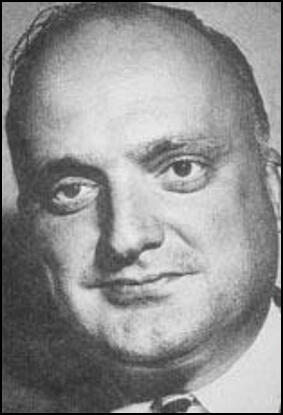
The journalist, Asher Brynes visited Garry Underhill on 8th May 1964. His apartment door was unlocked, he was found in bed dead from a single shot behind his left ear. The weapon used was one of his own pistols. (4) In addition to the wound behind the left-ear, the pistol was found under the left side of his body. Brynes felt this to be suspicious as Underhill was right-handed. The police investigation was minimal and the coroner reported the death as a suicide. (5)
Jim Garrison Investigation
In February 1967, Jim Garrison asked the journalist, William W. Turner, for help into his investigation into the assassination of John F. Kennedy. (6) Turner agreed and later that year he published a long article about the investigation in the Ramparts Magazine (June 1967). It included a passage on the death of Underhill that interested the CIA and was the reason for its memorandum dated 19 th July 1967. Here is that passage:
The day after the assassination, Gary Underhill left Washington in a hurry. Late in the evening he showed up at the homes of friends in New Jersey. He was very agitated. A small clique within the CIA was responsible for the assassination, he confided, and he was afraid for his life and probably would have to leave the country. Less than six months later Underhill was found shot to death in his Washington apartment. The coroner ruled it suicide.
Garrett had been an intelligence agent during World War II and was a recognized authority on limited warfare and small arms. A researcher and writer on military affairs, he was on a first-name bases with many of the top branch in the Pentagon. He was also on intimate terms with a number of high-ranking CIA officials – he was one of the Agency "un-people" who perform special assignments. At one time he had been a friend of Samuel Cummings of Interarmco, the arms broker that numbers among its customers the CIA and, ironically, Klein's Sporting Goods of Chicago, from whence the mail order Carcano allegedly was purchased by Oswald.
The friends whom Underhill visited say he was sober but badly shook. They say he attributed the Kennedy murder to a CIA clique which was carrying on a lucrative racket in gun-running, narcotics and other contraband and manipulating political intrigue to serve its own ends. Kennedy supposedly got wind that something was going on and was killed before he could "blow the whistle on it". Although the friends had always known Underhill to be perfectly rational and objective, they at first didn't take his account seriously. I think the main reason was, explains the husband, "that we couldn't believe that the CIA could contain a corrupt element every but as a ruthless – and more efficient – as the mafia."
The verdict of suicide is Underhill's death is by no means convincing. His body was found by a writing collaborator, Asher Brynes of the New Republic . He had been shot behind the left ear, and an automatic pistol was under his left side. Odd, says Brynes, because Underhill thinks the pistol was fitted with a silencer, and occupants of the apartment building could not recall hearing a shot. Underhill obviously been dead several days.
Gary Underhill's chilling story is hardly implausible. As a spy apparatus the CIA is honeycombed with self-contained cliques operating without any real central control. (7)
The CIA memorandum recorded what they had found in its records about the two men named in the passage. Gary Underhill had been a member of the MIS (Military Intelligence Service) during the war but had never been a staff member of the CIA. However, he had provided information to the CIA.
The CIA seemed very concerned about the other man mentioned in the Ramparts Magazine article: Samuel Cummings. It states: "The following information about Samuel George Cummings 201-178343, was compiled from his 201 file and from information provided by the Office of Security and by C/CI/SPG."
The memo states that he joined the CIA in December 1950. "He was than a GS-9 assigned to Ground Branch, Weapons and Equipment Division, OSI. In January 1952 he was transferred to the Office of Procurement and Supply. During 1952/1953 he travelled abroad extensively, buying foreign weapons…. Cables of the 1951-52 period state that Cummings was then buying arms for CIA and that the arms were intended for resistance elements behind the Iron Curtain."
It goes on to state: "On 17 August 1954 Cummings became the principal agent of the CIA-owned companies known as International Armament Corporation and Interarmco, both incorporated in Canada, Switzerland and the US. Cummings engaged in sharp practises in his conduct of business and was also difficult to control."
The memo states that in 1957 a businessman in Panama, an Agency source, knew Cummings to be providing information to the FBI. The following year Cummings does an amazing deal with the CIA: "In early 1958 Cummings assumed sole ownership of International Armament Corporation and Interarmco. An Agency audit established the net worth of these companies as $219,000,000. Cummings bought them with a non-interest bearing promissory note in the amount of $100,000, payable in four annual instalments of $25,000, and certain items of inventory which had a cost value of $67,000 and a market value of $250,000. These items were to remain the property of the CIA, and their cost was to be returned to the Agency after they were sold." (8)
Although the CIA was successful at keeping this arrangement out of the American media the story of Samuel Cummings's relationship with the Agency did appear in two European publications: Germany's Der Spiegel (9) and Italy's Vie Nuove. (10).
Interestingly, two days after the CIA memorandum was drawn-up, an interview with Samuel Cummings appeared in the New York Times. Cummings admitted that "after his graduation from George Washington University, he worked for the Central Intelligence Agency for a short time during the Korean War but soon became bored. His job was to identity the design of North Korean weapons from photographs."
The article goes on to argue "He then went to work for the small Western Arms Corporation of Los Angeles, which caters to sportsmen and collectors, on their European and South American arms buyer as a buyer, at a salary of £5,600 a year and one eighth of 1 per cent. Within two years he had saved $25,000 and was ready to go into business for himself. His first transaction was a purchase of 7,000 surplus small arms from Panama, which he resold to his former employer for a small profit."
The New York Times stated that "Cummings is the founder, owner and president of the International Armaments Corporation, which has 17 affiliates and subsidiaries in non-Communist countries." His company was so successful that Cummings was "for tax purposes" living in Monaco. (11)
Overthrow of Jacobo Arbenz
In November 1953, he became a CIA agent in Guatemala where he was responsible for supplying arms to those trying to overthrow President Jacobo Arbenz, who had won the democratic election in 1951, with 65% of the votes cast. The CIA became concerned when Arbenz announced a new Agrarian Reform program. He said that the country needed "an agrarian reform which puts an end to the latifundios and the semi-feudal practices, giving the land to thousands of peasants, raising their purchasing power and creating a great internal market favorable to the development of domestic industry." (12)
The main opponent to Arbenz's reforms were the United Fruit Company. The company owned 550,000 acres on the Atlantic coast, 85% of which was not cultivated. Sam Zemurray, the president of the United Fruit Company, hired the political lobbyist Tommy Corcoran to express his fears to senior political figures in Washington. This included a meeting with Allen Dulles, the deputy director of the CIA. Dulles, who represented United Fruit in the 1930s, was far more interested in Corcoran’s ideas of bringing down Arbenz's government. (13)
The plan to overthrow Arbenz was called Operation Success. Allen Dulles became the executive agent and arranged for Tracey Barnes and Richard Bissell to plan and execute the operation. Barnes brought in David Atlee Phillips to run a “black” propaganda radio station. Others involved included E. Howard Hunt as chief of political action. Rip Robertson took charge of the paramilitary side of the operation who brought in David Morales and Henry Hecksher. Arbenz was forced to resign on 27th June 1954. (14)
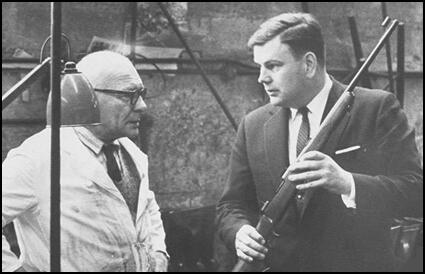
It is significant that Samuel Cummings was in Guatemala at the same time as CIA staff members such as Allen Dulles, Tracey Barnes, Richard Bissell, David Atlee Phillips, E. Howard Hunt, Rip Robertson, David Morales and Henry Hecksher. All these men have been accused at different times by researchers as being involved in the assassination of John F. Kennedy.
Sameul Cummings Arms Dealer
According to the CIA: "Cables during this period (1954) state that Cummings was then buying arms for CIA and that the arms were intended for resistance elements behind the Iron Curtain." (15) Tim Weiner, writing the New York Times, argued that with the Cold War at its peak "Cummings was the agency's most cunning arms dealer. Masquerading as a Hollywood producer buying guns for the movies, he snapped up $100 million worth of surplus German arms on the cheap in Europe and shipped them to Chinese Nationalist forces in Taiwan." (16)
William W. Turner argues that in 1963 Garry Underhill was "on intimate terms with a number of high-ranking CIA officials – he was one of the Agency "un-people" who perform special assignments." He also adds that he was "a friend of Samuel Cummings of Interarmco, the arms broker that numbers among its customers the CIA… They say he attributed the Kennedy murder to a CIA clique which was carrying on a lucrative racket in gun-running, narcotics and other contraband and manipulating political intrigue to serve its own ends." (17)
AM/WORLD
It has also been argued that in 1963 Samuel Cummings and his friend, Garry Underhill, became involved in the AM/WORLD project. (18) The first AM/WORLD document that has been released was a five-page memo prepared on 28th June, 1963. It was sent by Joseph Caldwell King, Chief of the CIA's Western Hemisphere Division. "This will serve to alert you to the inception of AM/WORLD, a new CIA program targeted against Cuba. Some manifestations of activity resulting from this program may come to your notice before long... The Kennedy Administration, it should be emphasized, is willing to accept the risks involved in utilizing autonomous Cuban exile groups and individuals who are not necessarily responsive to CIA guidance and to face up to the consequences which are unavoidable in lowering professional standards adhered to by autonomous groups (as compared with fully controlled and disciplined agent assets) is bound to entail." (19)
The AM/WORLD memo (104-10315-10004) was declassified on 27th January, 1999. The head of AM/WORLD was Henry Hecksher. The ranking exile under Manuel Artime was Rafael 'Chi Chi' Quintero who worked closely with CIA paramilitary officer, Carl E. Jenkins was military advisor to the AM/WORLD project. David Atlee Phillips was designated to organize safe houses and related activities for AM/WORLD. Other CIA officers who attended AM/WORLD and AM/TRUCK (an effort to produce an internal revolution against Castro in Cuba) meetings, included Ted Shackley and David Sanchez Morales. (20)
Larry Hancock and Stuart Wexler pointed out Shadow Warfare: The History of America's Undeclared Wars (2014) that over $326,000 from the AM/WORLD project was spent with Cummings' company Interarmco. "That was for everything from rifles to cannons. AM/WORLD personnel actually travelled to Europe to facilitate issues and make changes in orders for weapons not in stock with Interarmco. Cut out firms were established in Panama and Costa Rica. In Costa Rica the project used an airfield which was already being used for smuggling." (21)
Cummings later boasted to Michael Isikoff that: "At one point, we had 700,000 rifles, machine guns, pistols and submachine guns stored in our warehouses in Alexandria. That was in 1968 when the gates slammed shut. At that moment, we could have instantly overwhelmed the American armed forces. We could have armed 700,000 mercenaries that could have goose-stepped right over the Memorial Bridge and even taken over The Washington Post. We also had 150 pieces of artillery, ranging from 25 mm to 150 mm... So, if I didn't like a particular piece of legislation in the Congress, I could have phoned up the speaker and I could have said, My armies will be rolling over to the Capitol, if you don't do something about that." (22)
As Victor Marchetti and John D. Marks have pointed out in The CIA and the Cult of Intelligence (1974), a book that the CIA heavily censored, that Cummings was not really being "candid about his work". They argued that the CIA used "private arms dealers" to provide weapons and other military equipment for their illegal overseas operations." The largest such dealer in the United States is the International Armaments Corporation, or Interarmco, which has its main office and some warehouses on the waterfront in Alexandria, Virginia. Advertising that it specializes in arms for law-enforcement agencies, the corporation has outlets in Manchester in England, Monte Carlo, Singapore, Pretoria, South Africa, and in several Latin American cities. Interarmco was founded in 1953 by Samuel Cummings, a CIA officer during the Korean war. The circumstances surrounding Interarmco's earlier years are murky, but CIA funds and support undoubtedly were available to it at the beginning. Although Interarmco is now a truly private corporation, it still maintains close ties with the agency. And while the CIA will on occasion buy arms for specific operations, it generally prefers to stockpile military material in advance. For this reason, it maintains several storage facilities in the United States and abroad for untraceable or ‘sterile' weapons, which are always available for immediate use. Interarmco and similar dealers are the CIA's second most important source, after the pentagon, of military material for paramilitary activities." (23)
Iran-Contra Scandal
Samuel Cummings was back in the news in 1986 as a result of the Iran Contra Scandal. In November 1979, after Iranian students stormed the U.S. embassy in Tehran and took 52 Americans hostage, President Jimmy Carter imposed an arms embargo on Iran. In September 1980, Iraq invaded Iran and Iran desperately needed weapons and spare parts for its current weapons. President Ronald Reagan officially went along with this policy and in the spring of 1983 the U.S. launched Operation Staunch, a wide-ranging diplomatic effort to persuade other nations all over the world not to sell arms or spare parts for weapons to Iran. (24)
On the 4th December, 1985, Oliver North, a military aide to the US National Security Council (NSC), proposed a new plan for selling arms to Iran. Instead of selling arms through Israel, the sale was to be direct at a markup; and a portion of the proceeds would go to the Contras, Nicaraguan paramilitary fighters waging guerrilla warfare against the Sandinista government. North now began persuading people to fund the Contras. This included $10 million from the Sultan of Brunei. (25)
In October, 1985, Congress agreed to vote 27 million dollars in non-lethal aid for the Contras in Nicaragua. However, members of the Ronald Reagan administration decided to use this money to provide weapons to the Contras and the Mujahideen in Afghanistan. Samuel Cummings was suspected of being involved in the providing military equipment to the Contras. (26) This was never proved though we do know that some of his CIA contacts played an important role in this operation. This included Ted Shackley, Carl E. Jenkins, Edwin Wilson, Richard Secord and Thomas G. Clines. (27)
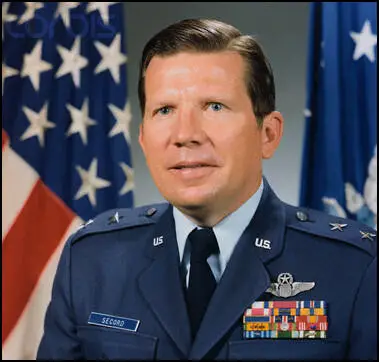
Gene Wheaton was recruited to use National Air to transport these weapons. He agreed but began to have second thoughts when he discovered that it was an illegal operation and in May 1986 Wheaton told William Casey, director of the CIA, about what he knew about what later became known as Irangate. "I had no objection to the covert end of it, as long as it was legal. It wasn't.... I talked myself out of the inner circle but I was in it long enough to get to know the players and their method of operation." (28)
Wheaton told Paul Hoven, a veteran of the Vietnam War, about the operation. Hoven arranged for Wheaton to meet with Daniel Sheehan, a left-wing lawyer. Wheaton told him that some CIA officers Tom Clines and Ted Shackley had been running a top-secret assassination unit since the early 1960s. According to Wheaton, it had begun with an assassination training program for Cuban exiles and the original target had been Fidel Castro. These assassins included Rafael Quintero and Felix Rodriguez. (29)
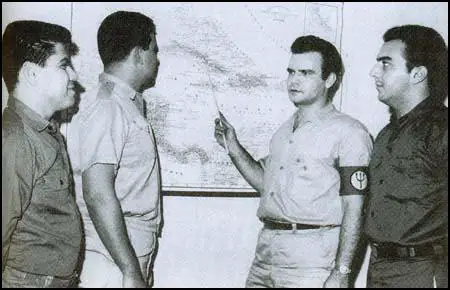
On 5th October, 1986, a Sandinista patrol in Nicaragua shot down a C-123K cargo plane that was supplying the Contras. Wallace Blaine Sawyer Jr. and William J. Cooper were killed but Eugene Hasenfus, an Air America veteran, survived the crash and told his captors that he thought the CIA was behind the operation. He also provided information on two Cuban-Americans running the operation in El Savador. (30)
On the 9th October 1986, I. W. Stephenson, a former pilot and long-time family friend, said Eugene had told him "he worked in Southeast Asia for Air America, a company owned by the Central Intelligence Agency. He added that "he had been a loadmaster on supply planes, loading the aircraft, balancing the freight properly and sometimes seeing it to its airdrop. Stephenson recalled Hasenfus as saying he was making ''more money than the law allows.'' (31)
At a press conference on 10th October in Nicaragua, Eugene Hasenfus claimed "Two Cuban naturalized Americans that work for the C.I.A. did most of the coordination for the flights and oversaw all of our housing, transportation, also refueling and some flight plans.'' According to the The New York Times "Hasenfus then named the two reported C.I.A. officials and gave the most detailed account so far of rebel supply operations out of El Salvador and Honduras." (32)
On 12th December, 1986, Daniel Sheehan submitted to the court an affidavit detailing the Irangate scandal. He also claimed that Thomas Clines and Ted Shackley were running a private assassination program that had evolved from projects they ran while working for the CIA. Others named as being part of this assassination team included Rafael Quintero, Richard Secord, Felix Rodriguez and Albert Hakim. It later emerged that Gene Wheaton and Carl E. Jenkins were the two main sources for the Secord-Clines affidavit. (33)
The next day Donald P. Gregg, National Security adviser and a former employee of the Central Intelligence Agency, responded to Sheehan's affidavit. "Mr. Gregg's friendship with the protege, Felix Rodriguez, which dates to 1970, and his own long service in the C.I.A. have fostered wide speculation that he, and possibly Mr. Bush, were among the Reagan Administration's links to a clandestine arms-supply network. But Mr. Gregg insisted today, in the only interview he has given since the existence of the arms-supply network became known, that neither he nor Mr. Bush had any links with the network beyond knowing Mr. Rodriguez and that they had known nothing of the diversion to the rebels of some profits from arms sales to Iran... At that time, Mr. Gregg continued, his boss was the C.I.A. station chief in Saigon, Theodore G. Shackley. Now retired from the agency, Mr. Shackley played a key early role in setting up arms transfers to Iran, but Mr. Gregg said he had not maintained close contact with Mr. Shackley, seeing him only occasionally at weddings and other such events... Mr. Gregg also denied knowing several key figures in the arms-supply network - Rafael Quintero and Luis Posada Carriles, two other Bay of Pigs veterans who have worked for the C.I.A., and retired Maj. Gen. Richard V. Secord, one of the organizers of the network. (34)
President Ronald Reagan told the country that "We did not - repeat, did not - trade weapons or anything else for hostages, nor will we." However, he responded to this information by setting up a three-man committee to look into the accusations being made about the CIA. The three men chosen was John Tower, Edmund Muskie and Brent Scowcroft. The New York Times responded by arguing: "Against news of a startling plunge in his popularity, President Reagan has gone from blaming the press for the Iran arms scandal finally to some constructive steps to end it" (35)
As Samuel Cummings was the world largest private arms dealer with links to the CIA, several newspapers began to speculate that he was involved in this scandal. Michael Isikoff reported in The Washington Post: "The Iranian arms scandal recently thrust Cummings into the public spotlight, mainly because, unlike almost everybody else in his line of work, Cummings likes to talk about his business. Journalists have flocked to his Alexandria headquarters, on the corner of Prince and Union streets, seeking guidance into the byzantine and often mysterious ways of the gun trade." (36)
However, in several interviews he denied being involved in the deal. He told Elaine Sciolino: In a purely commercial sense, it was sloppily handled. We could have done it without all the commissions and middlemen. Unfortunately, the United States is using a lot of characters who charge too much and have rather baroque histories." Sciolino asked if the fact that John Tower, the head of the investigation, was his brother-in-law, would be a factor, he replied: '"I go out of my way not to talk to him. I don't want to cause him any embarrassment." (37)
The report published by the Tower Commission was delivered to President Ronald Reagan on 26th February 1987. The commission had interviewed 80 witnesses to the scheme, including Reagan. The 200-page report determined that President Reagan did not have knowledge of the extent of the program, especially about the diversion of funds to the Contras. Reagan issued a statement stating: "A few months ago I told the American people I did not trade arms for hostages. My heart and my best intentions still tell me that's true, but the facts and the evidence tell me it is not. As the Tower board reported, what began as a strategic opening to Iran deteriorated, in its implementation, into trading arms for hostages. This runs counter to my own beliefs, to administration policy, and to the original strategy we had in mind." (38)
After the Iran Contra Scandal Cummings went into semi-retirement. ''The arms business,'' he told an interviewer in 1989, ''is based on human folly, and folly has yet to be measured nor its depths plumbed.'' He maintained his headquarters in Virginia, which he visited less frequently in recent years, living mainly in his Monaco home. Cummings also bought a lavish estate in the hunt country west of Washington, Ashland Farms, which was used primarily by his daughters, Diana and Susan Cummings. (39)
Samuel Cummings, aged 71, died on 29th April 1998, in Monaco after a series of strokes. There is no direct evidence to link Cummings with the assassination of John F. Kennedy. However, he was associated with people like Carl E. Jenkins, Rafael Quintero, Ted Shackley, Allen Dulles, Tracey Barnes, Richard Bissell, David Atlee Phillips, E. Howard Hunt, Rip Robertson, Tom Clines, David Sanchez Morales, Felix Rodriguez and Henry Hecksher who have been linked with the plot to kill Kennedy. It is also significant that in a long article in Ramparts Magazine where a large number of assassination plots are dealt with, it is the passage where Samuel Cummings name is mentioned that concerned the CIA. Was William W. Turner right when he wrote: "They say he (Gary Underhill) attributed the Kennedy murder to a CIA clique which was carrying on a lucrative racket in gun-running, narcotics and other contraband and manipulating political intrigue to serve its own ends. Kennedy supposedly got wind that something was going on and was killed before he could ‘blow the whistle on it'… Gary Underhill's chilling story is hardly implausible. As a spy apparatus the CIA is honeycombed with self-contained cliques operating without any real central control." (40)
References
(1) Robert Fitzsimmons, letter sent to Jim Garrison on the comments Garry Underhill made to Charlene Fitzsimmons (3rd May 1967)
(2) Larry Hancock, Underhill and a Clique within the CIA (22nd March 2025)
(3) Paul Golais, The Citizen's Voice (8th April, 2001)
(4) Larry Hancock, Someone Would Have Talked (2006) page 495
(5) Jim Garrison, interview in Playboy Magazine (October 1967) page 67
(6) William W. Turner, Rearview Mirror (2001) page 118
(7) William W. Turner, The Inquest, Ramparts Magazine (June 1967)
(8) CIA Memorandum (19th July, 1967)
(9) Der Spiegel (28th June 1961)
(10) Vie Nuove (4th January 1962)
(11) New York Times (July 21, 1967)
(12) President Jacobo Arbenz, speech (17th June, 1952)
(13) David McKean, Peddling Influence (2004) page 223
(14) Evan Thomas, The Very Best Men: The Early Years of the CIA (1995) pages
(17) William W. Turner, The Inquest, Ramparts Magazine (June 1967)
(18) Larry Hancock, Underhill and a Clique within the CIA (22nd March 2025)
(19) Joseph Caldwell King, memorandum (28th June, 1963) CIA 104-10315-10004 declasified 27th January, 1999
(20) Larry Hancock, Someone Would Have Talked (2006) pages 104-111
(21) Larry Hancock & Stuart Wexler, Shadow Warfare: The History of America's Undeclared Wars (2014) pages 212-213
(22) Michael Isikoff, The Washington Post (22nd December, 1986)
(23) Victor Marchetti and John D. Marks, The CIA and the Cult of Intelligence (1974) page 120
(24) Peter Kornbluh (editor), The Iran-Contra Scandal: The Declassified History (1993) page 213
(25) Fox Butterfield, The New York Times (8th May, 2018)
(26) Michael Isikoff, The Washington Post (22nd December, 1986)
(27) David Corn, Blonde Ghost: Ted Shackley and the CIA Crusade (1994) pages 380-382
(28) Joel Bainerman, The Crimes of a President (1992) pages 37-38
(29) David Corn, Blonde Ghost: Ted Shackley and the CIA Crusade (1994) page 384
(30) The New York Times (8th October 1986)
(31) Andrew H. Malcolm, The New York Times (9th October, 1986)
(32) James Lemoyne, The New York Times (10th October, 1986)
(33) David Corn, Blonde Ghost: Ted Shackley and the CIA Crusade (1994) pages 384-386
(34) R. W. Apple Jr., The New York Times (13th December, 1986)
(35) The New York Times (2nd December, 1986)
(36) Michael Isikoff, The Washington Post (22nd December, 1986)
(37) Elaine Sciolino, The New York Times (4th December, 1986)
(38) President Ronald Reagan, statement (4th March 1987)
(39) Tim Weiner, New York Times (5th May, 1998)
(40) William W. Turner, The Inquest, Ramparts Magazine (June 1967)
Previous Posts
Should George Orwell have chosen the title, 2030, instead of 1984? Keir Starmer as Big Brother. (17th March, 2025)
The Evolution of the Brain. Can you make yourself happy? (16th January, 2025)
Technology and the History Classroom: Should the Teaching Profession Embrace AI? (20th November, 2024)
Venetia Stanley, H. H. Asquith and the First World War (22nd August, 2024)
The General Election Campaign: The Tyranny of the Centre (4th July, 2024)
In Defence of the New History (20th March, 2024)
The Political History of Keir Starmer (25th January, 2024)
JFK Assassination: What Happened in the Trauma Room (23rd November, 2023)
Sir Keir Starmer and his Broken Pledges (1st September, 2023)
Should history students be using ChatGBT? (28th May, 2023)
A historical account of the Daily Mail, the Conservative Party and Migration (18th March, 2023)
Art and the Women's Suffrage Movement (20th January, 2023)
Emancipation of Women: 1870-1928 (15th November, 2022)
The Struggle for Women's Rights: 1500-1870 (21st September, 2022)
The real reason why the FA banned women from playing on their grounds (1st August, 2022)
The WSPU Young Hot Bloods and the Arson Campaign (26th May, 2022)
Interpretations in History (18th April, 2022)
The Student as Teacher (31st December, 2021)
History Simulations in the Classroom (30th November, 2021)
Walter Tull: Football and War Hero (20th October, 2021)
Child Labour and Freedom of the Individual (26th July, 2021)
Don Reynolds and the Assassination of John F. Kennedy (15th June, 2021)
Richard Nixon and the Conspiracy to kill George Wallace in 1972 (5th May, 2021)
The Connections between Watergate and the JFK Assassination (2nd April, 2021)
The Covid-19 Pandemic: An Outline for a Public Inquiry (4th February, 2021)
Why West Ham did not become the best team in England in the 1960s (24th December, 2000)
The Lyndon Baines Johnson Tapes and the John F. Kennedy Assassination (9th November, 2020)
It is Important we Remember the Freedom Riders (11th August, 2020)
Dominic Cummings, Niccolò Machiavelli and Joseph Goebbels (12th July, 2020)
Why so many people in the UK have died of Covid-19 (14th May, 2020)
Why the coronavirus (Covid-19) will probably kill a higher percentage of people in the UK than any other country in Europe.. (12th March, 2020 updated 17th March)
Mandy Rice Davies and Christine Keeler and the MI5 Honey-Trap (29th January, 2020)
Robert F. Kennedy was America's first assassination Conspiracy Theorist (29th November, 2019)
The Zinoviev Letter and the Russian Report: A Story of Two General Elections (24th November, 2019)
The Language of Right-wing Populism: Adolf Hitler to Boris Johnson (11th October, 2019)
The Political Philosophy of Dominic Cummings and the Funding of the Brexit Project (15th September, 2019)
What are the political lessons to learn from the Peterloo Massacre? (19th August, 2019)
Crisis in British Capitalism: Part 1: 1770-1945 (9th August, 2019)
Richard Sorge: The Greatest Spy of the 20th Century? (29th July, 2020)
The Death of Bernardo De Torres (26th May, 2019)
Gas Masks in the Second World War killed more people than they saved (9th May, 2019)
Did St Paul and St Augustine betray the teachings of Jesus? (20th April, 2019)
Stanley Baldwin and his failed attempt to modernise the Conservative Party (15th April, 2019)
The Delusions of Neville Chamberlain and Theresa May (26th February, 2019)
The statement signed by Robert F. Kennedy Jr. and Kathleen Kennedy Townsend (20th January, 2019)
Was Winston Churchill a supporter or an opponent of Fascism? (16th December, 2018)
Why Winston Churchill suffered a landslide defeat in 1945? (10th December, 2018)
The History of Freedom Speech in the UK (25th November, 2018)
Are we heading for a National government and a re-run of 1931? (19th November, 2018)
George Orwell in Spain (15th October, 2018)
Anti-Semitism in Britain today. Jeremy Corbyn and the Jewish Chronicle (23rd August, 2018)
Why was the anti-Nazi German, Gottfried von Cramm, banned from taking part at Wimbledon in 1939? (7th July, 2018)
What kind of society would we have if Evan Durbin had not died in 1948? (28th June, 2018)
The Politics of Immigration: 1945-2018 (21st May, 2018)
State Education in Crisis (27th May, 2018)
Why the decline in newspaper readership is good for democracy (18th April, 2018)
Anti-Semitism in the Labour Party (12th April, 2018)
George Osborne and the British Passport (24th March, 2018)
Boris Johnson and the 1936 Berlin Olympics (22nd March, 2018)
Donald Trump and the History of Tariffs in the United States (12th March, 2018)
Karen Horney: The Founder of Modern Feminism? (1st March, 2018)
The long record of The Daily Mail printing hate stories (19th February, 2018)
John Maynard Keynes, the Daily Mail and the Treaty of Versailles (25th January, 2018)
20 year anniversary of the Spartacus Educational website (2nd September, 2017)
The Hidden History of Ruskin College (17th August, 2017)
Underground child labour in the coal mining industry did not come to an end in 1842 (2nd August, 2017)
Raymond Asquith, killed in a war declared by his father (28th June, 2017)
History shows since it was established in 1896 the Daily Mail has been wrong about virtually every political issue. (4th June, 2017)
The House of Lords needs to be replaced with a House of the People (7th May, 2017)
100 Greatest Britons Candidate: Caroline Norton (28th March, 2017)
100 Greatest Britons Candidate: Mary Wollstonecraft (20th March, 2017)
100 Greatest Britons Candidate: Anne Knight (23rd February, 2017)
100 Greatest Britons Candidate: Elizabeth Heyrick (12th January, 2017)
100 Greatest Britons: Where are the Women? (28th December, 2016)
The Death of Liberalism: Charles and George Trevelyan (19th December, 2016)
Donald Trump and the Crisis in Capitalism (18th November, 2016)
Victor Grayson and the most surprising by-election result in British history (8th October, 2016)
Left-wing pressure groups in the Labour Party (25th September, 2016)
The Peasant's Revolt and the end of Feudalism (3rd September, 2016)
Leon Trotsky and Jeremy Corbyn's Labour Party (15th August, 2016)
Eleanor of Aquitaine, Queen of England (7th August, 2016)
The Media and Jeremy Corbyn (25th July, 2016)
Rupert Murdoch appoints a new prime minister (12th July, 2016)
George Orwell would have voted to leave the European Union (22nd June, 2016)
Is the European Union like the Roman Empire? (11th June, 2016)
Is it possible to be an objective history teacher? (18th May, 2016)
Women Levellers: The Campaign for Equality in the 1640s (12th May, 2016)
The Reichstag Fire was not a Nazi Conspiracy: Historians Interpreting the Past (12th April, 2016)
Why did Emmeline and Christabel Pankhurst join the Conservative Party? (23rd March, 2016)
Mikhail Koltsov and Boris Efimov - Political Idealism and Survival (3rd March, 2016)
Why the name Spartacus Educational? (23rd February, 2016)
Right-wing infiltration of the BBC (1st February, 2016)
Bert Trautmann, a committed Nazi who became a British hero (13th January, 2016)
Frank Foley, a Christian worth remembering at Christmas (24th December, 2015)
How did governments react to the Jewish Migration Crisis in December, 1938? (17th December, 2015)
Does going to war help the careers of politicians? (2nd December, 2015)
Art and Politics: The Work of John Heartfield (18th November, 2015)
The People we should be remembering on Remembrance Sunday (7th November, 2015)
Why Suffragette is a reactionary movie (21st October, 2015)
Volkswagen and Nazi Germany (1st October, 2015)
David Cameron's Trade Union Act and fascism in Europe (23rd September, 2015)
The problems of appearing in a BBC documentary (17th September, 2015)
Mary Tudor, the first Queen of England (12th September, 2015)
Jeremy Corbyn, the new Harold Wilson? (5th September, 2015)
Anne Boleyn in the history classroom (29th August, 2015)
Why the BBC and the Daily Mail ran a false story on anti-fascist campaigner, Cedric Belfrage (22nd August, 2015)
Women and Politics during the Reign of Henry VIII (14th July, 2015)
The Politics of Austerity (16th June, 2015)
Was Henry FitzRoy, the illegitimate son of Henry VIII, murdered? (31st May, 2015)
The long history of the Daily Mail campaigning against the interests of working people (7th May, 2015)
Nigel Farage would have been hung, drawn and quartered if he lived during the reign of Henry VIII (5th May, 2015)
Was social mobility greater under Henry VIII than it is under David Cameron? (29th April, 2015)
Why it is important to study the life and death of Margaret Cheyney in the history classroom (15th April, 2015)
Is Sir Thomas More one of the 10 worst Britons in History? (6th March, 2015)
Was Henry VIII as bad as Adolf Hitler and Joseph Stalin? (12th February, 2015)
The History of Freedom of Speech (13th January, 2015)
The Christmas Truce Football Game in 1914 (24th December, 2014)
The Anglocentric and Sexist misrepresentation of historical facts in The Imitation Game (2nd December, 2014)
The Secret Files of James Jesus Angleton (12th November, 2014)
Ben Bradlee and the Death of Mary Pinchot Meyer (29th October, 2014)
Yuri Nosenko and the Warren Report (15th October, 2014)
The KGB and Martin Luther King (2nd October, 2014)
The Death of Tomás Harris (24th September, 2014)
Simulations in the Classroom (1st September, 2014)
The KGB and the JFK Assassination (21st August, 2014)
West Ham United and the First World War (4th August, 2014)
The First World War and the War Propaganda Bureau (28th July, 2014)
Interpretations in History (8th July, 2014)
Alger Hiss was not framed by the FBI (17th June, 2014)
Google, Bing and Operation Mockingbird: Part 2 (14th June, 2014)
Google, Bing and Operation Mockingbird: The CIA and Search-Engine Results (10th June, 2014)
The Student as Teacher (7th June, 2014)
Is Wikipedia under the control of political extremists? (23rd May, 2014)
Why MI5 did not want you to know about Ernest Holloway Oldham (6th May, 2014)
The Strange Death of Lev Sedov (16th April, 2014)
Why we will never discover who killed John F. Kennedy (27th March, 2014)
The KGB planned to groom Michael Straight to become President of the United States (20th March, 2014)
The Allied Plot to Kill Lenin (7th March, 2014)
Was Rasputin murdered by MI6? (24th February 2014)
Winston Churchill and Chemical Weapons (11th February, 2014)
Pete Seeger and the Media (1st February 2014)
Should history teachers use Blackadder in the classroom? (15th January 2014)
Why did the intelligence services murder Dr. Stephen Ward? (8th January 2014)
Solomon Northup and 12 Years a Slave (4th January 2014)
The Angel of Auschwitz (6th December 2013)
The Death of John F. Kennedy (23rd November 2013)
Adolf Hitler and Women (22nd November 2013)
New Evidence in the Geli Raubal Case (10th November 2013)
Murder Cases in the Classroom (6th November 2013)
Major Truman Smith and the Funding of Adolf Hitler (4th November 2013)
Unity Mitford and Adolf Hitler (30th October 2013)
Claud Cockburn and his fight against Appeasement (26th October 2013)
The Strange Case of William Wiseman (21st October 2013)
Robert Vansittart's Spy Network (17th October 2013)
British Newspaper Reporting of Appeasement and Nazi Germany (14th October 2013)
Paul Dacre, The Daily Mail and Fascism (12th October 2013)
Wallis Simpson and Nazi Germany (11th October 2013)
The Activities of MI5 (9th October 2013)
The Right Club and the Second World War (6th October 2013)
What did Paul Dacre's father do in the war? (4th October 2013)
Ralph Miliband and Lord Rothermere (2nd October 2013)