

Spartacus Blog
How the wealthy elite undermine democracy in the UK
The Labour Party has always suffered two major disadvantages during General Election campaigns. The first of these concerns newspapers. Over the last 100 years the vast majority of UK's newspapers have supported the Conservative Party. The only high circulation newspaper that has consistently backed the Labour Party is the Daily Mirror. This was a marketing decision taken after newspaper magnate, and an open supporter of fascism, Harold Harmsworth, Lord Rothermere, began selling off his shares in the newspaper. (1)
Guy Bartholomew was appointed editorial director of the Daily Mirror in November 1933. With the support of Cecil King, one of the directors of the newspaper, he decided to change its market strategy. "They aimed to attract fresh advertising revenue by targeting young working-class readers with disposable income, and set about transforming it into an American-style tabloid, staffed by a highly professional team of young editors, designers, and reporters." (2)
The Daily Mirror took a strong anti-fascist stance and began supporting the Labour Party. This was a popular decision and the circulation of the newspaper had reached 1,571,000 in 1939. On the day of the 1945 General Election, the Daily Mirror reproduced Philip Zec's VE-Day cartoon of a bloodied and bandaged soldier thrusting a victory laurel wreath. Next to it was an article calling for the people to vote for the Labour Party: "We reproduce on this page Zec's famous VE-Day cartoon. We do so because it expresses more poignantly than words could do the issues which face the people of this country today... Vote on behalf of the men who won the victory for you. You failed to do so in 1918. The result is known to all. The land 'fit for heroes' did not come into existence. The dole did. Short-lived prosperity gave way to long, tragic years of poverty and unemployment. Make sure history does not repeat itself." (3)
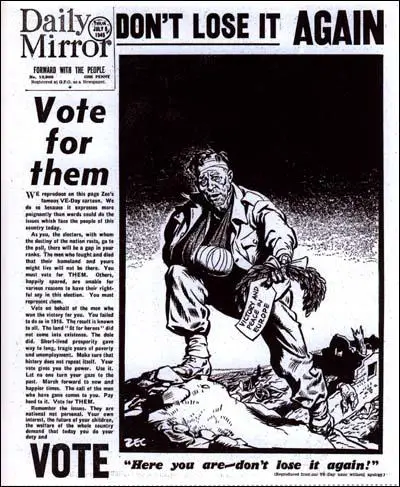
A copy of this newspaper can be obtained from Historic Newspapers.
Roy Greenslade has argued: "The slogan was cleverly aimed at the wives, girlfriends and mothers of servicemen abroad, many of whom were voting for the first time. They would, naturally, wish to do well by the men yet to return, many of whom were angry that they would have no opportunity to vote. The slogan was cleverly aimed at the wives, girlfriends and mothers of servicemen abroad, many of whom were voting for the first time. They would, naturally, wish to do well by the men yet to return, many of whom were angry that they would have no opportunity to vote. The slogan also gave political expression to the demobbed troops worried about their futures and, with great subtlety, tapped into the sense of comradeship they had experienced. The vote was for others, not just for oneself." (4)
When the poll closed the ballot boxes were sealed for three weeks to allow time for servicemen's votes (1.7 million) to be returned for the count on 26th July. It was a high turnout with 72.8% of the electorate voting. With almost 12 million votes, Labour had 47.8% of the vote to 39.8% for the Conservatives. Labour made 179 gains from the Tories, winning 393 seats to 213. The 12.0% national swing from the Conservatives to Labour, remains the largest ever achieved in a British general election. It came as a surprise that Winston Churchill, who was considered to be the most important figure in winning the war, suffered a landslide defeat. It was suggested at the time that the Mirror's "Vote For Him" campaign "may well have won more votes for the Labour party than any other journalistic enterprise". (5)
The 1968 Plot Against Harold Wilson
By 1947 its circulation had reached 3,702,000 and by 1949 it was the most popular newspaper in Britain. It supported the Labour Party in the 1950 General Election: "This is a critical moment in our history and the world's. It is not a time for starting to dither and go backwards; we must go forward determined to make secure the future of our great nation. Economic difficulties are bound to be ahead. We believe that the Labour Party is the only one that can deal with them. We support the Labour Party because it has kept its promises and earned our trust." (6)
Cecil King, who became chairman of International Publishing Corporation that owned the Daily Mirror in 1963, thought that Harold Wilson was too left wing. In 1968 King became involved with Peter Wright of MI5 in a plot to bring down thte government of Wilson. Wright claimed in his memoirs, Spycatcher (1987) that "Cecil King, who was a longtime agent of ours, made it clear that he would publish anything MI5 might care to leak in his direction." (7)
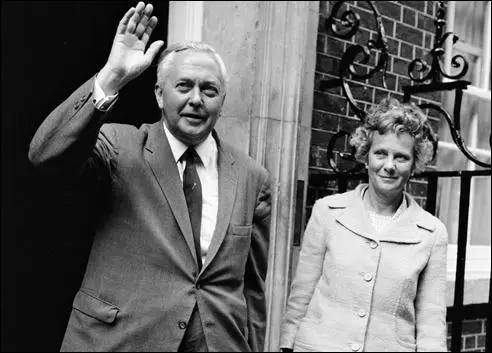
Hugh Cudlipp arranged for King to meet Lord Mountbatten, the recently retired Chief of the Defence Staff, who had been privately highly critical of the defence cuts made by the government. Solly Zuckerman, the government's scientific adviser, was also invited to attend the meeting on 8th May. According to Cecil King's account when he told Mountbatten of his plans, he replied that "there is anxiety about the government at the palace, and that the queen has had an unprecedented number of letters protesting about Wilson". (8)
According to Stephen Dorril and Robin Ramsay, the authors of Smear! Wilson and the Secret State (1992): "King then delivered a version of his preoccupations at the time - approaching economic collapse and ineffective government, with a Prime Minister no longer able to control events. Public order was about to break down leading to social chaos. there was a likelihood of bloodshed in the streets." At this point Zuckerman got up and said: "This is rank treachery. All this talk of machine guns at street corners is appalling." He also told Mountbatten to have nothing to do with the conspiracy to overthrow Wilson. (9)
Two days later, King published an article in the Daily Mirror under his own name entitled "Enough is enough". It read: "Mr Wilson and his government have lost all credit and we are now threatened with the greatest financial crisis in history. It is not to be resolved by lies about our reserves but only by a fresh start under a fresh leader." Three weeks later the directors of International Publishing Corporation unanimously dismissed Cecil King. (10)
Political Donations to the Margaret Thatcher Government
Political donations to Margaret Thatcher's governments in the 1980s and 1990s were characterized by a reliance on corporate contributions and secretive trust vehicles. Large-scale corporate funding was often channeled through third-party groups, such as British United Industrialists (BUI), Centre for Policy Studies and the Economic League, which allowed companies to secretly donate to the Conservative Party. As John Spellar said in the House of Commons: "It has also been clear for many years, to put it delicately, that there has been a strong statistical link between donations from companies and the chances of their bosses getting knighthoods and peerages. I am sure that that is a matter of coincidence. It has also been a long-running scandal that the Conservative party does not publish proper accounts, even for its own members." (11)
In 1984 the Thatcher government passed the 1984 Trade Union Act: Thatcher's government sought to weaken the financial foundations of the Labour Party - which relied heavily on trade union funding - by forcing unions to hold ballots every ten years to maintain their political funds. It also made it easier for trade union members to opt out of contributing to its political fund. (12)
During the later stages of the Conservative government it became clear the party was growing increasingly dependent on wealthy individuals. This included Michael Ashcroft (Baron Ashcroft), who donated £3m, the carpet magnate Philip Harris, (Baron Harris of Peckham), the former head of United News & Media, David Stevens (Baron Stevens of Ludgate), the bookmaker Leonard Steinberg (Baron Steinberg), Dixons' chief Stanley Kalms (Baron Kalms) and the Scottish industrialist, Norman Macfarlane (Baron Macfarlane of Bearsden). The union-funded Labour Research Department discovered a huge drop in corporate donations in the late 1980s which has left the Conservatives in the pocket of the rich. (13)
Peter Mandelson and New Labour
In 1985, the Labour Party leader Neil Kinnock appointed Peter Mandelson as the party's director of communications. As director, he was one of the first people in Britain to whom the term "spin doctor" was applied, and he was nicknamed the "Prince of Darkness". Despite his efforts Kinnock was defeated by Thatcher in the General Election held on 11 June 1987. The Labour Party's election campaign was described as "a brilliantly successful election defeat". (14)
Mandelson now reached the conclusion that it was an impossible task for the Labour Party to ever win power again unless it could persuade some newspapers to move its support away from the Conservative Party. Mandelson also wanted these rich individuals to give money to the Labour Party. Mandelson realised that for this to happen the Labour Party had to adopt policies that the wealthy elite liked. Therefore, after Tony Blair became leader, the party became known as New Labour. The attempt to persuade the largest newspaper baron, Rupert Murdoch, to change sides, became easier after his dispute with John Major's Conservative government over media policies on digital broadcasting, cross-media ownership and privacy. Murdoch was annoyed about a decision on cross-media ownership which excluded him from owning ITV franchises. (15)
Murdoch's newspaper empire became Mandelson's main target. As Gaby Hinsliff has pointed out: "His (Murdoch) blessing matters not just because a man who owns a paper that reaches 42 per cent of the reading market should know what makes people tick." Tony Blair's New Labour especially wanted the support of The Sun which had a daily circulation in of 10 million when it came out in support for New Labour in the 1997 General Election. The support was well-rewarded: Hinsliff wrote in 2006: "Murdoch's pro-American, pro-Israeli, pro-military intervention on the war on terrorism is faithfully reflected in Downing Street. His close associate Irwin Stelzer, the economist viewed as Murdoch's public mouthpiece - although the relationship is actually rather looser - argued in an article last week that Israel must be allowed to 'finish the job' and attacked Iran and Syria for fuelling the conflict, a position Blair echoes publicly." (16)
During the 1997 General Election campaign Blair made a major issue of the financial donations to the Conservative Party in exchange for titles or favourable government legislation. However, soon after his election victory, it emerged that Blair had also accepted donations from wealthy individuals. On 9 November, 1997, The Sunday Telegraph revealed that the motor racing tycoon, Bernie Ecclestone, had switched his financial support from the Tories to Labour in what appeared an astonishing political u-turn. During the campaign Labour had pledged to ban tobacco advertising in its manifesto, supporting a proposed European Union Directive ban. (17)
It emerged that Ecclestone gave Labour £1m only months before the election and was in talks over another £1m. On 16 October he had been to Downing Street to meet Blair and lobby him to exempt Formula One racing from a tobacco advertising ban, arguing that as many as 200,000 jobs could be lost. No proper minutes were kept and on 4 November it emerged in Brussels that the anti-smoking health minister, Tessa Jowell, was arguing for a formula one exemption. Media attention initially focused on Labour bending its principles for a "glamour sport" and on the "false trail" of Jowell's husband, David Mills, links to Benetton. (18)
On 17 November, Peter Mandelson told ITVs Dimbleby programme that before any contact from the Sunday Telegraph, who had the original story, the prime minister had decided that the original donation should be returned and the further donation should not be accepted. Also on that day Blair apologised for his government's mishandling of the affair and stated "the decision to exempt Formula One from tobacco sponsorship was taken two weeks later. It was in response to fears that Britain might lose the industry overseas to Asian countries who were bidding for it." In 2008, the year after Blair stepped down as Prime Minister, internal Downing Street memos revealed that the decision had been made at the time of the meeting, and not two weeks later as Blair stated in Parliament. (19)
It later emerged that New Labour had received large donations from other wealthy individuals. David Sainsbury (Baron Sainsbury of Turville), who gave over £2m. Robert Gavron (Baron Gavron), chairman of the Guardian Media Group, handed over £500,000. Also on Labour's list of generous donors are the F-Plan diet creator, Audrey Eyton, the Sunderland football club chairman, Bob Murray (CBE), the singer Elton John's former manager John Reid, the crime writer and peer Ruth Rendell (CBE), the BBC director-general, Greg Dyke. Businessmen include the publisher Paul Hamlyn (Baron Hamlyn, of Edgeworth), the Granada chief, Gerry Robinson, the Northern Foods boss, Christopher Haskins (Baron Haskins) and Alec Reed, of the Reed Executive recruitment group. (20)
Political Parties, Elections and Referendums Act
When they had been in opposition the Labour Party had called for the need to regulate political parties and their funding arrangements. The Bernie Eccleston scandal reinforced the need for legislation and in 2000 the government passed the Political Parties, Elections and Referendums Act. The act created an independent Electoral Commission to regulate political parties and their funding arrangements. It also required parties to submit statements of their accounts on a regular basis, and prohibited the receipt of funds from foreign or anonymous donors. Restrictions on campaign expenditure were also put in place, dictating the maximum amount that parties were able to spend. (21)
The law gave the newly formed Electoral Commission a role in controlling the registration of political parties. This meant that there was a requirement for parties to register with an official body, if they wished to be named on ballot papers, was the result of a fairly wide acceptance that the finances of political groups should be regulated to reduce the perception of underhand dealings. Under the terms of the law, registered political parties are only allowed to accept donations in excess of £500 from "permissible donors", defined as either individuals on an electoral register in the United Kingdom, or political parties, companies, trade unions, or similar organisations that are registered in the country. Each party is required to submit details of all donations received, whether by party headquarters or their subsidiary parts. Each report must provide sufficient information to show that a donor counts as a "permissible source". The Guardian pointed out that the legislation was an attempt to "clamp down on sleaze in political funding in the wake of the scandals that beset the Tories before the last general election". (22)
The act places strict limits on the amount each party may spend in the campaign period for an election. By 2024, the limit for elections to the UK Parliament in Westminster stands at £54,010 per constituency contested. Therefore if a political party contesting all 632 seats in Great Britain the costs would be: England (£29,327,430); Scotland (£3,078,570) and Wales (£1,728,320). This is a total cost of £34,134,320. (23)
Russian Donations to the Conservative Party
It is illegal for someone with only Russian nationality, however rich, to donate legally to a UK political party. However, there is nothing to stop Russian oligarchs from giving money to someone else, who then gives it to the Conservative Party. What has undoubtedly happened is that a series of people with dual UK-Russian nationality, or with significant business links with Russia, have donated heavily to the Conservative Party in recent years. It has been claimed by Ian Blackford of the Scottish National Party, that the Tories had raised illegally £2.3m "from Russian oligarchs" (24) The Labour MP Jon Trickett said the Conservatives had "serious questions to answer about where their party gets its money". (25)
Research carried out in February 2022, based on Electoral Commission information, estimated that donors who had made money from Russia or Russians had given £1.93m to either the Tory party or constituency associations since Boris Johnson became prime minister in July 2019. The biggest single donor of this group is the financier Lubov Chernukhin, who has donated £700,000. A British national since 2011, she is married to Vladimir Chernukhin, a former deputy finance minister under Vladimir Putin. Documents published in the Pandora papers in October 2021 suggest he was allowed to leave Russia in 2004 with assets worth about $500m (£366m) and retain Russian business connections. Lubov Chernukhin had the winning bid at the party's 2020 fundraising ball for the prize of a game of tennis with Johnson. The industrialist Alexander Temerko, also a UK national, has donated £357,000 since Johnson took office. He is a minority shareholder and co-owner of a company called Aquind. Its majority investor is the Russian-born oil tycoon Viktor Fedotov. (26)
According to Matthew Cunningham-Cook, "Boris Johnson's Conservative Party has made the UK a safe haven for the dirtiest money in the world... Amid pledges to crack down on Vladimir Putin's network of Russian oligarchs, the United Kingdom's Conservative government this week began advancing loophole-ridden transparency legislation purportedly designed to reduce secrecy in real estate and company registration. The government has also proposed broad deregulation of markets that have been used to launder illicit assets. A report in 2022 from Transparency International showed that more than 20 percent of the nearly $9 billion in total property value in the UK associated with potential money laundering is connected to the Kremlin." (27)
Transparency International has argued that property remains a key area of concern with the National Crime Agency estimating there is a realistic possibility that up to £10 billion could be laundered through the UK property market each year. "The use of complex structures to own property is a key enabler, making it easier to hide suspicious owners and their sources of wealth. Historically, secretive shell companies have been the key obstacle to revealing property ownership, however with the introduction of the Register of Overseas Entities (ROE), this has shifted the attention to opaque trusts. The NRA highlights our research released earlier this year, which identified more than 170 properties – worth £2.5 billion – bought with suspicious wealth and owned using opaque trust structures." (28)
Jeremy Corbyn: Political Funding and the Mass Media
Jeremy Corbyn was elected as leader of the Labour Party in 2015. One of his policies was to increase taxes on the wealthy. Understandably, donations from wealthy individuals came to an end. Corbyn had to change the funding model of the Labour Party. He did this by creating a mass-membership party. Corbyn's leadership oversaw a massive surge in party membership. With over half a million members, the revenue generated from membership subscriptions provided the party with steady, multi-million-pound annual incomes. After he became leader, Labour became one of the largest mass membership parties in western Europe, with over 500,000 members. (29)
This change in strategy was a great success. The Electoral Commission reported that in 2017 Labour broke all previous donation records and raised more money than the Conservative Party by nearly £10m. Labour raised £55.8m in 2017, while the Tories managed to raise £45.9m, also their highest ever total, as both parties financed general election campaigns. As The Guardian pointed out: "Even Corbyn's critics have been surprised by the way his popularity has turned around the party's funding model. Under Tony Blair and Gordon Brown, Labour was reliant on a small number of wealthy donors." (30)
As I said earlier, the Labour Party faces two major problems. One concerns political funding that Corbyn solved by creating a mass membership party. The second involves the power of the conservative mainstream mass media. This was a factor that Corbyn was completely unable to control. As the propaganda scholar Alex Carey remarked in his book, Taking the Risk Out of Democracy: Corporate Propaganda Versus Freedom and Liberty: (1997) "Domestic propaganda is propaganda directed, not outwards to control or deflect the purposes of some external enemy in wartime, but inwards to control and deflect the purposes of the domestic electorate in a democratic country in the interests of privileged segments of that society." (31)
Corbyn argued that he was not the real threat to capitalism and the wealthy elite. The real "threat" was the general public who would have used Corbyn as a political representative to bring services back into common ownership, raise taxes on the wealthy, properly fund social security, and to some degree curtail British militarism abroad. As the journalists, Peter Oborne and David Hearst pointed out the British media carried out "the biggest character assassination of any British politician in history" by the "thousands of hatchet jobs conducted against him in the press and "wider media" leading to the "carefully planned and brutally executed political assassination" of Corbyn. (32)
Two academics, Florian Zollmann and T. J. Coles, carried out a detailed study of the way the media treated Corbyn: "The subject of Corbyn's political assassination is worth studying because insufficient attention has been paid to the wider societal interests behind the drive against Corbyn, the role of the media in lending ideological support to these interests, and the ramifications of the ending of Corbynism. In fact, with the election victory in December 2019 of Conservative prime minister Boris Johnson, British politics has seen a further shift to the right. Since the defeat of Corbyn, public smears against social democrats, socialists, peace activists, and anti racist campaigners have intensified. An organic and consistently anti-Corbyn narrative emerged from the shared agenda of discrete elements within the British establishment, then was multiplied by the mainstream media. The propaganda campaign against Corbyn thus must be seen in the context of the restoration of the British right and a wider ideological attack by the military-industrial establishment - including banking, finance, corporate power, intelligence services, mass media, and the Ministry of Defence - against civil rights, peace, and justice movements." (33)
Andy Beckett pointed out that this smear campaign was a complete success highlighting the importance of the mass media in destroying a politician's image: "Corbyn's leadership was steadily undermined by claims that he was a dangerous extremist who threatened national security and economic prosperity and tolerated anti semitism, terrorism and Muslim sectarianism. A lifelong anti-racist, peace campaigner and assiduously inclusive constituency MP ended up being seen by too many voters as a promoter of division and prejudice." (34)
Keir Starmer and Labour Together
Over the last few years in the UK we have seen the emergence of groups that are used to funnel money into political parties in an attempt to hide the fact that they are corruptibly influencing the policies of the party. One such organisation was Labour Together. It was registered with Companies House on June 9, 2015, only six days after Jeremy Corbyn announced his intention to run for the leadership of the Labour Party. A key figure in the organisation was Sir Trevor Chinn a wealthy entrepreneur with a long history of funding figures on the right of the Labour Party. He has been associated with Labour Friends of Israel and has an extended history of involvement in pro-Israel causes. Chinn is a member of the executive committee of the Britain Israel Communications and Research Centre, a pro-Israel lobby group. In November 2024, Chinn was awarded the Israeli Presidential Medal of Honour. The award recognises individuals "who have made an extraordinary contribution to the State of Israel or to humanity through their talents, their service, or in any other way." (35)
Chinn had initially wanted Chuka Umunna to head the organisation. At the time he was the leading light of the Labour centrists and considered potential leadership material. Umunna rejected the overture and so did Tristram Hunt, who decided to leave politics and take up the role of Director of the Victoria and Albert Museum. Eventually, Steve Reed was selected as the official leader of Labour Together. According to Reed: "In 2017, Labour Together developed a strategy for defeating the Hard Left and reconnecting Labour with the voters it had abandoned. In 2020, it played a key role in Keir Starmer's leadership campaign, and Keir has since transformed our party. Now, Labour Together is helping to build a politics for Labour." (36)
According to Paul Holden, the author of Fraud: Keir Starmer, Labour Together and the Crisis of British Democracy (2025), Reed recruited other opponents of Jeremy Corbyn. Others who became involved in the project included Wes Streeting, Lisa Nandy, Rachael Reeves, Shabana Mahmood, Bridget Phillipson, Lucy Powell, Jon Cruddas, and Jim McMahon. It was claimed their main objective was to make Labour "electable again". (37) Maurice Glasman also joined the Labour Together project. He was the leader of Blue Labour, which he founded in 2009. At its first meeting Glasman defined the movement as "a deeply conservative socialism that places family, faith and work at the heart of a new politics of reciprocity, mutuality and solidarity". (38)
Peter Mandelson was another political figure from the past who became involved in Labour Together. Mandelson was quoted as saying in February 2017 that he worked "every single day" to end Corbyn's leadership. (39) It was Mandelson who was behind the recruitment of Morgan McSweeny as director and company secretary in 2017. (40) In 2015, McSweeny, a long-time member of the right-wing faction of the Labour Party, ran the leadership campaign of Liz Kendall, who came fourth with 4.5% of the vote. (41)
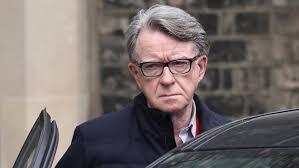
McSweeny was the long-time protégé of Mandelson, the architect of New Labour. However, by 2015 the majority of the membership of the Labour Party was clearly on the left. Mandelson believed that McSweeny had the ability to move Labour back to its more right-wing days. Mandelson has been quoted saying of McSweeny: "I don't know who and how and when he was invented, but whoever it was... they will find their place in heaven." (42) Anushka Asthana pointed out that McSweeny "despised" Corbyn and his "hard-left" politics he represented. (43) According to another source, McSweeny believed that "Corbyn's politics were not just wrong. They were evil." (44)
The Funding of Labour Together
The Times reported that Labour Together was starting to raise money on a scale and at a speed rarely seen in British politics." (45) Further donations were made in 2018 by several other wealthy businessmen such as Paul Myners (£25,000), Clive Hollick (£10,000), Simon Tuttle (£10,000), Richard Greer ((£10,000) and Sean Wadsworth (£10,000). Labour Together failed at the time to report fully £739,429 of the cash and non-cash donations it received between June 2017 and September 2020 to the electoral commission, as required by law. (46)
After Sir Trevor Chinn the most important financial contributor to Labour Together was Martin Taylor, who established Nevsky Capital in 2007. Under his management, the Nevsky fund achieved an average annual USD net return of 18.4% for its investors from the period 2000 to 2015, over double the average of other emerging market funds. He initially focused on companies in the former Soviet Bloc, investing in those deemed set to benefit from economic reforms as these economies democratized. His investments include Russian telecom companies such as Vimpelcom and assorted companies in the energy sector, including Gazprom and Lukoil. The fund eventually reached $3.3bn. (47)
Another important funder of Labour Together is Francesca Perrin, the daughter of Lord David Sainsbury. On March 31st, she gave the organisation £100,000. Perrin also gave two Labour MPs: Zubir Ahmed and David Pinto-Duschinsky £30,000. Perrin has funded several high-ranking Labour MPs in the recent past. Bridget Phillipson received £15,000 and Josh Simons £30,000. Wes Streeting and Shabana Mahmood were given £50,000 each. (48)
Also involved was William Reeves, an American Hedge Fund boss with a fortune estimated at £375 million. Reeves, who gave Labour Together £50,000, was a longstanding Liberal Democrat funder, who gave a large sum to David Laws when he was a minister in David Cameron's austerity government. People like Reeves, Chinn, Taylor, Sainsbury, Perrin, Myers, and Hollick, have never been interested in funding political parties because they wanted a more equal society, in fact, they wanted to maintain a system where they would be able to keep us much of their money as possible. That is why they are so opposed to politicians such as Jeremy Corbyn who support measures to redistribute wealth.
As Solomon Hughes has said about Labour Together: "They have many things in common with Westminster's corporate-funded policy shops, but Labour Together's single-minded drive for back-room sway with Labour's leadership is something different. The organisation looks more like a scheme for a band of high-net-worth individuals to shape Labour's leadership, fixing them to the low-tax, pro-market policies they and their bank balances prefer." (49)
Labour Together used the money provided by these wealthy individuals to poll party members on their policy priorities, splitting members into "instrumentalists" (who would vote for any leader that they thought would win the next election), "idealists" (who projected onto Corbyn what they wanted of him), and "ideologues" (who initially signed up to Labour in the 1970s and 1980s, left or were removed, and then rejoined for Corbyn). The group decided that a successor to Corbyn would need to appeal to all of the "instrumentalists" and over one third of the "idealists", and would need to have served under and backed Corbyn. (50)
Research carried out by Paul Holden showed that Labour Together raised £3,920,400 between 2023-July 2024. This included £2,102,000 from Martin Taylor. It was also revealed that Lord David Sainsbury (£313,000) and his daughter, Francesca Perrin (£210,000) had become major investors in the Starmer Project. In 2022 Gary Lubner began making large donations to the Labour Party in the build-up to the 2024 General Election. This included £5,930,000 to the Labour Party and a further £288,000 to the associated Co-operative Party. Lubner also gave £663,900 to Labour Together in June 2024 (51)
Keir Starmer's Leadership Campaign
Labour Together had a problem because the members of the Labour Party had twice overwhelmingly voted for Jeremy Corbyn. It seemed certain that when Corbyn resigned he would be replaced by another left-wing socialist. The only way that Labour Together could get a right-wing candidate to win the election was to recruit Keir Starmer to pretend he was left-wing by making his ten socialist pledges. (52)
During the leadership campaign, Andrew Neil asked Starmer in a television interview, "Can you guarantee that under your leadership the 2019 Labour commitments to nationalise water, energy, rail, the Royal Mail - they'll all be in Labour's next election manifesto?" Starmer said yes because "I've made that commitment." Starmer was asked, "Will you remain committed to scrapping university tuition fees, will you remain committed to scrapping them? Starmer replied: "They are pledges, Andrew, so the answer to these questions is yes." (53)
Andrew Neil also questioned the fact that Starmer, unlike his opponents, had not published details of the people or organisations who were funding his campaign. Starmer replied that he would do this later. Jon Trickett, a member of the Socialist Campaign Group pointed out that Starmer's failure to publish donations contemporaneously was "anti-democratic" because "voters deserve to know what lies behind the candidates they are being asked to vote for, before they cast their vote, not afterwards." He added that he feared Starmer was being funded by people who had no desire for socialist measures to be introduced: "I've been campaigning against the influence of money in politics for years. Whether it's in general elections or internal party elections, we need to end the secrecy" (54)
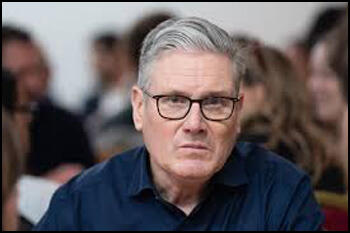
The only way Starmer could become leader was to say he fully supported the policies of Jeremy Corbyn. This enabled him to win by beating Rebecca Long-Bailey (27.6%) and Lisa Nandy (16.2%), with 56.2% of the vote in the first round. Starmer's full donation list was not published until after the election. In total Starmer took £706,135 in donations between January and April 2020. Most of the donors were known to be hostile to the political policies that had been advocated by Starmer. For example, Martin Clarke, a former executive at the roadside recovery firm AA, who had long criticised Corbyn and had openly supported the anti-Corbyn breakaway party Change UK in 2019 provided £25,000 to Starmer's campaign. Other large donors included Waheed Alli (£100,000) and the two founders of Labour Together, Martin Taylor (£95,000) and Trevor Chinn (£50,000). (55)
It was not long after Starmer became leader of the Labour Party he began dropping his 10 socialist pledges. For example: (i) "Increase income tax for the top 5% of earners, reverse the Tories' cuts in corporation tax and clamp down on tax avoidance, particularly of large corporations. No stepping back from our core principles." (ii) "Abolish Universal Credit and end the Tories' cruel sanctions regime. Stand up for universal services and defend our NHS. Support the abolition of tuition fees and invest in lifelong learning." (iii) "Put the Green New Deal at the heart of everything we do. There is no issue more important to our future than the climate emergency. A Clean Air Act to tackle pollution locally. Demand international action on climate rights." (iv) "No more illegal wars. Introduce a Prevention of Military Intervention Act and put human rights at the heart of foreign policy. Review all UK arms sales and make us a force for international peace and justice." (v) "Public services should be in public hands, not making profits for shareholders. Support common ownership of rail, mail, energy and water; end outsourcing in our NHS, local government and justice system." (vi) "Full voting rights for EU nationals. Defend free movement as we leave the EU. An immigration system based on compassion and dignity. End indefinite detention and call for the closure of centres such as Yarl's Wood." (vii) "Push power, wealth and opportunity away from Whitehall. A federal system to devolve powers – including through regional investment banks and control over regional industrial strategy. Abolish the House of Lords – replace it with an elected chamber of regions and nations." (56)
Starmer did not put his ten socialist measures in the Labour Party Manifesto for the 2024 General Election. When he became prime minister Starmer appointed to his cabinet several people who had been funded by the Labour Together group. This included Wes Streeting, Lisa Nandy, Steve Reed, Rachael Reeves, Shabana Mahmood, Bridget Phillipson, Jim McMahon, Angela Rayner, Yvette Cooper, David Lammy, John Healey, Ian Murray, Nick Thomas-Symonds, Louise Haigh and Josh Simons. As Solomon Hughes has pointed out that the connection between the funding of individuals and their appointment as government ministers suggests political corruption. (57)
Following the Labour Party's victory in the 2024 general election and Keir Starmer's ascension to the office of prime minister, Sue Gray became his Downing Street Chief of Staff. Stories soon emerged that she was in conflict with Morgan McSweeny. It was leaked that she adopted a "micromanagerial" leadership style with substantial control over ministerial and special adviser appointments, and had "extraordinary" control over access to Starmer and his agenda. The Guardian revealed that "Gray had twice moved McSweeney's desk further away from the prime minister's office. It was also reported that Simon Case, the cabinet secretary, had refused to authorise Gray's request for McSweeney to be denied access to a secure computer system unless he heard it from Starmer himself." (58)
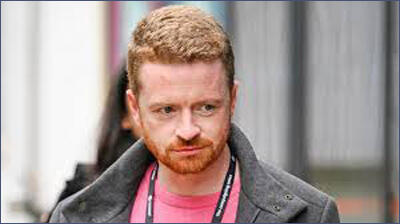
On 6 October 2024, Sue Gray resigned as Downing Street chief of staff, citing the "intense commentary" around her position risking becoming a "distraction" to the government. Following the resignation of Sue Gray, McSweeney, the former director and company secretary of Labour Together. was appointed as Starmer's chief of staff. McSweeny was now in a good position to persuade Starmer to appoint Peter Mandelson as ambassador to Washington. According to Ailbhe Rea of The New Statesman: "When Keir Starmer first entered Downing Street as Prime Minister, appointing Peter Mandelson ambassador to Washington wasn't part of the plan. Sue Gray, Starmer's then chief of staff, had compiled a shortlist of two for that crucial diplomatic role, and Mandelson - despite media reports linking his name to the role - was not on it.... The shortlist Gray had drawn up contained the existing post-holder, Karen Pierce, and an intriguing potential political appointment: David Miliband." (59)
Josh Simons and APCO
Morgan McSweeny was the main figure at Labour Together until becoming chief of staff to Keir Starmer, after he became elected as leader of the Labour Party. In October 2022 Josh Simons was appointed director of the organisation. Simons is a specialist in artificial intelligence and was considered to be an expert in electoral strategy. Simons had originally worked as a policy advisor for Jeremy Corbyn until he left the party in 2016 over the leader's criticisms of Israel. Simons complained: "After six months working as a policy adviser for Jeremy Corbyn, it was clear to me that the way Corbyn and those around him think about Jewish people is shaped by a frenetic anti-imperialism, focused on Israel and America.... Antisemitism is not rife in the British Labour party, quite the opposite in fact. It is only thought to be so because Labour is currently led by a team whose political identity is driven first and foremost by a visceral contempt for America and for Israel." (60)
By 2024, Simons were describing the organisation he fronted as "Keir Starmer's provisional wing". The journalist Paul Holden began to investigate the activities of Simons and the Labour Together group. In return, Simons began to investigate Holden. On 8 February 2024, The Guardian's political editor, Pippa Crerar, informed Holden that they were 24 hours away from publishing an article that would significantly damage, if not destroy Holden's reputation. The email stated: "We are planning on running a story on the Guardian site tomorrow, and in Saturday's paper, that the National Cyber Security Centre (NCSC) is investigating whether information obtained from an Electoral Commission hack may have been used to target the Labour Party. We understand the NCSC probe centres on a series of private legal emails between the political think tank Labour Together, which was previously run by Morgan McSweeney, and the Electoral Commission." (61)
Paul Holden replied: "I want to make this very, very clear. If there is any hint in your reporting that I received material from the hack of the Electoral Commission referred to above, whether knowingly or unknowingly, I will immediately be bringing defamation proceedings against you and the Guardian... The allegation that I have received information from a hack of the Electoral Commission is not only false, but I can positively prove it to be false." (62)
The Guardian did not print the story nor did they investigate the motives of the people who had provided this false information. The reason for this was the newspaper had worked very closely with Labour Together in its original antisemitism claims against Jeremy Corbyn and had given its strong support for Keir Starmer. It was to be another couple of years before the full story was published. It was later revealed that Simons had hired APCO Worldwide to investigate the private affairs of several journalists, including Paul Holden, Henry Dyer, John McAvoy, Aletha Adu, Solomon Hughes, Jody McIntyre, Gabriel Pogrund and Harry Yorke, who were investigating the finances of Labour Together. An article in Democracy for Sale in February 2026 exposed the fact that Labour had paid at least £30,000 to identify the source of stories about its funding. (63)
The report from APCO Worldwide stated: "After a review of publicly available information, there appears to be two potential sources for the information about Labour Together's funding that appeared in the Times article: a leak from someone within the Electoral Commission or Labour Together to the author; or illegally gathered information collected from the 2023 hack of the Electoral Commission that has been passed on to the author." It was clearly linked to the article that Pippa Crerar wanted to publish in February 2024. (64)
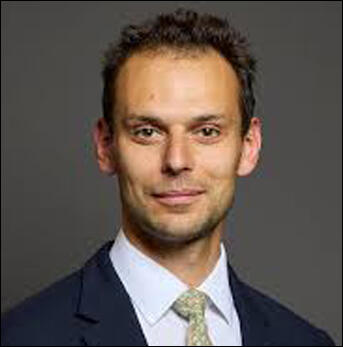
In response to the allegations, Labour MP John McDonnell, who had himself been a victim of Labour Together, called for his party to launch an inquiry into the organisation and those in the party connected to it. In a letter to Hollie Ridley, the party's general secretary, McDonnell called the investigation of journalists "truly shocking" and added: "If the reports of [Labour Together's] activities in surveilling journalists are accurate it is clear that this organisation and its operators and controllers are bringing our party into disrepute." (65)
By this time Josh Simons had been parachuted into a safe Labour seat of Makerfield and his salary was now paid by taxpayers instead of Labour Together's mega-rich donors. In September 2025 Starmer appointed him as Parliamentary Secretary for the Cabinet Office. On 1 March 2026, Simons resigned from government, stating that he did not wish to become a "distraction". Paul Holden said that "Josh Simons doesn't deserve to be an MP, let alone a cabinet minister" adding: "I will now work to make sure parliamentary authorities hold him to account if our weak and supine prime minister will not." He claimed Simons' actions threatened his livelihood and reputation, and had caused him "significant distress". (66)
Andy Burnham
On 14 May 2016, Josh Simons announced he would stand down, triggering a byelection, so that Andy Burnham could win the seat and then beat Keir Starmer in a leadership contest.. In a letter to constituents announcing his decision to resign, Simons said: "I do not believe this government is delivering the urgent, radical, brave reform we need. We need a new direction. I believe that Andy Burnham can provide it. I could not stand here and tell you that our politics is broken and things need to change, then stand in the way of supporting that change. That means stepping aside as your MP for Makerfield to make way for a leader who has the radicalism, energy and immense courage to meet the moment. A leader who is authentic, honest and trusted, who says what he believes and does what he says." (67)
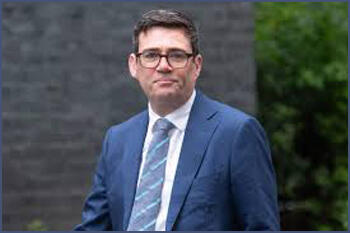
It has been suggested that offering the seat of Makerfield might be a Labour Together trap. It used to be seen as a Labour safe seat, as it has been in the party's hands since its creation in 1983. However, Simons won the seat by a majority of just 5,399 over Reform UK at the 2024 general election. Since then, Labour's polling has collapsed, while Reform's has surged. This month's local elections saw the Reform Party win every council ward in the Makerfield constituency, securing around half the vote. Labour was left trailing behind, having secured little more than a quarter of those who voted. (68)
Is it possible that Labour Together want Burnham to be defeated so that it will make it possible for its candidate, Wes Streeting to become the prime minister. It is clear that Labour Together realised that Starmer was so unpopular that he had to be replaced. Several members of the organisation, Chris Curtis, Zubir Ahmed, Joe Morris and Tom Rutland, were some of the first people to call for Starmer to resign. Or maybe, a deal has been done, for example, that Simons, would be given a good job in Burnham's team. After all, he started off by working for Jeremy Corbyn (he was sacked for leaking information to Labour Together) and so maybe he is willing to work for anyone who has got power. (69)
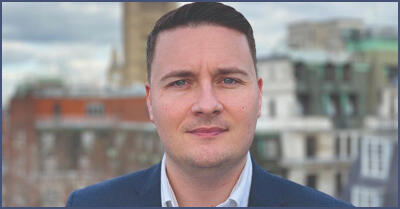
In his pre-election campaign to become the leader of the Labour Party and the prime minister, Wes Streeting, although closely associated with the conservative policies of Keir Starmer, began adopting left-wing positions, proposing ideas that he had previously criticised when he was a member of the government. For example, in an interview with Nick Robinson he called for a wealth-tax, similar to the one proposed by Starmer when he campaigned for the leadership in 2019. Streeting said that this "wealth tax" would work by equalising capital gains tax with income tax. He believed this would raise £12bn a year. The problem for Streeting is that Starmer lied about the introduction of wealth taxes to get elected as party leader. Is Streeting doing the same thing? Streeting also has the added problem of being in a government that has constantly ruled out the introduction of such a tax. (70)
Currently, the "soft left" has got a good chance of selecting the next prime minister. There are three Labour pressure groups on the centre-left: Tribune Group, Socialist Campaign Group and Mainstream. Tribune alone has over 100 members. It has seven co-leaders: Beccy Cooper, Debbie Abrahams, Vicky Foxcroft, Louise Haigh, Justin Madders, Sarah Owen and Yuan Yang. They have argued: "Advocating for the interests of ordinary people is what many of us in the Labour Party became involved in politics to do. And it's the relentless mission of the recently relaunched Tribune Group of Labour MPs, which we are proud to lead. We are fuelled by a mixture of determination that British people be allowed to build a politics and economy that works for them; by intense frustration that this is not the case today; and by hope, that we can and will achieve our mission... It is true that we have a labour market that runs on exploitation, denies workers agency, and funnels wealth to those who contribute the least." (71)
Labour Together and the Electoral Commission
It had always been important to Labour Together to hide the fact that it was being financed by wealthy donors who had been hostile to socialist policies. In January 2021, the Electoral Commission, began investigating Labour Together for failing to declare over £800,000 of donations within 30 days. The investigation became public in February 2021, when Business Insider revealed that only £165,000 of the £970,492 donated between October 2015 and January 2021 had been declared within the specified period. (72)
In a parliamentary meeting held in January 2019, McSweeney had falsely asserted that donations were being declared fully and promptly. Labour Together claimed that this "administrative oversight" was "entirely unintentional" and asserted that "we are now fully transparent and compliant with regards to our donations, and are cooperating fully with the Electoral Commission to assist them in their ongoing inquiry." The Electoral Commission concluded that "admin error" was not a reasonable excuse. In September 2021, the Electoral Commission fined Labour Together £14,250, after concluding it had committed over 20 offences under electoral law, including disclosures with incorrect information and a failure to appoint a "responsible person" for declaring funds. (73)
In September 2025, Labour Together was reported by The National to have hired private investigators to go after author and journalist Paul Holden, who was writing a book on Starmer entitled Fraud: Keir Starmer, Labour Together and the Crisis of British Democracy (2025), and anti-corruption campaigner Andrew Feinstein , who had stood against Starmer in his constituency of Holborn and St Pancras at the 2024 general election. (74)
Other journalists were working on the same story. In February 2026, Emanuele Midolo, revealed that Labour Together had paid £36,000 to American public relations firm APCO to discredit journalists Gabriel Pogrund and Harry Yorke by falsely suggesting its journalists might be part of a Russian conspiracy or had relied on emails hacked by the Russian government. Paul Holden was also investigated because he had provided documents to Pogrund and Yorke. The report was named "Operation Cannon", and was allegedly made with the full knowledge of Morgan McSweeney. The report made various claims about Pogrund's journalism, Jewish faith and relationships, whilst concluding that the emails that Pogrund had used in his article were leaked from Russian hacks. Neither Pogrund or Yorke were made aware of the investigations, even though the report was shared with British intelligence agency GCHQ which reportedly declined to investigate the claims. (75)
These two stories were very damaging to Labour Together and it was decided in April 2026 that the think tank would completely overhaul its operations and change its name to ThinkLabour. Chief executive Alison Phillips stated that a full rebrand of the organization will take place in mid-May as it attempts to tackle perceptions of it being a factional boys' club... That's hung around us, even though I think it does a big disservice to the people that have been working here," she said. "It's why we'll be coming out in May in a very different form. I think that's the only way to really signal that change." (76)
On Thursday 18 June 2026, Andy Burnham won the Makerfield election and is expected to replace Keir Starmer as prime minister. Neal Lawson pointed out Tony Blair himself was respected but never loved by Labour, who begrudgingly accepted his third way agenda until their tolerance ran out. Blair said that his "project will be complete when the Labour party learns to love Peter Mandelson". Lawson added: "In that respect alone, Blair's project failed. Will Burnham do better?" (77)
The Wealthy Elite and Political Parties
Steve Goodrich of Transparency International has pointed out that: "In 2023 the UK Government raised national campaign spending limits by 80 per cent without evidence or clear justification. The consequences have been immediate and substantial. In 2024, parties and their candidates spent over £90 million – the most at an election in modern UK history – and nearly an 80 per cent increase from a decade earlier (2015: £51.7 million). The new arms race in election spending is putting immense pressure on parties to raise funds, which increases corruption risk. " (78)
The recent Peter Mandelson and Labour Together scandals have had an impact on public opinion. A survey carried out by the Fairness Foundation shows that nearly two-thirds of Britons are concerned about the political influence of very rich people. It commissioned a survey of 2,000 adults by Opinium, which found 63% believe the very rich have too much influence on UK politics, compared to 40% for businesses and religious organisations, and 38% for international organisations, such as the EU and UN. Voters are broadly united on the issue, with 78% of LibDem supporters, 67% of Labour, 65% of Reform and 56% of Conservatives agreeing. (79)
As Will Hutton has pointed out wealth inequality has a massive impact on our democratic system. "Wealth finances the capacity to lobby and generate knowledge and ideas that favour the rich rather than common interest outcomes. Very little of our media is particularly profitable; it is much easier to recruit rich individuals from the pool of the wealthy prepared to underwrite an otherwise uncommercial media to make wealth defence arguments than it is to support a more liberal media. Media bias is not a law of nature, it is an outgrowth of wealth inequality." (80)
According to Transparency International: "In 2015, only 1 per cent of private donations came from companies and individuals giving £1 million or more; by 2024, this had risen to over a third. At this rate over half of all political contributions could soon come from just a dozen or so individuals, who would account for less than 0.00002 per cent of those eligible to donate. Parties turning to wealthy donors for cash is making them dangerously reliant on a small group of individuals, which increases the likelihood they will have undue influence on public policymaking. Donations buy access, potential influence and honours. The amounts now given are unprecedented, and far beyond the means of normal voters." (81)
After their terrible defeat in 2024 the wealthy donors decided that it was pointless funding the Conservative Party as it looked like they would be out of power for a long time. On 3 February 2025, Reform UK topped a national YouGov poll for the first time. (82) It has remained in that position ever since. It was interesting to see who would now fund Reform. That year Christopher Harborne gave Reform UK £9 million, the largest single political contribution from a living donor. "It would take the average person around 3,000 years to give the same amount, provided they used all of their savings to make political donations. Continuing to allow unlimited political contributions will mean those with the deepest pockets can buy political influence to advance their own interests – skewing policymaking away from the public good." (83)
Over the past seven years, Harborne has given more than £22m to Nigel Farage and his political parties that he has led. That accounts for two-thirds of all funding received by Reform UK (previously called the Brexit Party), making it uniquely dependent among British parties on a single benefactor. Asked in December about his donations, Farage said: "Does he want anything from me? No. Absolutely nothing in return at all. He just happens to think that we've not made the most of Brexit, that we're not getting into the 21st-century technologies." (84)
Before switching his donations to Nigel Farage's political campaigns, Harborne had donated smaller sums, averaging £15,000 per annum since 2001 totalling about £270,000, to the Conservative Party. In November 2022, Harborne donated £1 million to The Office of Boris Johnson, one of the biggest donations ever made to an individual British politician. The government awarded Qinetiq, a company in which Harborne was the largest single shareholder, an £80 million Ministry of Defence contract in January 2023. (85)
In 2024 Christopher Harborne gifted £5 million to Nigel Farage, shortly before Farage announced that he had decided to stand as a candidate in that year's general election. Farage did not declare this gift at the time. This gift was disputed in May 2026 as to whether it constituted a donation that should be registered. Farage did not disclose the donation and in May 2026 the Electoral Commission and the Parliamentary Commissioner for Standards began investigations into the money paid to Farage. (86)
Why is Harborne giving all this money to Nigel Farage. What does he want in return? It is necessary to look at how he made his money. Christopher Charles Sherriff Harborne (born December 1962) is a British billionaire businessman and technology investor based in Thailand. He holds Thai citizenship under the name Chakrit Sakunkrit. Harborne is part-owner of Tether Limited Inc. The company issues the eponymous cryptocurrency stablecoin ‘Tether'. Because Tether's value is pegged to that of the US dollar, it allows users to trade their cryptocurrency for real-world money and vice versa. This fact makes it the most popular cryptocurrency in the world. In 2025 Tether made $10bn, and its total assets rose to $49bn. Harborne owns a 12% share in the company, making him one of the world's richest individuals. (87)
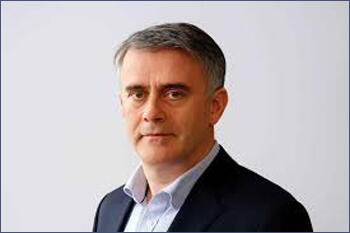
According to The Guardian: "Harborne was an early buyer of digital tokens that have soared in value. And he is one of half a dozen enigmatic tech types who own Tether, the company that issues the most widely traded cryptocurrency. Registered in the Central American dictatorship of El Salvador, with a small staff, Tether has been described as the most profitable company per employee in history. It has issued $184bn in digital cash known as stablecoins. Billions of Tether’s stablecoins are known to have been put to illicit purposes by gangsters, scammers, Russian sanctions-busters, North Korean hackers and others who would rather avoid the scrutiny of moving money via a bank." (88)
Harborne is already very wealthy so why would he give money to Farage? What could he do as prime minister to help Harborne's business interests. Farage told LBC Radio in September, 2025: "Stablecoins are the way which money goes from conventional currencies through into cryptocurrencies and back again. Tether is about to be valued as a $500bn company." Were that to happen then Harborne's stake in Tether would be worth £44billion. That would make him Britain's richest person. Farage went on to say: "Stablecoins, crypto, this world is enormous, and I've been urging for years that London should embrace it. We should become a global trading centre for this stuff." He said he would be seeing the Bank of England's governor to demand he scrap a proposed cap on stablecoin ownership that had led "some of my friends" to consider emigrating. "Why is the bank so out of touch? Why is it behaving like a dinosaur? Why not get with the 21st century? These new technologies aren't going away. They're here." (89)
Harborne's wealth is being threatened by the Bank of England's plan to launch its own "digital pound". The government first floated the idea to the public back in 2023. However, it could become a reality as early as 2030. The digital pound, "Britcoin", would be a central bank digital currency (CBDC). Rather than being artificially pegged to a government issued currency's value like a stablecoin, a CBDC is essentially a digital form of that same currency. As such, Britcoin could put a serious dent in Harborne's net worth if it's ever issued. Andrew Bailey said: "As the world around us and the way we pay for things becomes more digitalised, the case for a digital pound in the future continues to grow. A digital pound would provide a new way to pay, help businesses, maintain trust in money and better protect financial stability." This conflict has resulted in a series of AI deepfakes showing Farage and Bailey in a fight. (90)
On 5th July 2006 The Sunday Times published an article claiming George Cottrell, a longtime aide to Nigel Farage Farage, provided funding for the Reform UK leader's operation. Cottrell recruited and paid three staff to work on Farage's social media before the 2024 General Election, and offered him the use of a five-storey Georgian townhouse he rented near Buckingham Palace. Under rules in place at the time, new MPs were required to register any gifts worth more than £300 they had received in the previous 12 months, except where the gift "could not be reasonably thought by others" to relate to their political activities. Cottrell was jailed for eight months in the US in 2017 after pleading guilty to a charge of wire fraud after admitting attempting to defraud criminals on the dark web by masquerading as a money launderer. (91)
The Labour Party is also under investigation for possible corruption. A report by the thinktank Autonomy Institute shows that eight companies that donated to Labour more than £580,000 received government contracts worth nearly £138m within two years of their donation (between July 2024 and June 2025). For example, Grant Thornton UK donated £81,658 between March 2023 and July 2024 and has since been awarded £6,541,819 in contracts. This was only a study of corporations and not individuals who gave money to the Labour Party. (92)
Dr Will Stronge, the chief executive of the Autonomy Institute, said: "When the same corporations that bankroll political parties also win government contracts, the line between public service and private influence becomes dangerously blurred. The only way to alleviate concerns about favouritism and corruption is a ban on political donors receiving government contracts." (93)
The Tories have not complained about it because as the Autonomy Institute has pointed out, they were just as bad at taking donations from companies before handing out government contracts when they were in power. The Green Party has tried to make this an issue but most of the mainstream media have ignored it because it will damage the Conservative Party and help give credence to left-wing politicians who have been campaigning on this issue for years. Zack Polanski has argued: "We need to take big money out of politics with a cap on political donations, and state funding for political parties so they're not in the pocket of the wealthy and powerful." (94)
George Monbiot has pointed out: "How do we know whether political funding is corrupt? Mostly, we don't. A plutocrat delivers a sack of cash to a political party. A few weeks later, it announces a policy that happens to favour the donor's business. Are the events linked? We might suspect it; we cannot prove it. But the suspicion itself is corrosive and demoralising. The current funding system, perhaps more than any other factor, turns us away from politics, breeding disillusionment, alienation and cynicism. A survey by the Electoral Commission last year found that only 18% of respondents believed spending and funding are transparent. A government survey in December discovered that 87% of people are "concerned about the possibility of corruption" among politicians. A further survey concluded that political donors are believed to wield the most influence of any elite faction. Disillusionment with politics drives people into the arms of the extreme right. This is paradoxical, as it tends to be highly receptive to the ultra-rich." (95)
Possible Reforms
In the run-up to the 2024 General Election Keir Starmer stated that he would protect democracy by strengthening the rules on political donations and pledged to put the national interest above personal or partisan concerns. However, once in power he followed the instructions of the wealthy elite who paid for his election campaign. Transparency International has suggested three measures that the Labour government could introduce: (i) "End the arms race by reducing campaign spending limits to a more meaningful level. (ii) Cap political donations to stop the sale of our democracy, as is the case in Canada and Australia. (iii) Increase transparency over contributions to provide assurance over sources of political funding, and aid enforcement of the law. (96)
The Electoral Commission has suggested that by lowering the national party spending limits by around half and including election-related staff costs would significantly reduce the pressure on fundraising and associated corruption risks. It was especially concerned about foreign donors to UK political parties: "The categories of permissible donors to regulated entities in Great Britain include a company registered in and carrying on business in the UK... This does not fully reflect the approach recommended in CSPL's Fifth Report, which proposed that to prevent foreign donors channelling donations through subsidiary UK companies, it should be necessary for a subsidiary to show that it ‘was carrying on a genuine business 42 within the UK and was generating income here sufficient to fund any donation." (97)
Transparency International has praised the attempts by other democracies, such as Canada, Australia and Italy, to control political donations. "In 2025, Australian passed a new law limiting political contributions to AUS$1.6 million annually (£800,000). Though a major shift in the country's electoral rules, the cap is substantially higher than elsewhere. For example, Italy does not allow political donations over EUR 100,000 (£87,000) within a year, while the maximum in Canada is CA$5,250 (£2,800). Making a similar shift in the UK is possible if political leaders have the vision and courage to move us beyond the broken status quo." (98)
Countries in Europe have introduced legislation to break the link between political donations and government policies. In France for example, Businesses and Trade Unions have forbidden from making party donations since 1995. The change in the law sought to redress excessive payments from companies who could be seen to have special interests in election outcomes. Political parties may not receive more than 7,500 euros a year from individuals and any contribution greater than 152 euros must be made by cheque. The principal source of contributions, however, is from the regular payments made by party members, which is equal to 35% on average across all political parties.... Every year political parties receive state grants based on two factors, called fractions. The first fraction depends on the proportion of the vote won by a party in the last round of parliamentary elections. The second is calculated by the actual number of seats the party wins in parliament. This funding represents 40% of party funds across the board." (99)
References
(1) Matthew Engel, Tickle the Public: One Hundred Years of the Popular Press (1996) page 158
(2) Adrian Smith, H. G. Bartholomew: Oxford Dictionary of National Biography (23rd September, 2004)
(3) The Daily Mirror (5th June, 1945)
(4) Roy Greenslade, How Newspapers Make Profits from Propaganda (2003) page 35
(5) R. B. McCallum, The British General Election in 1945 (1947) page 205
(6) The Daily Mirror (21st February, 1951)
(7) Peter Wright, Spycatcher (1987) page 369
(8) Barrie Penrose and Roger Courtiour, The Pencourt File (1978) page 308
(9) Stephen Dorril and Robin Ramsay, Smear! Wilson and the Secret State (1992) page 180
(10) Cecil King, The Daily Mirror (11 May 1968)
(11) John Spellar, House of Commons (16 June 1993)
(12) Trade Union Act (26 July, 1984)
(13) Kevin Maguire, The Guardian (25 November, 1999)
(14) Andrew Grice, The Independent (21 April 2003)
(15) The Guardian (18 July 2019)
(16) Gaby Hinsliff, The Guardian (23 July, 2006)
(17) BBC News (22 September 2000)
(18) The Guardian (20 September, 2000)
(19) The Times (12 October 2008)
(20) Kevin Maguire, The Guardian (25 November, 1999)
(21) Political Parties, Elections and Referendums Act (30 November 2000)
(22) The Guardian (22 December 1999)
(23) The Electoral Commission (11 June 2024)
(24) The Guardian (23 February 2022)
(25) BBC News (18 March 2018)
(26) The Guardian (23 February 2022)
(27) Matthew Cunningham-Cook, The Jacobin (11 March 2022)
(28) Ben Cowdock, Transparency International (30 July 2025)
(29) Politics Home (31 August 2017)
(30) The Guardian (22 August 2018)
(31) Alex Carey, Taking the Risk Out of Democracy: Corporate Propaganda Versus Freedom and Liberty (1997) page 1
(32) Peter Oborne and David Hearst, Middle East Eye (5 June, 2020)
(33) Andy Beckett, The Guardian (5 May 2026)
(34) Florian Zollmann and T. J. Coles, The Monthly Review (February 2022)
(35) Paul Holden, Fraud: Keir Starmer, Labour Together and the Crisis of British Democracy (2025) page 25
(36) Steve Reed, Labour Together (archived 21 May 2023)
(37) Paul Holden, Fraud: Keir Starmer, Labour Together and the Crisis of British Democracy (2025) page 110
(38) Allegra Stratton, The Guardian (24 April 2007)
(39) The Guardian (21 February 2017)
(40) The Morning Star (12 March, 2026)
(41) Aletha Adu, The Guardian (27 October, 2023)
(42) Paul Holden, Fraud: Keir Starmer, Labour Together and the Crisis of British Democracy (2025) page 32
(43) Anushka Asthana, Taken as Red: How the Election Was Won and Lost (2024) page 60
(44) Patrick Maguire and Gabriel Pogrund, Left Out: The Inside Story of Labour Under Corbyn (2021) page 27
(45) The Times (5 January 2024)
(46) Paul Holden, Fraud: Keir Starmer, Labour Together and the Crisis of British Democracy (2025) pages 38-39
(47) Jim Pickard, The Financial Times (20 March 2015)
(48) Jody McIntyre, The Canary (28 April 2026)
(49) Solomon Hughes, Tribune Magazine (18 June 2024)
(50) Aletha Adu, The Guardian (27 October 2023)
(51) Paul Holden, Fraud: Keir Starmer, Labour Together and the Crisis of British Democracy (2025) pages 446-447
(52) John Simkin, Sir Keir Starmer and his Broken Pledges (1st September, 2023)
(53) Keir Starmer on the Andrew Neil Show (4 March 2020)
(54) The Guardian (3 March 2020)
(55) Paul Holden, Fraud: Keir Starmer, Labour Together and the Crisis of British Democracy (2025) pages 162-163
(56) John Simkin, Sir Keir Starmer and his Broken Pledges (1st September, 2023)
(57) Solomon Hughes, Tribune Magazine (18 June 2024)
(58) The Guardian (16 August 2024)
(59) Ailbhe Rea, The New Statesman (4 February, 2026)
(60) Josh Simons, The Observer (11 September 2016)
(61) Pippa Crerar, email to Paul Holden (8 February 2024)
(62) Paul Holden, email to Pippa Crerar (8 February 2024)
(63) Khadija Sharife and Peter Geoghegan, Democracy for Sale (5 Februay 2026)
(64) The Guardian (16 February 2026)
(65) John McDonnell, letter to Hollie Ridley (6 February 2026)
(66) BBC News (28 Februay 2026)
(67) The Tribune Group (5 January, 2026)
(68) The Independent (18 May 2026)
(69) Paul Holden, Fraud: Keir Starmer, Labour Together and the Crisis of British Democracy (2025) page 445
(70) BBC News (21 May, 2026)
(71) The Tribune Group (5 January, 2026)
(72) Henry Dyer, Business Insider (19 February 2021)
(73) Gabriel Pogrund and Harry Yorke, The Times (5 January 2024)
(74) Richard Sanders & Peter Oborne, The National (30 September 2025)
(75) Emanuele Midolo, The Times (14 February 2026)
(76) John Johnson, Politico (27 April 2026)
(77) Neal Lawson, The Guardian (19 June, 2026)
(78) Steve Goodrich, Taking Big Money Out of Politics (2 March 2026)
(79) The Guardian (25 January 2025)
(80) Will Hutton, The Guardian (20 October 2024)
(81) Steve Goodrich, Taking Big Money Out of Politics (2 March 2026)
(82) YouGov: Voting Intentions (3 February 2025)
(83) Steve Goodrich, Taking Big Money Out of Politics (2 March 2026)
(84) The Guardian (25 April 2026)
(85) Jim Fitzpatrick, Open Democracy (19 January 2023)
(86) BBC News (13 May 2026)
(87) The Canary (19 June 2026)
(88) The Guardian (25 April 2026)
(89) The Daily Mirror (15 May 2026)
(90) Larry Elliott, The Guardian (6 February 2023)
(91) The Sunday Times (5th July 2026)
(92) Autonomy Institute, Givers and Takers: uncovering the donor-contractor nexus at the heart of government
(26th October 2025)
(93) Will Stronge, The Guardian (26 October 2025)
(94) Zack Polanski, Nigel Farage and Political Donations (7 July 2026)
(95) George Monbiot, The Guardian (30 April 2026)
(96) Steve Goodrich, Taking Big Money Out of Politics (2 March 2026)
(97) The Electoral Commission, Recommendations For Change (June 2013) page 41
(98) Steve Goodrich, Taking Big Money Out of Politics (2 March 2026)
(99) How French parties and politicians are funded (6 July 2010)
Previous Posts
How the Wealthy Elite Undermine Democracy in the UK (4th June 2026)
Cicero on Friendship and Old Age (4th June 2026)
Wes Streeting and Labour Together (17th May 2026)
The Strange appintment of Peter Mandelson (5th May, 2026)
Why at the age of 80 I have joined the Green Party (29th March, 2026)
The Vassal State: How America Runs Britain (25th March, 2026)
Should the Government try to control was appears on the Internet? (26th February, 2026)
The Political Ideas of Rutger Bregman (25th January, 2026)
Technofeudalism: Is AI going to destroy Capitalism and Democracy? (19th November, 2025)
How do we stop Nigel Farage from forming a government (14th October, 2025)
Donald Trump and the Deep State (13th August, 2025)
The History of Fascism: Are Vladimir Putin and Donald Trump Fascists? (10th June, 2025)
The CIA memorandum on the death of Gary Underhill (6th April, 2025)
Should George Orwell have chosen the title, 2030, instead of 1984? Keir Starmer as Big Brother. (17th March, 2025)
The Evolution of the Brain. Can you make yourself happy? (16th January, 2025)
Technology and the History Classroom: Should the Teaching Profession Embrace AI? (20th November, 2024)
Venetia Stanley, H. H. Asquith and the First World War (22nd August, 2024)
The General Election Campaign: The Tyranny of the Centre (4th July, 2024)
In Defence of the New History (20th March, 2024)
The Political History of Keir Starmer (25th January, 2024)
JFK Assassination: What Happened in the Trauma Room (23rd November, 2023)
Sir Keir Starmer and his Broken Pledges (1st September, 2023)
Should history students be using ChatGBT? (28th May, 2023)
A historical account of the Daily Mail, the Conservative Party and Migration (18th March, 2023)
Art and the Women's Suffrage Movement (20th January, 2023)
Emancipation of Women: 1870-1928 (15th November, 2022)
The Struggle for Women's Rights: 1500-1870 (21st September, 2022)
The real reason why the FA banned women from playing on their grounds (1st August, 2022)
The WSPU Young Hot Bloods and the Arson Campaign (26th May, 2022)
Interpretations in History (18th April, 2022)
The Student as Teacher (31st December, 2021)
History Simulations in the Classroom (30th November, 2021)
Walter Tull: Football and War Hero (20th October, 2021)
Child Labour and Freedom of the Individual (26th July, 2021)
Don Reynolds and the Assassination of John F. Kennedy (15th June, 2021)
Richard Nixon and the Conspiracy to kill George Wallace in 1972 (5th May, 2021)
The Connections between Watergate and the JFK Assassination (2nd April, 2021)
The Covid-19 Pandemic: An Outline for a Public Inquiry (4th February, 2021)
Why West Ham did not become the best team in England in the 1960s (24th December, 2000)
The Lyndon Baines Johnson Tapes and the John F. Kennedy Assassination (9th November, 2020)
It is Important we Remember the Freedom Riders (11th August, 2020)
Dominic Cummings, Niccolò Machiavelli and Joseph Goebbels (12th July, 2020)
Why so many people in the UK have died of Covid-19 (14th May, 2020)
Why the coronavirus (Covid-19) will probably kill a higher percentage of people in the UK than any other country in Europe.. (12th March, 2020 updated 17th March)
Mandy Rice Davies and Christine Keeler and the MI5 Honey-Trap (29th January, 2020)
Robert F. Kennedy was America's first assassination Conspiracy Theorist (29th November, 2019)
The Zinoviev Letter and the Russian Report: A Story of Two General Elections (24th November, 2019)
The Language of Right-wing Populism: Adolf Hitler to Boris Johnson (11th October, 2019)
The Political Philosophy of Dominic Cummings and the Funding of the Brexit Project (15th September, 2019)
What are the political lessons to learn from the Peterloo Massacre? (19th August, 2019)
Crisis in British Capitalism: Part 1: 1770-1945 (9th August, 2019)
Richard Sorge: The Greatest Spy of the 20th Century? (29th July, 2020)
The Death of Bernardo De Torres (26th May, 2019)
Gas Masks in the Second World War killed more people than they saved (9th May, 2019)
Did St Paul and St Augustine betray the teachings of Jesus? (20th April, 2019)
Stanley Baldwin and his failed attempt to modernise the Conservative Party (15th April, 2019)
The Delusions of Neville Chamberlain and Theresa May (26th February, 2019)
The statement signed by Robert F. Kennedy Jr. and Kathleen Kennedy Townsend (20th January, 2019)
Was Winston Churchill a supporter or an opponent of Fascism? (16th December, 2018)
Why Winston Churchill suffered a landslide defeat in 1945? (10th December, 2018)
The History of Freedom Speech in the UK (25th November, 2018)
Are we heading for a National government and a re-run of 1931? (19th November, 2018)
George Orwell in Spain (15th October, 2018)
Anti-Semitism in Britain today. Jeremy Corbyn and the Jewish Chronicle (23rd August, 2018)
Why was the anti-Nazi German, Gottfried von Cramm, banned from taking part at Wimbledon in 1939? (7th July, 2018)
What kind of society would we have if Evan Durbin had not died in 1948? (28th June, 2018)
The Politics of Immigration: 1945-2018 (21st May, 2018)
State Education in Crisis (27th May, 2018)
Why the decline in newspaper readership is good for democracy (18th April, 2018)
Anti-Semitism in the Labour Party (12th April, 2018)
George Osborne and the British Passport (24th March, 2018)
Boris Johnson and the 1936 Berlin Olympics (22nd March, 2018)
Donald Trump and the History of Tariffs in the United States (12th March, 2018)
Karen Horney: The Founder of Modern Feminism? (1st March, 2018)
The long record of The Daily Mail printing hate stories (19th February, 2018)
John Maynard Keynes, the Daily Mail and the Treaty of Versailles (25th January, 2018)
20 year anniversary of the Spartacus Educational website (2nd September, 2017)
The Hidden History of Ruskin College (17th August, 2017)
Underground child labour in the coal mining industry did not come to an end in 1842 (2nd August, 2017)
Raymond Asquith, killed in a war declared by his father (28th June, 2017)
History shows since it was established in 1896 the Daily Mail has been wrong about virtually every political issue. (4th June, 2017)
The House of Lords needs to be replaced with a House of the People (7th May, 2017)
100 Greatest Britons Candidate: Caroline Norton (28th March, 2017)
100 Greatest Britons Candidate: Mary Wollstonecraft (20th March, 2017)
100 Greatest Britons Candidate: Anne Knight (23rd February, 2017)
100 Greatest Britons Candidate: Elizabeth Heyrick (12th January, 2017)
100 Greatest Britons: Where are the Women? (28th December, 2016)
The Death of Liberalism: Charles and George Trevelyan (19th December, 2016)
Donald Trump and the Crisis in Capitalism (18th November, 2016)
Victor Grayson and the most surprising by-election result in British history (8th October, 2016)
Left-wing pressure groups in the Labour Party (25th September, 2016)
The Peasant's Revolt and the end of Feudalism (3rd September, 2016)
Leon Trotsky and Jeremy Corbyn's Labour Party (15th August, 2016)
Eleanor of Aquitaine, Queen of England (7th August, 2016)
The Media and Jeremy Corbyn (25th July, 2016)
Rupert Murdoch appoints a new prime minister (12th July, 2016)
George Orwell would have voted to leave the European Union (22nd June, 2016)
Is the European Union like the Roman Empire? (11th June, 2016)
Is it possible to be an objective history teacher? (18th May, 2016)
Women Levellers: The Campaign for Equality in the 1640s (12th May, 2016)
The Reichstag Fire was not a Nazi Conspiracy: Historians Interpreting the Past (12th April, 2016)
Why did Emmeline and Christabel Pankhurst join the Conservative Party? (23rd March, 2016)
Mikhail Koltsov and Boris Efimov - Political Idealism and Survival (3rd March, 2016)
Why the name Spartacus Educational? (23rd February, 2016)
Right-wing infiltration of the BBC (1st February, 2016)
Bert Trautmann, a committed Nazi who became a British hero (13th January, 2016)
Frank Foley, a Christian worth remembering at Christmas (24th December, 2015)
How did governments react to the Jewish Migration Crisis in December, 1938? (17th December, 2015)
Does going to war help the careers of politicians? (2nd December, 2015)
Art and Politics: The Work of John Heartfield (18th November, 2015)
The People we should be remembering on Remembrance Sunday (7th November, 2015)
Why Suffragette is a reactionary movie (21st October, 2015)
Volkswagen and Nazi Germany (1st October, 2015)
David Cameron's Trade Union Act and fascism in Europe (23rd September, 2015)
The problems of appearing in a BBC documentary (17th September, 2015)
Mary Tudor, the first Queen of England (12th September, 2015)
Jeremy Corbyn, the new Harold Wilson? (5th September, 2015)
Anne Boleyn in the history classroom (29th August, 2015)
Why the BBC and the Daily Mail ran a false story on anti-fascist campaigner, Cedric Belfrage (22nd August, 2015)
Women and Politics during the Reign of Henry VIII (14th July, 2015)
The Politics of Austerity (16th June, 2015)
Was Henry FitzRoy, the illegitimate son of Henry VIII, murdered? (31st May, 2015)
The long history of the Daily Mail campaigning against the interests of working people (7th May, 2015)
Nigel Farage would have been hung, drawn and quartered if he lived during the reign of Henry VIII (5th May, 2015)
Was social mobility greater under Henry VIII than it is under David Cameron? (29th April, 2015)
Why it is important to study the life and death of Margaret Cheyney in the history classroom (15th April, 2015)
Is Sir Thomas More one of the 10 worst Britons in History? (6th March, 2015)
Was Henry VIII as bad as Adolf Hitler and Joseph Stalin? (12th February, 2015)
The History of Freedom of Speech (13th January, 2015)
The Christmas Truce Football Game in 1914 (24th December, 2014)
The Anglocentric and Sexist misrepresentation of historical facts in The Imitation Game (2nd December, 2014)
The Secret Files of James Jesus Angleton (12th November, 2014)
Ben Bradlee and the Death of Mary Pinchot Meyer (29th October, 2014)
Yuri Nosenko and the Warren Report (15th October, 2014)
The KGB and Martin Luther King (2nd October, 2014)
The Death of Tomás Harris (24th September, 2014)
Simulations in the Classroom (1st September, 2014)
The KGB and the JFK Assassination (21st August, 2014)
West Ham United and the First World War (4th August, 2014)
The First World War and the War Propaganda Bureau (28th July, 2014)
Interpretations in History (8th July, 2014)
Alger Hiss was not framed by the FBI (17th June, 2014)
Google, Bing and Operation Mockingbird: Part 2 (14th June, 2014)
Google, Bing and Operation Mockingbird: The CIA and Search-Engine Results (10th June, 2014)
The Student as Teacher (7th June, 2014)
Is Wikipedia under the control of political extremists? (23rd May, 2014)
Why MI5 did not want you to know about Ernest Holloway Oldham (6th May, 2014)
The Strange Death of Lev Sedov (16th April, 2014)
Why we will never discover who killed John F. Kennedy (27th March, 2014)
The KGB planned to groom Michael Straight to become President of the United States (20th March, 2014)
The Allied Plot to Kill Lenin (7th March, 2014)
Was Rasputin murdered by MI6? (24th February 2014)
Winston Churchill and Chemical Weapons (11th February, 2014)
Pete Seeger and the Media (1st February 2014)
Should history teachers use Blackadder in the classroom? (15th January 2014)
Why did the intelligence services murder Dr. Stephen Ward? (8th January 2014)
Solomon Northup and 12 Years a Slave (4th January 2014)
The Angel of Auschwitz (6th December 2013)
The Death of John F. Kennedy (23rd November 2013)
Adolf Hitler and Women (22nd November 2013)
New Evidence in the Geli Raubal Case (10th November 2013)
Murder Cases in the Classroom (6th November 2013)
Major Truman Smith and the Funding of Adolf Hitler (4th November 2013)
Unity Mitford and Adolf Hitler (30th October 2013)
Claud Cockburn and his fight against Appeasement (26th October 2013)
The Strange Case of William Wiseman (21st October 2013)
Robert Vansittart's Spy Network (17th October 2013)
British Newspaper Reporting of Appeasement and Nazi Germany (14th October 2013)
Paul Dacre, The Daily Mail and Fascism (12th October 2013)
Wallis Simpson and Nazi Germany (11th October 2013)
The Activities of MI5 (9th October 2013)
The Right Club and the Second World War (6th October 2013)
What did Paul Dacre's father do in the war? (4th October 2013)
Ralph Miliband and Lord Rothermere (2nd October 2013)