

Spartacus Blog
Should the government try to control what appears on the internet?
In January 1997 I received a phone-call from my daughter. Her husband, who was also a secondary school teacher, had invited a member of his staff, to a demonstration of this recent invention he had come across called the internet. Has I had been involved in the early 1980s in designing and publishing some of the first history simulations to be used in the classroom, she thought I might be interested in attending this demonstration.
I did and realised that the world of education was to be changed for ever. I was particularly impressed with two websites: Nine Planets by Bill Arnett and the World War One: Trenches on the Web by Michael Iavarone. Both were multimedia websites that contained encyclopaedic information about the Solar System and the First World War. I immediately realised the potential the medium had for education and asked Sean if he could create a website for me. He agreed and for the sum of £200 he promised me the Spartacus Educational website would be ready by September.
Spartacus Educational
At that time, I was an educational book publisher and so I sent every secondary school in the UK a free mouse mat with details of the new website. However, Sean had overestimated his abilities and gave me back my £200 and I invested that money in a software package called Coral Webmaster had created the website myself.

This was the early days of the internet. Even the BBC did not have a website in September 1997. At the time I was a regular contributor to The Guardian newspaper. I arranged a meeting with some of the senior members of staff. I told them the internet would severely damage the newspaper industry and should develop a strategy to use its archive to become an educational publisher. The people I spoke to liked the idea but said that it would be over a year before they had a website. In fact, it was not until January 1999, that the Guardian online newspaper was established and at the same time employed me to help develop its Learnthings website. In the meantime, I went to work for the Daily Telegraph, who had been the first newspaper in Europe to have a website.
To encourage other teachers to provide free materials I helped establish the Association of Teacher Websites. In 1998 I was contacted by representatives of the Swedish government and was asked to join the European Virtual School project. They paid me to travel all over Europe to promote the use of the internet in schools. The European Union provided me and a small group of friends with £750,000 for the European History E-Learning Project (E-Help), a project to encourage and improve use of ICT and the internet in history classrooms across the continent. (1)
The Education Forum
One of the first things I did was to form an Education Forum. This enabled teachers all over the world to post details of successful lessons they had developed. We also hosted lectures and debates on educational issues. At the time we thought this was a good example of collective intelligence. By rational debate we would be able to reach sensible conclusions. Although we sometimes disagreed about certain issues, we were always polite to each other.
I was then approached by people who were not teachers who had an interest in history who wanted to join the Education Forum. At first this worked well and historians were willing to discuss their books on the forum. Most of the people joining were from America. Other people joined who had been involved in recent historical events such as the assassinations of John F. Kennedy, Robert F. Kennedy and Martin Luther King, Watergate and the Iran-Contra Scandal. These people created a great deal of controversy and members became more abusive of each other. In attempt to make them behave I forced all members to post a picture of themselves plus a biography. I suspected that the fact that could post anonymously, was the main reason for their bad behaviour. For a time, this measure did reduce abusive comments, but it was not long before it started up again. It appeared to be a problem that could not be solved.
Social Media Websites
Another website I joined in the early days of the internet was Friends Reunited. It was a pioneering UK-based social networking site launched in 2000 by Steve and Julie Pankhurst to reconnect school, university, and workplace friends. I joined and communicated with teachers and students from the school that I had taught in the late 1970s and early 1980s. It was a great resource for people, and I never saw any disputes between people. Within a few years it had around 20 million users in the UK.
In February 2004, Facebook was established by Mark Zuckerberg. It was made available to all over the world. By 2007, Facebook became the world's most popular social media platform with 100 million members. It also began using advertising to pay for the free service it provided. Facebook also discovered that the more conflict that took place on the platform, the more people visited the site. By 2016 it had 1,600 million members and was making huge profits. It was the same year that Friends Reunited closed, failing to compete with Facebook and other large American social media sites.
I was aware that the Education Forum used to get more visitors and page views when members were in conflict. I remember when I was at school if a fight broke out in the playground it soon attracted a crowd and became the subject of conversation for the next few hours. It confirmed my view that for some reason people like watching people getting angry with each other. It was not long before social media companies like Facebook (Meta) discovered it was profitable to encourage conflict because it resulted in more visitors and the showing of more adverts that is its main source of revenue.

In 2019, Frances Haugen, an experienced data product manager, joined Facebook, after a person close to her became radicalized online; she "felt compelled to take an active role in creating a better, less toxic Facebook" and thought "Facebook has the potential to bring out the best of us". When Facebook recruited her, she expressed interest in a role related to misinformation; in 2019 she became a product manager on the Facebook civic integrity team. Following the 2020 United States elections, Facebook dissolved its civic integrity team, and Haugen became disillusioned. She decided to become a whistleblower, due to what she has since described as a pattern of Facebook's prioritization of profit over public safety. (2)
Haugen began giving her information to politicians and journalists. In September 2021, The Wall Street Journal published The Facebook Files: A Wall Street Journal Investigation, a series of news reports "based on a review of internal Facebook documents, including research reports, online employee discussions and drafts of presentations to senior management." The investigation was published in nine reports, including examinations of rules exemptions for high-profile users, Facebook's impacts on youth, the impacts of its 2018 algorithm changes, weaknesses in Facebook's response to human trafficking and drug cartels, and vaccine misinformation. (3)
As Scout Burchill has explained: "Facebook makes money by selling targeted advertising. It sounds simple, but the results can be deadly. In order to sell targeted ads, Facebook surveys its users and collects massive amounts of data on each user so it can target them more effectively. They are very good at targeting potential customers simply because they know so much about us. Because the company profits from users seeing ads, the platform is designed to keep users on the site for as long as possible. To do this, their algorithms promote content that fosters ‘engagement.' Engaging content also tends to be incendiary, sensationalistic and conflict-driven. For Facebook, it's a winning business formula. The more we scroll, the more information they collect, the more ads we see and the better equipped they are at keeping us scrolling while plastering our eyeballs with ads for the perfect pair of shoes we never knew we needed. Businesses like these have inspired new economic terms like the attention economy, which describe how companies vie to win over people's dwindling attention spans as if they were mining for scarce resources. The truth is, it's an exploitative business that is wreaking havoc on our society's collective mind. There is a mounting pile of evidence to suggest that Facebook rakes in profits while it radicalizes individuals and contributes to the growing amounts of political violence in our society." (4)
Twitter was formed in March 2006. Users can share short messages, images, and videos in short posts (known as "tweets") and like other users' content. I joined early as it was a good way of informing people about the latest pages I had created. One of the features of Twitter was that you follow people who have similar interests as you. It was not long before I had over 3,000 followers, most of them are schoolteachers and academics who share my educational and political opinions. It is good for my ego as people only say nice things about me. Twitter was a great success and by 2012 more than 100 million users produced 340 million daily tweets. (5)
During my time on Twitter, I received no abusive comments from members. However, that is not true of all members. People in the public eye who hold strong political views are followed by both friends and enemies. The abuse these people receive is horrific. It also became a major source of misinformation. In October 2017, Twitter began to act as it banned the Russian media outlets RT and Sputnik from advertising on their website following the conclusions of the U.S. national intelligence report the previous January that both news organisations had been used as vehicles for Russia's interference in the 2016 US presidential election. (6)
In October 2019, Twitter announced it would stop running political ads on its platform. Company CEO Jack Dorsey clarified that internet advertising had great power and was extremely effective for commercial advertisers, the power brings significant risks to politics where crucial decisions impact millions of lives. (7)
In April 2022, Twitter announced a ban on "misleading" advertisements that go against "the scientific consensus on climate change". (8) This attempt at regulation upset the far right in America and in October 2022 Elon Musk acquired Twitter for US$44 billion. Musk stated that his goal with the acquisition was to promote free speech on the platform and renamed it X. Since his acquisition, the platform has been criticized for enabling the increased spread of disinformation and hate speech and accused of becoming increasingly right-wing and catering to hate groups. (9)
TikTok
TikTok, originally developed by ByteDance in China, was launched in the international market in September 2017. The mobile app allows users to create short videos, which often feature music in the background and can be sped up, slowed down, or edited with a filter. The "For You" page on TikTok is a feed of videos that are recommended to users based on their activity on the app. Content is curated by TikTok's artificial intelligence depending on the content a user liked, interacted with, or searched. This helps users find new content and creators reach new audiences, in contrast to other social networks that base recommendations on the interactions and relationships between users.
TikTok is very popular with children. In April 2023 TikTok was fined £12.7m for illegally processing the data of 1.4 million children under 13 who were using its platform without parental consent. The information commissioner said the China-owned video app had done "very little, if anything" to check who was using the platform and remove underage users, despite internal warnings the firm was flouting its own terms and conditions. "Our findings were that TikTok were not doing enough to prevent under-13s accessing their platform, they were not doing enough when they became aware of under-13s to get rid of them, and they were not doing enough to detect under-13s on there." (10)
TikTok has been described as the home of dance tutorial videos and viral comedy sketches. But it is also host to self-harm and eating disorder content, with an algorithm that has been called the "crack cocaine of social media". Amnesty International report showed how TikTok's relentless pursuit of young users' attention "risks exacerbating mental health concerns such as depression, anxiety and self-harm". As it points out: "TikTok's very business model is inherently abusive and privileges engagement to keep users hooked on the platform, in order to collect evermore data about them. It unequally applies protections for users around the world." (11)

Imran Ahmed of the Center for Countering Digital Hate, which produced a report last December that suggested TikTok's algorithm was pushing harmful content to some users within minutes of their signing up. Ahmed said he found the most dangerous aspect to be the sheer prevalence of such content on social media platforms. "The truth is that they are being flooded with content that gives them an extremely distorted view of themselves, their bodies, their mental health, and how they compare to other people," he added. "The algorithm recognises vulnerability and, instead of seeing it as something it should be careful around, it sees it as a potential point of addiction – of helping to maximise time on the platform for that child by serving them up content that might trigger some of the pre-existing concerns." (12)
Donald Trump complained about the activities of TikTok because it was owned by the Chinese. The platform was due to be banned in the US in January 2025 if its Chinese owner, ByteDance, failed to sell its US operations to American investors. But Trump repeatedly postponed the enforcement of legislation to take down the app. It was not until January 2026 that TikTok announced the new joint venture will operate as an independent entity governed by a seven-member, majority-American board of directors. ByteDance will retain a 19.9% stake in the business. American investors in the company include Trump supporters Michael Dell and Larry Ellison. (13)
The Anxious Generation
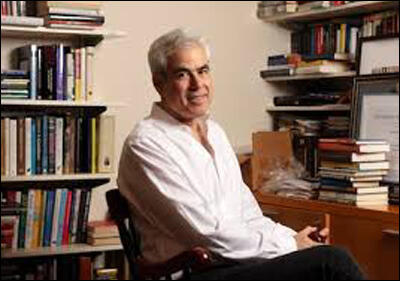
Jonathan Haidt is the author of The Anxious Generation (2025). He points out: "At the turn of the millennium, technology companies created a set of world-changing products that transformed life not just for adults all over the world but for children, too. Young people had been watching television since the 1950s but the new tech was far more portable, personalised and engaging than anything that came before. Yet the companies that developed them had done little or no research on the mental health effects. When faced with growing evidence that their products were harming young people, they mostly engaged in denial, obfuscation, and public relations campaigns. Companies that strive to maximise "engagement" by using psychological tricks to keep young people clicking were the worst offenders. They hooked children during vulnerable developmental stages, while their brains were rapidly rewiring in response to incoming stimulation. This included social media companies, which inflicted their greatest damage on girls, and video game companies and pornography sites, which sank their hooks deepest into boys. By designing a slew of addictive content that entered through kids' eyes and ears, and by displacing physical play and in-person socialising, these companies have rewired childhood and changed human development on an almost unimaginable scale." (14)
In recent years we have seen the emergence of AI software: ChatGPT (November 2022), DeepSeek AI (May 2023), Grok AI (November 2023) and Google Gemini AI (February 2024). According to the UK's AI Security Institute, these platforms make it possible to repurpose innocent images of women to present them without clothes or in suggestive or fetishistic poses. The AI Security Institute is especially concerned by the creation and spread of AI-generated child sexual abuse material. (15)
As a result of the campaign of several groups the Labour Government passed the Online Safety Act. One of the things the government did include in the Online Safety Act was the banning of Nudification (online platforms and software that use generative artificial intelligence to digitally alter an existing image or video of a person to make them appear partially or fully nude without their consent). As the government pointed out: "Nudification" apps are not used for harmless pranks. They devastate young people's lives, and we will ensure those who create or supply them face real consequences. Every child deserves to grow up safe, and we will do whatever it takes to make that a reality… The creation and supply of so-called ‘nudification' apps or tools that generate deepfake nude images of real people will also be banned, under plans announced today, building on offences which criminalise sharing these deeply damaging images. The new legislation will allow the police to target the firms and individuals who design and supply these tools." (16)
It soon became clear that the social media companies were clearly ignoring the Online Safety Act". Women began complaining about how men taking photographs from fully dressed women's Facebook accounts and then asking Elon Musk's AI tool, Grok, to show them to show the women in bikinis. This rapidly evolved into Grok being asked to provide increasingly explicit demands for women to be placed in transparent bikinis, sexualised positions, and to make their genitals visible.
Under pressure from his own MPs Keir Starmer decided to give the impression he was willing to take on Elon Musk. He announced that the UK would bring into force a law which will make it illegal to create non-consensual intimate images and warned X could lose the "right to self-regulate". He told MPs that "if X cannot control Grok, we will." As campaigners pointed out it is currently illegal to share deepfakes of adults in the UK, but legislation in the Data (Use and Access) Act which would make it a criminal offence to create or request them has not been enforced until now, despite passing in June 2025. (17)
Elon Musk eventually agreed to act after Starmer described the photographs generated by Grok as "disgusting" and "shameful". However, research carried out by The Guardian several days later revealed that "X has continued to allow users to post highly sexualised videos of women in bikinis generated by its AI tool Grok, despite the company's claim to have cracked down on misuse. The Guardian was able to create short videos of people stripping to bikinis from photographs of fully clothed, real women. It was also possible to post this adult content on to X's public platform without any sign of it being moderated, meaning the clip could be viewed within seconds by anyone with an account." (18)
The AI Security Institute continues to investigate these AI systems, and it was reported that users found it "trivially easy" to overcome the measures being put in place. The Institute found it was able to bypass the security systems of every single AI model it tested. It also raised alarm over TikTok adverts for AI companion who will "listen to you", "love you" and will never say no". (19)
Meta's algorithms relentlessly push AI videos to users (the top five Facebook videos in December were all AI generated Instagram Reels). Also popular are "Instagram content creators who rack up millions of views by generating images of themselves in post-coital disarray with celebrities. If only someone could take steps to tackle this epistemological nightmare." (20)
On 6th February 2026 a new UK law was introduced banning non-consensual intimate images being published online (VAWG). However, there is a lack of detail on how enforcement is expected to be transformed into response. There is no mention of the policing role around online VAWG beyond a commitment to increasing the use of undercover online officers. A landscape review published by the Centre for Protecting Women Online in 2025 found that there were systemic issues with the policing response to online and technology facilitated VAWG: "Policing alone can never address issues as systemic as the abuse of technology to harm women and girls." (21)
How do we control the internet. First let us look at the issue of children on the internet. Jonathan Haidt, the author of The Anxious Generation (2025), believes in what he calls collective action. "There are four main types of collective response, and each can help us to bring about major change." (i) No smartphones before year 10. Parents should delay children's entry into round-the-clock internet access by giving only basic phones with limited apps and no internet browser before the age of 14. (ii) No social media before 16. Let children get through the most vulnerable period of brain development before connecting them to an avalanche of social comparison and algorithmically chosen influencers. (iii) Phone-free schools. Schools must insist that students store their phones, smartwatches, and any other devices in phone lockers during the school day, as per the new non-statutory guidance issued by the UK government. That is the only way to free up their attention for one another and for their teachers. (iv) Far more unsupervised play and childhood independence. That's the way children naturally develop social skills, overcome anxiety, and become self-governing young adults. (22)
Damian McBeath, principal at John Wallis Academy in Ashford, Kent, has pointed out that more than 90% of schools in England have implemented bans – including more than 99% of primary schools. The Department for Education (DfE) and Ofsted back a ban and 70% of parents in the UK agree. Ireland is banning phones from schools, Australia already has. At a recent NASUWT conference 59% of teachers stated that behaviour had deteriorated because of social media. (23)
Ash Sarker, on of the most significant young political leaders on the left is in favour of banning under-16s from using social media. "Obviously it's a good idea. Everything we know about its relationship to anxiety, depression, low self-worth, the assault on and degradation of attention spans – you know, like biochemical responses, its impact on your cortisol – no 16-year-old needs that. Also [for all of us], time spent away from screens, being in community with people in real life, is both the biggest act of self-care that you can do, and it's also a really important act of resisting the creep of this technology into your life. (24)
However, many experts reject the idea of banning smartphones in schools. This includes Dr Aaron Cheng who has carried out considerable research into the subject: "With smartphones now nearly universal - 100% of UK 16-24-year-olds used one - outright bans seem increasingly impractical. A more effective strategy is to equip teachers with the right training and classroom tools to guide smartphone use. With thoughtful integration, smartphones can become powerful learning tools rather than distractions. Banning smartphones also ignores the reality that they are already central to students' daily lives. Used wisely, smartphones can foster real-time collaboration, instant access to information, personalised learning, and responsible digital citizenship - skills essential for the modern world. Our findings strongly advocate a balanced, practical approach to smartphone use in education. Instead of banning them, educators and policymakers should focus on turning these devices into structured, valuable learning opportunities. (25)
Peter Twining, Professor of Education at the Open University, is totally opposed to banning mobile phones in schools. His top five reasons are: (i) "Mobile phones are not just phones. They provide pupils with electronic dictionaries, magazines, maps, novels reference books, and scientific and musical instruments through applications. Headteachers should not dream of banning these from the learning environment." (ii) "Most schools can't afford all of the technology that they need. It seems counterproductive to ban the use of the computers that children have in their pockets – bearing in mind that today's mobile phones are considerably more powerful than computers were only a few years ago." (iii) "Banning them will not stop them being used – it will simply push that use underground. Much better for the device to be visible on the desk than hidden under it. This way, teachers will know if the mobiles are being used outside of learning." (iv) "Schools have a duty to prepare young people to live in the world outside the learning environment. Mobile phones are an integral part of life and schools should be helping young people make appropriate and effective use of them." (v) "We know that learning only happens when the learner is interested in or at the very least sees the relevance of whatever they are meant to be learning. Neuroscientist, Mary Immordino-Yang, states that: ‘It is literally neurobiologically impossible to think deeply about things that you don't care about'. If we genuinely want pupils to learn in school then we need to connect with the things they think are important – and mobile phones certainly fit that bill!" (26)
Dr Robert Harrison, director of education and integrated technology at ACS International Schools, has argued that people like Jonathan Haidt has created a moral panic about mobile phones: "I just don't see how a ban is going to push back the tide. I think we'd be better off putting our energy into helping young people learn to manage technology responsibly. The problems are real, but a ban won't make them magically go away... Some studies suggest that school day bans only intensify what happens at home. I agree that digital technologies can supercharge and intensify adolescent concerns, but I'm quite sure the social-emotional development of teenagers hasn't fundamentally changed. Today's young people don't distinguish between their digital and real world lives – they only have one existence. I'd argue that the best possible safeguarding response is helping students learn how to become responsible digital citizens, and using their mobile phones to practise digital literacies and civil engagement while at school! We have to find ways to help children to have healthy, intentional, relationships with technology that enhances their lives. That is the main idea of contextual safeguarding – helping children and their parents understand and manage risk at school and in the wider community." (27)
Research by Birmingham University has shown that smartphone policies in English secondary schools are a "huge drain" on resources, with staff spending on average more than 100 hours a week enforcing restrictions, according to research. Teachers, teaching assistants, caretakers and receptionists are involved with helping to police pupils' smartphone use in school, researchers said, with multiple staff recording incidents, overseeing detentions and communicating with parents. "The study provides the first analysis of the economic impact of smartphone policies in schools and is based on data drawn from a nationally representative sample of 20 schools in England, 13 of which have ‘restrictive' policies and seven ‘permissive' policies. According to the research, restrictive policies require phones to be turned off and hidden in a school bag or handed in to reception throughout the school day, while permissive policies allow use during breaks and lunchtime. The self-reported data showed that on average, schools with restrictive policies spend 102 hours – or the full-time equivalent of 3.1 staff a week overall – on implementing policies. Schools with permissive policies spend slightly more time on average – 108 hours or the full-time equivalent of 3.3 staff a week – potentially costing £94 per pupil per school year more than more restrictive policies." (28)
One of the main groups opposing these bans is The National Society for the Prevention of Cruelty to Children (NSPCC). Chris Sherwood its CEO recently pointed out: "For countless young people, social media can be a lifeline. A place where isolated teenagers find community, where LGBTQ+ young people find acceptance and where neurodiverse children find ways to learn and connect."
NSPCC's Childline gives the organisation a lot of information about children and social media. Children tell the NSPCC how they use social media to connect and share content with family members, to meet likeminded peers and to engage in communities and trends that they love when they are feeling low. "Pulling the plug on those spaces overnight would take away these communities and limit teenager's worlds."
Sherwood explains that: "Everyone involved in this debate has the best interests of children at heart, but we know that barring children from mainstream social media platforms won't stop them going online. It will simply push them to unregulated forums, anonymous apps, and gaming platforms where risks are higher and support is scarce. When you drive young people underground, you don't reduce harm. You bury it where it's hardest to see and easiest to exploit. And once that happens, something even more dangerous follows. Suddenly you have children and young people who are less likely to speak up or reach out for help. If social media becomes something they must conceal, they are less likely to tell parents or teachers when something goes wrong and report inappropriate things they've seen and grooming or abuse they may experience. They'll stay silent because they fear getting in trouble. That is a gift to abusers, not a safeguard for children." (29)
Sherwood rightly points out that we need to tackle the underlying problem head on. The tech companies have built platforms that are unsafe by design. I would argue that adults as well as children need protecting from these harmful social media algorithms that recognises vulnerabilities in the user and then exploits them to maximise their profits. The question we need to ask is why the current government is so reluctant to deal with social media companies. The reason is corruption.
Keir Starmer and the Online Safety Act
On 16 February 2026, Keir Starmer announced that makers of AI chatbots that put children at risk will face massive fines or even see their services blocked in the UK under law changes proposed by the government. With an increasing number of children using chatbots for everything from help with their homework to mental health support, the government said it would "move fast to shut a legal loophole and force all AI chatbot providers to abide by illegal content duties in the Online Safety Act or face the consequences of breaking the law". It means that any changes to children's use of social media, which may include other measures such as restricting infinite scrolling, could happen as soon as this summer. (30)
Starmer announced a further change to the Online Safety Act on 19th February 2026. "We are putting tech companies on notice: any non-consensual intimate image that is flagged must be taken down within 48 hours. We must create a system where a victim reports once, and it's removed everywhere, on multiple platforms, and automatically deleted if it is reuploaded. We are also designating creating or sharing these images as a priority offence under the Online Safety Act, so they are treated with the seriousness they deserve. These measures build on our violence against women and girls strategy, published before Christmas, with more than 200 commitments across prevention, victim support and prosecution." (31)
Some critics of Starmer's strategy argue that 48 hours is too long. For example, India has recently mandated that social media companies remove some deepfake content in three hours. Anne Craanen, who researches online misogyny at the Institute for Strategic Dialogue. Has pointed out that "48 hours is longer than the timeframe for the removal of other types of content, such as terrorist content in the EU." Craanen added that the advent of AI tools and AI deepfakes will make this problem worse, allowing nonconsensual intimate images and other content to be quickly altered and spread around the internet. (32)
Starmer is also considering banning social media ban for under-16s in the UK. However, early evidence from Australia suggests that stopping motivated under-16s accessing social platforms is harder than just introducing a ban. Some apps not initially covered by the ban have surged in popularity since its implementation, while young users have found that getting past automated age checks is easy. (33)
A better idea is a smartphone that is made for children. For example, Techless, a US company has launched such a phone. The pared-back version of the top-selling iphone, which will not allow internet searches, gaming or downloads of Instagram, TikTok, Snapchat and other social media. The phone includes an app store that will only allow users access to apps for tasks like banking, public transport, schooling, calendars and weather. However, the price is far too high as it is being offered in the UK for £99 a month. (34)
Social media companies in the United States are protected from prosecution by Section 230 of the Communications Decency Act (1996). "At the time, some lower courts in the United States were threatening the ability of Internet service providers and other online providers to carry the speech of individuals without risking significant legal liability for the content of the speakers. For example, if illegal user-generated content was posted to a forum, the forum organization could be held responsible despite not being involved in the creation of the content. This legal risk for services providers threatened the ability of the general public to post content online and participate in a global conversation, and also increased the challenges faced by innovators trying to build new online services." (35)
The main objective of this legislation was to preserve First Amendment freedom of speech rights in the United States. However, why should the rest of the world be forced to follow the rules of another country. As Paul Mason pointed out several years ago: "The solution has been staring us in the face for years. It is to regulate the social media platforms in the way we regulate newspapers, radio channels, movies and TV. The tech giants' argument was that they were ‘only platforms' for content generated by third parties. This was never true. Each of the platforms deploys decision-making algorithms that determine what content is prioritised, and it's been repeatedly shown that the algorithms themselves are flawed… Regulators, with those in Europe taking the lead, have up to now focused on forcing the tech giants to publish details of the algorithms they use, and to conduct risk assessments of the content they are disseminating. But it's time to do more. Both in the UK and the European Union there is no ‘First Amendment' right to disseminate hate speech and incitement. That is why newspapers self-regulate and the government regulates both broadcast and film content." (36)
If a newspaper publishes an article that includes inaccurate information about an individual it is possible to take legal action against both the author and publisher. However, social media platforms are free to publish posts that encourages anti-Semitism, Islamophobia, homophobia and other forms of toxicity. These posts are often made by people hiding behind pseudonyms. This has become a serious problem in sports like football. During the final six weeks of the 2019-2020 football season, a joint PFA and Signify study of online content identified more than 3,000 abusive messages aimed at Premier League players, 56% of which were racist. Of the players surveyed, 43% said they had experienced targeted racist abuse.
It was suggested that social media platforms should make their users sign in with formal identification such as a driving licence or passport to make it easier for the police to identify people who commit hate crimes and also discourage people from posting abuse in the first place. In a letter to Twitter and Facebook, English football's authorities asked that: "All users should be subject to an improved verification process that (only if required by law enforcement) allows for accurate identification of the person behind the account. Steps should also be taken to stop a user that has sent abuse previously from re-registering an account". (37)
However, others argued that you would be giving social media companies too much personal data and they won the argument and the abuse increased rapidly. A BBC News analysis conducted with data science company Signify focused on posts made during 10 Premier League and six Women's Super League matches on the weekend of 8 and 9 November 2025. They discovered more than 2,000 extremely abusive social media posts - including racist slurs, homophobia, death and rape threats - were sent about managers and players that weekend. Managers were targeted more than players, with 82% of abusive posts made on X. A total of 61% of all abusive messages were sent from accounts in the UK and the Republic of Ireland, and the data suggests the overall number is on the rise. (38)
We have the choice of either going along with this abuse or making the social media platforms and their members accountable for what appears online. We should regulate the social media platforms in the way we regulate publishers of other forms of media. We also need to make posters accountable for what they say. One way we could do this is for everyone to have a Digital ID that contains the name, age and nationality of the poster. This would not only improve the behaviour of the poster but help to deal with fraud. As Elis Thomas has pointed out: "Enabled by advances in biometrics, blockchain, and privacy-preserving software, digital ID systems are helping to streamline access to the digital economy while reducing fraud." (39)
References
(1) John Simkin, Spartacus Blog (4 September 2017)
(2) The New York Times (3 October 2021)
(3) The Wall Street Journal (September/October 2021)
(4) Scout Burchill, Facebook Profits From Political Polarization and Violence (28 January, 2021)
(5) Twitter Turns Six (21 March 2012)
(6) Elizabeth Dwoskin, Washington Post (26 October, 2017)
(7) News 18 (31 October, 2019)
(8) The Verge (22 April, 2022)
(9) Noah Carl, UnHerd (24 November, 2024)
(10) BBC News (4 April 2023)
(11) Amnesty International Report on TikTok (7 November 2023)
(12) Kevin Rawlinson, The Guardian (4 April 2023)
(13) BBC News (23 January 2026)
(14) Jonathan Haidt, The Guardian (24 March 2024)
(15) AI Security Institute, Our approach to tackling AI-generated child sexual abuse material (17 December, 2025)
(16) Government Statement (18 January 2025)
(17) BBC News (12 January 2026)
(18) The Guardian (16 January 2026)
(19) Private Eye, No 1667 (23 January-5 February 2026) page 19
(20) Private Eye, No 1668 (23 January-5 February 2026) page 19
(21) Giles Herdale, The Informer (6 February 2026)
(22) Jonathan Haidt, The Guardian (24 March 2024)
(23) Damian McBeath, The Observer (27 April 2025)
(24) Ash Sarker, The Nerve (20 February 2026)
(25) Aaron Cheng, Why schools shouldn't ban smartphones from the classroom (September 25th, 2025)
(26) Peter Twining, 5 Reasons Why mobile phones should not be banned in schools (25 July 2018)
(27) Dr Robert Harrison, The Observer (27 April 2025)
(28) The Guardian (10 February 2026)
(29) Chris Sherwood, A social media ban would punish teenagers for tech platform's failures (21 January 2026)
(30) The Guardian (16 February 2026)
(31) Keir Starmer, The Guardian (19 February 2026)
(32) The Guardian (18 February 2026)
(33) Private Eye, No 166 (23 January-5 February 2026)
(34) The Guardian (16 July 2025)
(35) Kelly O'Hara and Natalie Campbell, What is Section 230 and Why Should I Care About It? (24 February 2023)
(36) Paul Mason, New Statesman (2 December 2021)
(37) BBC News (26 February 2021)
(38) BBC News (3 December 2025)
(39) Elis Thomas, Digital ID in the UK (9 September 2025)
Previous Posts
Should the Government try to control was appears on the Internet? (26th February, 2026)
The Political Ideas of Rutger Bregman (25th January, 2026)
Technofeudalism: Is AI going to destroy Capitalism and Democracy? (19th November, 2025)
How do we stop Nigel Farage from forming a government (14th October, 2025)
Donald Trump and the Deep State (13th August, 2025)
The History of Fascism: Are Vladimir Putin and Donald Trump Fascists? (10th June, 2025)
The CIA memorandum on the death of Gary Underhill (6th April, 2025)
Should George Orwell have chosen the title, 2030, instead of 1984? Keir Starmer as Big Brother. (17th March, 2025)
The Evolution of the Brain. Can you make yourself happy? (16th January, 2025)
Technology and the History Classroom: Should the Teaching Profession Embrace AI? (20th November, 2024)
Venetia Stanley, H. H. Asquith and the First World War (22nd August, 2024)
The General Election Campaign: The Tyranny of the Centre (4th July, 2024)
In Defence of the New History (20th March, 2024)
The Political History of Keir Starmer (25th January, 2024)
JFK Assassination: What Happened in the Trauma Room (23rd November, 2023)
Sir Keir Starmer and his Broken Pledges (1st September, 2023)
Should history students be using ChatGBT? (28th May, 2023)
A historical account of the Daily Mail, the Conservative Party and Migration (18th March, 2023)
Art and the Women's Suffrage Movement (20th January, 2023)
Emancipation of Women: 1870-1928 (15th November, 2022)
The Struggle for Women's Rights: 1500-1870 (21st September, 2022)
The real reason why the FA banned women from playing on their grounds (1st August, 2022)
The WSPU Young Hot Bloods and the Arson Campaign (26th May, 2022)
Interpretations in History (18th April, 2022)
The Student as Teacher (31st December, 2021)
History Simulations in the Classroom (30th November, 2021)
Walter Tull: Football and War Hero (20th October, 2021)
Child Labour and Freedom of the Individual (26th July, 2021)
Don Reynolds and the Assassination of John F. Kennedy (15th June, 2021)
Richard Nixon and the Conspiracy to kill George Wallace in 1972 (5th May, 2021)
The Connections between Watergate and the JFK Assassination (2nd April, 2021)
The Covid-19 Pandemic: An Outline for a Public Inquiry (4th February, 2021)
Why West Ham did not become the best team in England in the 1960s (24th December, 2000)
The Lyndon Baines Johnson Tapes and the John F. Kennedy Assassination (9th November, 2020)
It is Important we Remember the Freedom Riders (11th August, 2020)
Dominic Cummings, Niccolò Machiavelli and Joseph Goebbels (12th July, 2020)
Why so many people in the UK have died of Covid-19 (14th May, 2020)
Why the coronavirus (Covid-19) will probably kill a higher percentage of people in the UK than any other country in Europe.. (12th March, 2020 updated 17th March)
Mandy Rice Davies and Christine Keeler and the MI5 Honey-Trap (29th January, 2020)
Robert F. Kennedy was America's first assassination Conspiracy Theorist (29th November, 2019)
The Zinoviev Letter and the Russian Report: A Story of Two General Elections (24th November, 2019)
The Language of Right-wing Populism: Adolf Hitler to Boris Johnson (11th October, 2019)
The Political Philosophy of Dominic Cummings and the Funding of the Brexit Project (15th September, 2019)
What are the political lessons to learn from the Peterloo Massacre? (19th August, 2019)
Crisis in British Capitalism: Part 1: 1770-1945 (9th August, 2019)
Richard Sorge: The Greatest Spy of the 20th Century? (29th July, 2020)
The Death of Bernardo De Torres (26th May, 2019)
Gas Masks in the Second World War killed more people than they saved (9th May, 2019)
Did St Paul and St Augustine betray the teachings of Jesus? (20th April, 2019)
Stanley Baldwin and his failed attempt to modernise the Conservative Party (15th April, 2019)
The Delusions of Neville Chamberlain and Theresa May (26th February, 2019)
The statement signed by Robert F. Kennedy Jr. and Kathleen Kennedy Townsend (20th January, 2019)
Was Winston Churchill a supporter or an opponent of Fascism? (16th December, 2018)
Why Winston Churchill suffered a landslide defeat in 1945? (10th December, 2018)
The History of Freedom Speech in the UK (25th November, 2018)
Are we heading for a National government and a re-run of 1931? (19th November, 2018)
George Orwell in Spain (15th October, 2018)
Anti-Semitism in Britain today. Jeremy Corbyn and the Jewish Chronicle (23rd August, 2018)
Why was the anti-Nazi German, Gottfried von Cramm, banned from taking part at Wimbledon in 1939? (7th July, 2018)
What kind of society would we have if Evan Durbin had not died in 1948? (28th June, 2018)
The Politics of Immigration: 1945-2018 (21st May, 2018)
State Education in Crisis (27th May, 2018)
Why the decline in newspaper readership is good for democracy (18th April, 2018)
Anti-Semitism in the Labour Party (12th April, 2018)
George Osborne and the British Passport (24th March, 2018)
Boris Johnson and the 1936 Berlin Olympics (22nd March, 2018)
Donald Trump and the History of Tariffs in the United States (12th March, 2018)
Karen Horney: The Founder of Modern Feminism? (1st March, 2018)
The long record of The Daily Mail printing hate stories (19th February, 2018)
John Maynard Keynes, the Daily Mail and the Treaty of Versailles (25th January, 2018)
20 year anniversary of the Spartacus Educational website (2nd September, 2017)
The Hidden History of Ruskin College (17th August, 2017)
Underground child labour in the coal mining industry did not come to an end in 1842 (2nd August, 2017)
Raymond Asquith, killed in a war declared by his father (28th June, 2017)
History shows since it was established in 1896 the Daily Mail has been wrong about virtually every political issue. (4th June, 2017)
The House of Lords needs to be replaced with a House of the People (7th May, 2017)
100 Greatest Britons Candidate: Caroline Norton (28th March, 2017)
100 Greatest Britons Candidate: Mary Wollstonecraft (20th March, 2017)
100 Greatest Britons Candidate: Anne Knight (23rd February, 2017)
100 Greatest Britons Candidate: Elizabeth Heyrick (12th January, 2017)
100 Greatest Britons: Where are the Women? (28th December, 2016)
The Death of Liberalism: Charles and George Trevelyan (19th December, 2016)
Donald Trump and the Crisis in Capitalism (18th November, 2016)
Victor Grayson and the most surprising by-election result in British history (8th October, 2016)
Left-wing pressure groups in the Labour Party (25th September, 2016)
The Peasant's Revolt and the end of Feudalism (3rd September, 2016)
Leon Trotsky and Jeremy Corbyn's Labour Party (15th August, 2016)
Eleanor of Aquitaine, Queen of England (7th August, 2016)
The Media and Jeremy Corbyn (25th July, 2016)
Rupert Murdoch appoints a new prime minister (12th July, 2016)
George Orwell would have voted to leave the European Union (22nd June, 2016)
Is the European Union like the Roman Empire? (11th June, 2016)
Is it possible to be an objective history teacher? (18th May, 2016)
Women Levellers: The Campaign for Equality in the 1640s (12th May, 2016)
The Reichstag Fire was not a Nazi Conspiracy: Historians Interpreting the Past (12th April, 2016)
Why did Emmeline and Christabel Pankhurst join the Conservative Party? (23rd March, 2016)
Mikhail Koltsov and Boris Efimov - Political Idealism and Survival (3rd March, 2016)
Why the name Spartacus Educational? (23rd February, 2016)
Right-wing infiltration of the BBC (1st February, 2016)
Bert Trautmann, a committed Nazi who became a British hero (13th January, 2016)
Frank Foley, a Christian worth remembering at Christmas (24th December, 2015)
How did governments react to the Jewish Migration Crisis in December, 1938? (17th December, 2015)
Does going to war help the careers of politicians? (2nd December, 2015)
Art and Politics: The Work of John Heartfield (18th November, 2015)
The People we should be remembering on Remembrance Sunday (7th November, 2015)
Why Suffragette is a reactionary movie (21st October, 2015)
Volkswagen and Nazi Germany (1st October, 2015)
David Cameron's Trade Union Act and fascism in Europe (23rd September, 2015)
The problems of appearing in a BBC documentary (17th September, 2015)
Mary Tudor, the first Queen of England (12th September, 2015)
Jeremy Corbyn, the new Harold Wilson? (5th September, 2015)
Anne Boleyn in the history classroom (29th August, 2015)
Why the BBC and the Daily Mail ran a false story on anti-fascist campaigner, Cedric Belfrage (22nd August, 2015)
Women and Politics during the Reign of Henry VIII (14th July, 2015)
The Politics of Austerity (16th June, 2015)
Was Henry FitzRoy, the illegitimate son of Henry VIII, murdered? (31st May, 2015)
The long history of the Daily Mail campaigning against the interests of working people (7th May, 2015)
Nigel Farage would have been hung, drawn and quartered if he lived during the reign of Henry VIII (5th May, 2015)
Was social mobility greater under Henry VIII than it is under David Cameron? (29th April, 2015)
Why it is important to study the life and death of Margaret Cheyney in the history classroom (15th April, 2015)
Is Sir Thomas More one of the 10 worst Britons in History? (6th March, 2015)
Was Henry VIII as bad as Adolf Hitler and Joseph Stalin? (12th February, 2015)
The History of Freedom of Speech (13th January, 2015)
The Christmas Truce Football Game in 1914 (24th December, 2014)
The Anglocentric and Sexist misrepresentation of historical facts in The Imitation Game (2nd December, 2014)
The Secret Files of James Jesus Angleton (12th November, 2014)
Ben Bradlee and the Death of Mary Pinchot Meyer (29th October, 2014)
Yuri Nosenko and the Warren Report (15th October, 2014)
The KGB and Martin Luther King (2nd October, 2014)
The Death of Tomás Harris (24th September, 2014)
Simulations in the Classroom (1st September, 2014)
The KGB and the JFK Assassination (21st August, 2014)
West Ham United and the First World War (4th August, 2014)
The First World War and the War Propaganda Bureau (28th July, 2014)
Interpretations in History (8th July, 2014)
Alger Hiss was not framed by the FBI (17th June, 2014)
Google, Bing and Operation Mockingbird: Part 2 (14th June, 2014)
Google, Bing and Operation Mockingbird: The CIA and Search-Engine Results (10th June, 2014)
The Student as Teacher (7th June, 2014)
Is Wikipedia under the control of political extremists? (23rd May, 2014)
Why MI5 did not want you to know about Ernest Holloway Oldham (6th May, 2014)
The Strange Death of Lev Sedov (16th April, 2014)
Why we will never discover who killed John F. Kennedy (27th March, 2014)
The KGB planned to groom Michael Straight to become President of the United States (20th March, 2014)
The Allied Plot to Kill Lenin (7th March, 2014)
Was Rasputin murdered by MI6? (24th February 2014)
Winston Churchill and Chemical Weapons (11th February, 2014)
Pete Seeger and the Media (1st February 2014)
Should history teachers use Blackadder in the classroom? (15th January 2014)
Why did the intelligence services murder Dr. Stephen Ward? (8th January 2014)
Solomon Northup and 12 Years a Slave (4th January 2014)
The Angel of Auschwitz (6th December 2013)
The Death of John F. Kennedy (23rd November 2013)
Adolf Hitler and Women (22nd November 2013)
New Evidence in the Geli Raubal Case (10th November 2013)
Murder Cases in the Classroom (6th November 2013)
Major Truman Smith and the Funding of Adolf Hitler (4th November 2013)
Unity Mitford and Adolf Hitler (30th October 2013)
Claud Cockburn and his fight against Appeasement (26th October 2013)
The Strange Case of William Wiseman (21st October 2013)
Robert Vansittart's Spy Network (17th October 2013)
British Newspaper Reporting of Appeasement and Nazi Germany (14th October 2013)
Paul Dacre, The Daily Mail and Fascism (12th October 2013)
Wallis Simpson and Nazi Germany (11th October 2013)
The Activities of MI5 (9th October 2013)
The Right Club and the Second World War (6th October 2013)
What did Paul Dacre's father do in the war? (4th October 2013)
Ralph Miliband and Lord Rothermere (2nd October 2013)