

Watergate
In 1971, G. Gordon Liddy joined the White House Staff. Working under Egil Krogh, Liddy became a member of the Special Investigations Group (SIG). The group was (informally known as "the Plumbers" because their job was to stop leaks from Nixon's administration. Later that year the SIG became concerned about the activities of Daniel Ellsberg. He was a former member of the McNamara Study Group which had produced the classified History of Decision Making in Vietnam, 1945-1968. (1)
Ellsberg, disillusioned with the progress of the war, believed this document should be made available to the public. Ellsberg gave a copy of what later became known as the Pentagon Papers to Phil Geyelin of the Washington Post. Katharine Graham and Ben Bradlee decided against publishing the contents on the document. Ellsberg now went to the New York Times and they began publishing extracts from the document on 13th June, 1971. This included information that Dwight Eisenhower had made a secret commitment to help the French defeat the rebellion in Vietnam. The document also showed that the Gulf of Tonkin incident had been used by Lyndon B. Johnson to send troops to Vietnam. Johnson told the Joint Chiefs of Staff at a 1963 Christmas party, "Just get me elected, and then you can have your war." (2)
The Pentagon Papers
Ben Bradlee wrote: "Six full pages of news stories and top-secret documents, based on a 47-volume, 7,000-page study, "History of U.S. Decision-Making Process on Vietnam Policy, 1945-1967." The New York Times had obtained a copy of the study, and had assigned more than a dozen top reporters and editors to digest it for three months, and write dozens of articles... We found ourselves in the humiliating position of having to rewrite the competition. Every other paragraph of the Washington Post story had to include some form of the words 'according to the New York Times,' blood - visible only to us - on every word." (3)
Bradlee was criticised by his journalists for failing to break this story. He now made attempts to catch up and on June 18, 1971, the Washington Post began publishing extracts from another copy of the document. However, Bradlee concentrated on the period when Dwight Eisenhower was in power. The first story reported on how the Eisenhower administration had delayed democratic elections in Vietnam. This marked a change in direction and "established Katharine Graham as a great American woman in the 1970s, a leader of the moral opposition to the Nixon administration, the truth of the matter was that her newspaper had done a bad job handling the moral issues of the 1960s, as bad as that of the politicians themselves. The significance of the Pentagon Papers was that they put her belatedly on the right side of the issues." (4)
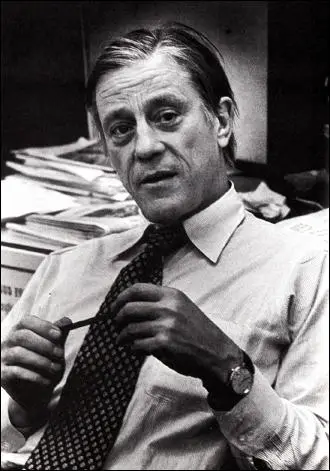
Richard Nixon now made attempts to prevent anymore extracts from the Pentagon Papers being published. Murray Gurfein, the federal judge who heard the case, ruled: “The security of the nation is not at the ramparts alone. Security also lies in the value of our free institutions. A cantankerous press, an obstinate press, a ubiquitous press must be suffered by those in authority in order to preserve the even greater values of freedom of expression and the right of the people to know.” (5)
The Supreme Court ruled against Nixon and Hugo Black commented that the two newspapers "should be commended for serving the purpose that the Founding Fathers saw so clearly". "The next day, both of us resumed our stories about the Pentagon Papers. For the first time in the history of the American republic, newspapers had been restrained by the government from publishing a story - a black mark in the history of democracy. We had won." (6)
First Watergate Break-in
On 1st January 1972, James McCord was appointed as the security coordinator for the Committee for the Re-Election of the President (7). It was officially, a fundraising organization of United States president Richard Nixon's 1972 re-election. In addition to fundraising, the organization was engaged in political sabotage against Nixon's opponents, the various Democratic Party politicians running in the presidential election. (8)
In 1972 G. Gordon Liddy presented Nixon's attorney general, John N. Mitchell, with an action plan called Operation Gemstone. Liddy wanted a $1 million budget to carry out a series of black ops activities against Nixon's political enemies. Mitchell decided that the budget for Operation Gemstone was too large. Instead, he gave him $250,000 to launch a scaled-down version of the plan. (9)
One of Liddy's first tasks was to place electronic devices in the Democratic Party campaign offices in an apartment block called Watergate. Liddy wanted to wiretap the conversations of Larry O'Brien, chairman of the Democratic National Committee. Liddy recruited McCord to help him with this. On 28th May 1972, McCord and his team broke into the DNC's offices and placed bugs on the telephones of O'Brien and R. Spencer Oliver, executive director of the Association of State Democratic Chairmen. The bug on O'Brien's telephone proved faulty, but Baldwin monitored two hundred calls on Oliver's telephone. (10)
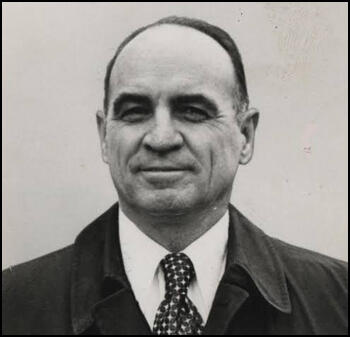
It has been pointed out that Bill Haddad, a Democratic politician in New York sent a letter to his friend Larry O'Brien in Washington on 23 March 1972, warning him that his Watergate office might be a target for wiretapping. "I am hearing some very disturbing stories about GOP sophisticated surveillance techniques now being used for campaign purposes… The information comes from a counter wiretapper who helped me once in a very difficult situation in Michigan." (11)
O'Brien sent an aide, John Stewart, to New York to check on the information. Haddad arranged for his source, Arthur Woolston-Smith, to meet with Stewart. (Declassified CIA documents indicate that as early as 1954, Woolston-Smith was a representative of the Canadian Intelligence Service). Woolston-Smith told Stewart that Miami's Cuban community would be involved and that they were going to break into O'Brien's office to find evidence that the Democratic Party was receiving money from Cuba. (12)
Second Watergate Break-in
It is therefore believed that the bug on Larry O'Brien's phone was simply removed after it was installed and that's why it did not work. It was therefore decided to return to O'Brien's office on 17 June 1972 to place a new bug on his telephone. Earl Robert Merritt, a member of Metropolitan Police Department, was told by one of his informants about the intended break-in. Merritt passed this information to Carl M. Shoffler who set up an entrapment scheme. His plan was to "become the most famous detective in the world". (13)
Shoffler, who had been injured on duty some months before, was assigned to desk work on the evening of 16 June 1972. His shift ended at 10.00 p.m., but he voluntarily undertook a second shift, joining a plainclothes tactical unit cruising the streets in the early-morning hours. Jim Hougan has raised questions why Shoffler volunteered for a second shift that night. This meant two eight-hour shifts back-to-back. "The following day was Shoffler's birthday. His wife and children had gone to Pennsylvania on the afternoon of 16 June to spend the weekend at Shoffler's parents' home. Shoffler was to join them that weekend to celebrate his birthday with his parents. Given the long journey in front of him, it seems odd that he chose to work a second shift on that particular night." (14)
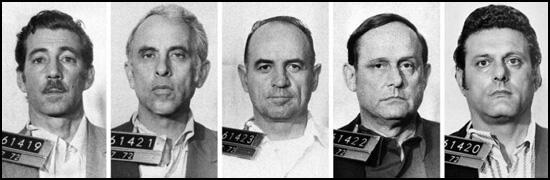
Carl Shoffler was sitting with three other officers, in a parked police car, a minute from Watergate building when Watergate Security Guard Frank Wills found the second taped door and called the police for help. (15) Frank Sturgis, Virgilio Gonzalez, Eugenio Martinez, Bernard L. Barker and James W. McCord were arrested at 2.30 am during a break-in into the Democratic Party headquarters at Watergate Office Building. When arrested Barker had his hotel key in his pocket. In his hotel room found a briefcase containing $4,600. The money was in hundred-dollar bills in sequential serial numbers that linked to the money found on the Watergate burglars. They also found two address books with the name "Howard Hunt" and details that he worked in the White House. (16)
As soon as E. Howard Hunt had become aware of the arrests, he started making telephone calls: "My first was to lawyer Douglas Caddy… His sleepy voice didn't sound too happy. ‘Yes' he said. ‘Doug? This is Howard. I hate to wake you up, but I've got a tough situation, and I need to talk to you. Can I come over?' That was the beginning of Watergate – a scandal that would bring down a president and destroy my life in the process." (17)
Douglas Caddy later reported what Hunt said when he arrived at his house: "Hunt explained to me what had occurred inside the Democratic National Committee headquarters at Watergate culminating in the arrests of James McCord and the four Cuban-Americans. I was appalled at what I heard and immediately realised the dire threat it posed as a criminal case to the survival of the Nixon Administration…. From my apartment Hunt telephoned Gordon Liddy… Shortly before 5 a.m. both Hunt, in my apartment, and Liddy, on the telephone with me, retained my services as their attorney to represent them and the five arrested burglars in the case." (18)
G. Gordon Liddy now telephoned Jeb Stuart Magruder, the deputy director of the Committee to Re-Elect the President (CRP) to tell him, "That five of our men had been arrested in DNC headquarters" and that he should tell John Mitchell, the Attorney General, about what had happened. Mitchell then gave permission for Liddy to tell Richard Kleindienst, the Deputy Attorney General "to help get McCord out of jail right away – before it's found out who he really is." Kleindienst refused to help and so Liddy returned to his office and continued to destroy all the records of his illegal actions. (19)
The Watergate burglars first appeared in court for their arraignment on Saturday, June 17, 1972, just hours after their early-morning arrest. The only journalist in the courtroom was Bob Woodward. He later wrote about his attendance at the courtroom. "One person stood out. In a middle row sat a young man with fashionably long hair and an expensive suit with slightly flared lapels, his chin high, his eyes searching the room as if he were in unfamiliar surroundings." Woodward sat down next to him and asked if he was in court because of the Watergate arrests. "Perhaps," the man said. "I'm not the attorney of record. I'm acting as an individual." He then said his name was Douglas Caddy. (20)
Douglas Caddy later recalled: "As the five were being arraigned in court late that Saturday, a Washington Post reporter named Bob Woodward, himself a former military intelligence agent assigned to the Nixon White House, sought me out. I found myself in the awkward position of providing evasive answers, because at that point few persons knew of the involvement of Hunt and Liddy, and anything I might say could place them in legal jeopardy." (21)
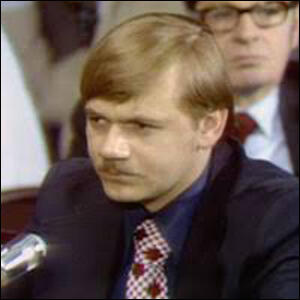
During the court hearing James McCord was asked by the judge about his current employment. He replied that he was a security consultant and then went on to say he had previously worked for the CIA. As soon as Woodward heard this, he knew he had an interesting news story. Why had McCord revealed his association with the CIA? Is it possible that Woodward had been told by someone in the CIA that he was going to give that information that morning? (22)
Woodward returned to the office with news of McCord's statement. The city editor, Barry Sussman, decided that the story should appear on the front page of the newspaper. The first paragraph of the story read: "Five men, one of whom said he is a former employee of the Central Intelligence Agency, were arrested at 2.30 a.m. yesterday in what authorities described as an elaborate plot to bug the offices of the Democratic National Committee here." (23)
Carl Bernstein was chosen to work with Woodward on the story. Katharine Graham admitted this was a strange choice and the two men had never worked on a story together. "Carl Bernstein... had been at the Washington Post since the fall of 1966 but had not distinguished himself. He was a good writer, but his poor work-habits were well-known throughout the city room even then, as was his famous roving eye. In fact, one thing that stood in the way of Carl's being put on the story was that Ben Bradlee was about to fire him." (24)
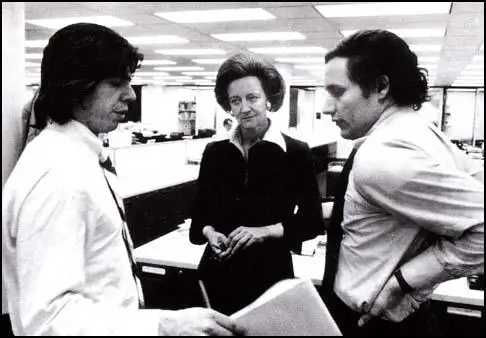
Several people who have researched the case believe that it was Carl M. Shoffler, a detective in the police department's intelligence unit, who had arrested the burglars, was the man who tipped off Woodward. In his book, Secret Agenda: Watergate, Deep Throat and the CIA (1984) Jim Hougan points out that both H. R. Halderman (The Ends of Power) and Carl Oglesby (The Yankee and Cowboy War: Conspiracies and Dallas to Watergate and Beyond) both believed that it was Shoffler who told Woodward about the Watergate burglars appearing in court that morning. (25)
E. Howard Hunt was also highly suspicious of Carl Shoffler. In an interview with Time Magazine he asked why Shoffler was in a position to arrest the Watergate burglars on 17 June 1972: "There were just too many fishy things that occurred. What was the Mod Squad (Shoffler's group) doing out on the street some two or three hours after they were supposed to be off duty? McCord was an electronic hitchhiker who shouldn't have been allowed on our operation… There were just too many things that went wrong for them all to be a coincidence." (26)
Captain Edmund Chung was Shoffler's commanding officer at Vint Hill Farm Station in Virginia. Chung claims that he had dinner several months after the Watergate break-in. According to Chung, Shoffler told him that the arrests were the result of a tip-off and that he had been in contact with Alfred C. Baldwin prior to the break-in. Shoffler added that if he ever made the whole story public, "his life wouldn't be worth a nickel". Shoffler later denied the story and suggested that Chung was a CIA agent. (27)
Deep Throat
Bob Woodward, claimed that one of his best sources was a man that was given the nickname of Deep Throat. He claims that on 19th June, he telephoned a man who he called "an old friend" for information about the burglars. This man, who Woodward claims was a high-ranking federal employee, was willing to help Woodward as long as he was never named as a source. During their first telephone conversation Deep Throat insisted on certain conditions. According to All the President's Men: "His identity was unknown to anyone else. He could be contacted only on very important occasions. Woodward had promised he would never identify him or his position to anyone. Further, he, had agreed never to quote the man, even as an anonymous source. Their discussions would be only to confirm information that had been obtained elsewhere and to add some perspective." (28)
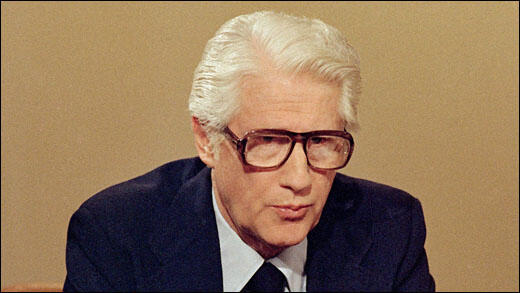
Ben Bradlee claims that Deep Throat was Woodward's source. However, Deborah Davis, the author of Katharine the Great (1979), claims this is not true: "Bradlee knew him (Deep Throat), had known him far longer than Woodward. There is a possibility that Woodward had met him while working as an intelligence liaison between the Pentagon and the White House, where Deep Throat spent a lot of time, and that he considered Woodward trustworthy, or useful, and began talking to him when the time was right. It is equally likely, though, that Bradlee, who had given Woodward other sources on other stories, put them in touch after Woodward's first day on the story, when Watergate burglar James McCord said at his arraignment hearing that he had once worked for the CIA." (29) Davis suggests that Deep Throat was Bradlee's CIA friend, Richard Ober. Woodward later identified Deep Throat as Mark Felt, who worked for FBI. (30) However, it is clear from the evidence that Woodward claimed Deep Throat supplied, came from a variety of different sources, including the CIA and the White House. (31)
Despite his close relationship with Richard Nixon, in June 1974 William C. Sullivan was accused of being Deep Throat, the top level mole in Nixon's administration that provided some of the important evidence to Bob Woodward and Carl Bernstein in their investigation of Watergate..The Washingtonian Magazine reported: "Some insiders think Deep Throat is more than one source… A lot of names are being bandied about. People Magazine says Deep Throat was Pat Gray, FBI director from May 1972 to April 1973. Another FBI favourite is William Sullivan, an assistant FBI director fired by J. Edgar Hoover and then rehabilitated by the Nixon Administration after Hoover's death in May 1972." (32)
Ray Locker has also uncovered information that suggests that Sullivan was one of the sources that made up Deep Throat. He has examined Woodward's journalistic notes that were donated to the University of Texas. They show that Woodward met with Sullivan in a bar in Prince George's County, Maryland on 5 March 1973. Sullivan told Woodward a tale of a "vigilante squad" in the Justice Department run by former Assistant Attorney General Robert Mardian that spied on journalists. Mardian's team, Sullivan continued, eventually became a political operation at Haldeman's request. In All the President's Men (1974), Woodward identified the source of this information as Deep Throat. (33)
The Motives behind Watergate
There are two important questions that need to be asked about the Watergate break-in. The first is what were the motives behind the crime. Russ Baker has argued: "If, as it appears, Watergate was indeed a setup, it was a fairly elaborate covert operation, with three parts: 1) creating the crime, 2) implicating Nixon by making him appear to be knowledgeable and complicit in a cover-up, and 3) ensuring that an aggressive effort would be mounted to use the 'facts' of the case to prosecute Nixon and force him from office." Baker claims that all those who played an important role in the downfall of Richard Nixon had CIA connections - John Dean, E. Howard Hunt, Frank Sturgis, Virgilio Gonzalez, Eugenio Martinez, Bernard L. Barker, James W. McCord, Alexander P. Butterfield, Jeb Stuart Magruder and Leon Jaworski. (34)
As Richard Nixon later pointed out in his autobiography: "Press reports soon indicated that Hunt and McCord and their confederates were attempting to photograph files, bug the telephones, and arrange electronic monitoring of the Democratic Committee. I could not understand why anyone would think there was anything to be gained from such a half-baked and technically difficult operation that would possibly warrant the risks involved." (35)
Nixon had similar thoughts when he first read about the Watergate burglary in the Miami Herald while vacationing in Florida: "It sounded preposterous. Cubans in surgical gloves bugging the DNC! I dismissed it as some sort of prank... The whole thing made so little sense. Why, I wondered. Why then? Why in such a blundering way... Anyone who knew anything about politics would know that a national committee headquarters was a useless place to go for inside information on a presidential campaign. The whole thing was so senseless and bungled that it almost looked like some kind of a set-up." (36)
Nixon's Chief of Staff, H. R. Halderman, was another person who could not see why the break-in had been organised by John N. Mitchell, G. Gordon Liddy and James W. McCord. "Mitchell, the campaign chairman, knew by June 17 that Nixon didn't need any political information, useful or otherwise, to defeat McGovern. He was about 64-36 in the polls, an unprecedented lead." (37)
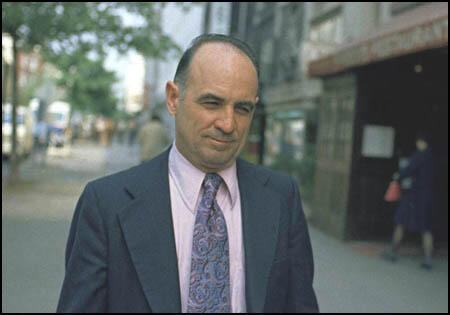
Fred Thompson, the minority counsel to assist the Republican senators on the Senate Watergate Committee, later claimed: "In my opinion, we (the minority staff) had already determined that the CIA was aware of the activities of the Watergate burglars prior to the break-in and that it perhaps knew more than' that... In my mind, the question was becoming one of whether the CIA had been a participant in or a benign observer of the breakin, or, in view of the bungling of the burglary and the mysterious circumstances surrounding it, whether CIA ' operatives had perhaps sabotaged the break-in to weaken the White House and strengthen the Agency in its struggle for survival." (38)
Helms, Nixon, Haldeman and Thompson are right; the operation does not make any sense at all. The second question is even more important. Why was it done so badly? The operation involved several people who had successfully carried out other intelligence operations. It was also in direct contrast to other Nixon dirty tricks campaigns. Why did the burglars leave so many clues behind that made it inevitable that they would be caught and at the same time provide links to the Nixon administration?
Here is a list of some of the mistakes they made in the Watergate operation that led to the resignation of Richard Nixon:
(i) The money to pay for the Watergate operation came from CREEP. It would have been possible to have found a way of transferring this money to the Watergate burglars without it being traceable back to CREEP. For example, see how Anthony Ulasewicz got his money from Richard Nixon. As counsel for the Finance Committee to Re-Elect the President, G. Gordon Liddy acquired two cheques that amounted to $114,000. This money came from an illegal U.S. corporate contribution laundered in Mexico and Dwayne Andreas, a Democrat who was a secret Nixon supporter. Liddy handed these cheques to E. Howard Hunt. He then gave these cheques to Bernard L. Barker who paid them into his own bank account. In this way it was possible to link Nixon with a Watergate burglar. (39)
(ii) On 22nd May 1972, James W. McCord booked Alfred C. Baldwin and himself into the Howard Johnson Motor Inn opposite the Watergate building (room 419). The room was booked in the name of McCord's company. During his stay in this room Baldwin made several long-distance phone calls to his parents. This information was later used during the trial of the Watergate burglars. (40)
(iii) On the eve of the first Watergate break-in the team had a meeting in the Howard Johnson Motor Inn's Continental Room. The booking was made on the stationary of a Miami firm that included Bernard L. Barker among its directors. Again, this was easily traceable. (41)
(iv) E. Howard Hunt oversaw photographing documents found in the DNC offices during the first break-in. The two rolls of film were supposed to be developed by a friend of James McCord. This did not happen and eventually Hunt took the film to Miami for Bernard L. Barker to deal with. Barker had them developed by Rich's Camera Shop. Once again, the conspirators were providing evidence of being involved in the Watergate break-in. The developed prints showed gloved hands holding them down and a shag rug in the background. There was no shag rug in the DNC offices. Therefore, it seems the Democratic Party documents must have been taken away from the office to be photographed. (42)
(v) G. Gordon Liddy drove his distinctive Buick-powered green Jeep into Washington on the night of the second Watergate break-in. He was stopped by a policeman after jumping a yellow light. He was let off with a warning. He parked his car right outside the Watergate building. (43)
(vi) After the first break-in Alfred C. Baldwin and James McCord moved to room 723 of the Howard Johnson Motor Inn to get a better view of the DNC offices. It became Baldwin's job to eavesdrop the phone calls. Over the next 20 days Baldwin listened to over 200 phone calls. These were not recorded. Baldwin made notes and typed up summaries. Nor did Baldwin listen to all phone calls coming in. For example, he took his meals outside his room. Any phone calls taking place at this time would have been missed. It has been described as "one of the sloppiest telephone surveillances ever undertaken". (44)
(vii) It soon became clear that the bug on one of the phones installed by McCord was not working. As a result of the defective bug, McCord decided that they would have to break-in to the Watergate office for a second time. However, the FBI reported that the second wiretap placed on O'Brien's telephone was nothing more than "a little toy" that didn't have the range to reach across the street where the receivers were installed. (45)
(viii) The burglars then met up in room 214 before the break-in. G. Gordon Liddy gave each man between $200 and $800 in $100 bills with serial numbers close in sequence. McCord gave out six walkie-talkies. Two of these did not work because they had dead batteries. (46)
(xiv) McCord taped the 6th, 8th and 9th floor stairwell doors and the garage level door. Later it was reported that the tape on the garage - level lock was gone. Hunt argued that a guard must have done this and suggested the operation should be aborted. Liddy and McCord argued that the operation must continue. McCord then went back and re-taped the garage-level door. Later the police pointed out that there was no need to tape the door as it opened from that side without a key. The tape served only as a sign to the police that there had been a break-in. McCord told Barker and Martinez that after the break-in he removed the tape on all the doors. This was not true and soon after midnight the security guard, Frank Wills, discovered that several doors had been taped to stay unlocked. He told his superior about this, but it was not until 1.47 a.m. that he notified the police. (47)
(x) When arrested Bernard L. Barker had his hotel key in his pocket (314). This enabled the police to find traceable material in Barker's hotel room. When E. Howard Hunt and G. Gordon Liddy realized that the burglars had been arrested, they attempted to remove traceable material from their hotel room (214). However, they left a briefcase containing $4,600. The money was in hundred-dollar bills in sequential serial numbers that linked to the money found on the Watergate burglars. (48)
(xi) Police took an address book from Bernard L. Barker. It contained the notation "WH HH" and Howard Hunt's White House telephone number. Police took an address book from Eugenio Martinez. It contained the notation "H. Hunt WH" and Howard Hunt's telephone number. He also had cheque for $6.36 signed by E. Howard Hunt. (49)
(xii) Alfred C. Baldwin told his story to a lawyer called John Cassidento, a strong supporter of the Democratic Party. He did not tell the authorities but did pass this information onto Larry O'Brien. The Democrats now knew that people like E. Howard Hunt and G. Gordon Liddy were involved in the Watergate break-in. (50)
As Jim DiEugenio has pointed out: "If not for James McCord, would there have been a trial at all? As most analysts of the June 17, 1972 final break-in have noted, there was something odd about the way the burglars were caught. McCord had taped the locks on numerous doors to keep them open during the break-in. The security guard, Frank Wills, had found these doors and removed the tape. When the burglars entered the building at about 1:10 AM, they found a previously taped door that was now stripped. McCord then conferred with higher-ups Hunt and Liddy. According to everyone but McCord, it was he who insisted on not aborting the mission. The door was retaped. But after McCord entered the building, he told his low-level cohorts that he himself had removed the tape on the doors. This was not true." (51)
One of the chief investigators for the FBI on the Watergate case was Angelo Lano. He told Shane O'Sullivan that he thought the Watergate break-in was a set-up: "You've got a guy who's expert in key entry, burglary (Virgilio Gonzalez). Why did they have to put the tape back on? You put the tape on one door; it wasn't necessary to put it on six doors. There's always been a question in my mind about the response of the police department - 2:30 in the morning - the placement of the items in the hotel room, the tape. To this day I still think that one of those guys tipped off the police department and it was either Hunt or McCord." (52)
Hush Money and the Watergate Trial
Two weeks after the Watergate arrests Douglas Caddy began receiving phone-calls from a man who called himself Mr. Rivers. The purpose of the calls was the request for Caddy to pay "hush money" to those involved in the Watergate break-in. On 6 July 1972, Caddy told Rivers he was unwilling to carry out the task and did not want him to contact him again. Caddy later found out that Rivers was Anthony Ulasewicz, a former New York City detective who carried out numerous assignments for the White House. (53)
On 20 July, E. Howard Hunt began to threaten the White House with public disclosure of his other secret activities in the Special Investigative Unit unless he was paid off. According to Hunt's biographer, Tad Szulc, he sent a message, saying "the writer has a manuscript of a play to sell," via Douglas Caddy, to be passed on to the White House. Caddy gave this message to Paul O'Brien, an attorney for the Committee to Re-Elect, who in turn, passed it on to John Dean. (54)
In October 1972, James McCord got a call from his attorney, Gerald Alch, who wanted to arrange a meeting about the case. According to McCord, Alch's opening words were, "I have just come from Bittman's office (Howard Hunt's attorney William Bittman). Nobody gets up on that (witness) stand during the trial. In return, they will get executive clemency, money while in prison and rehabilitation afterwards." McCord refused the deal. "I went over my concerns that the whole business had the appearance of a control mechanism to keep the men quiet prior to the Nixon election by the use of money as a weapon and tool." (55)
A few days later, McCord wrote to Jack Caulfield at the White House. McCord stated that if Watergate was dumped off on the CIA and Richard Helms was fired, "every tree in the forest will fall. It will be a scorched desert. The whole matter is at the precipice right now. Just pass the message that if they want it to blow, they are on exactly the right course." (56)
The objective of paying "hush money" was to ensure that the men pleaded guilty and did not give evidence against the men who arranged for the Watergate break-in to take place. However, McCord was not willing to take the money from this source because he did not want to help Richard Nixon to win the 1972 Presidential Election. This reinforces the idea that McCord wanted the Watergate break-in to fail and the main objective was to bring down Richard Nixon. This was the view of H. R. Halderman, Nixon's Chief of Staff, who wrote in The Ends of Power (1978) that the Watergate operation made no sense: "Nixon didn't need any political information, useful or otherwise, to defeat McGovern. He was about 64-36 in the polls, an unprecedented lead." Haldeman was convinced that McCord wanted to be arrested and that he was in the pay of either the Democratic Party or the CIA. (57)
One of the reasons that McCord might have been unwilling to take John Dean's money was that he might have been well rewarded by the CIA to get Nixon to resign. When he was arrested, McCord met Garey Bittenbender in the police station. Bittenbender was the police officer who served as McCord's liaison between the CRP and the police Intelligence Division. They had a brief conversation and McCord told Bittenbender that the Watergate break-in was "a CIA operation". (58)
Soon after the Watergate break-in James McCord destroyed a large number of documents that he kept in his home safe. Also present during the fire was Lee R. Pennington. At the time Pennington was director of the Washington office of the ultraconservative American Security Council. He was also, and had been for more than fifteen years, a contract agent of the CIA Security Research Staff. Pennington said that he helped McCord destroy every shred of paper that was found in McCord's office. (59)
The director of the CIA, Richard Helms, also decided to erase all tapes and burn all transcripts of conversations secretly recorded on what has been described as the CIA's "central recording system". More than four thousand pages of recorded conversations were destroyed, obliterating the behind-the-scenes record of Helms's six and a half years as DCI. Senator Mike Mansfield had ordered that all materials having to do with the Watergate affair be preserved, pending the Senate's scheduled hearings on the subject. Helms insisted that none of them had anything to do with the Watergate affair. "Who in the public can make an allegation that there were any tapes that were Watergate-related?" Lucien Nedzi replied: "The problem is, if the shoe was put on the other foot, how can you prove they weren't Watergate-related?" (60)
If McCord was unwilling to take the money, Hunt and the other burglars were willing to be rewarded for their silence. Rivers (Ulasewicz) had also been in contact with William Bittman, the lawyer who had agreed to represent E. Howard Hunt and supplied him with $25,000 for his legal costs. Rivers had not contacted Hunt directly because he assumed his telephone had been tapped by the FBI. Rivers eventually contacted Hunt's wife, Dorothy Hunt, via a phone booth in Potomac Village, and she was asked for an estimate of each arrested man's monthly living expenses and attorneys' fees, including those of Hunt and Liddy. The following day, she gave the amount to Rivers, who replied, "Well, let's multiply that by five to cut down on the number of deliveries." (61)
John Dean was giving the job of arranging the payment of "hush money". This money was given to Dorothy Hunt. (62) According to Tad Szulc, Hunt's biographer, Hunt collected over $200,000 from the White House over a short period of time. (63) In his book, The President's Private Eye (1990), Anthony Ulasewicz, admitted that he had was the man supplying the money to Dorothy Hunt. "She (Dorothy Hunt) started calculating everybody's needs and came up with a minimum figure of $3,000 a month, but as she didn't want to worry about a monthly delivery from the post man, it was better, she said, to get a big chunk up front to relieve the pressure on everybody. ‘So let's start with $10,000 or $15,000 apiece to get this thing off the ground,' she said. She wanted the advance to cover five months of living expenses. She said Barker, Sturgis, Gonzales, and Martinez needed at least $14,000 apiece and that Barker needed another $10,000 for bail, $10,000 more under the table, and $3,000 for ‘other expenses.' Twenty-five grand apiece were needed for Sturgis, Gonzales, and Martinez's attorneys. I told Mrs. Hunt to slow down. Now she was talking about $400,000 or maybe $450,000. That wasn't even close to the amount Dean had told Kalmbach to raise when they met in Lafayette Park."
Ulasewicz claims he delivered a total of "$154,000 to Dorothy Hunt in four separate instalments: $40,000, $43,000, $18,000 and $53,000. She was never satisfied with the amount of money I gave her. She never believed that I didn't have (and didn't want) the power to determine the breadth of financial support she said was necessary to keep things afloat. Neither Kalmbach nor I knew whether she was delivering what those involved were supposed to receive. She kept telling me about Barker's problems down south; that he needed a lot of cash to keep the lid on things in Miami." (64)
On 8th December 1972, Dorothy Hunt had a meeting with Michelle Clark, a journalist working for CBS. Was she about to betray Nixon and the others involved in the cover-up? According to Sherman Skolnick, Clark was working on a story on the Watergate case: "Ms Clark had lots of insight into the bugging and cover-up through her boyfriend, a CIA operative. In the summer of 1972, prior to any major revelations of Watergate, Ms Clark tried to pick the brains of Chicago Congressman George Collins, regarding the bugging of the Democratic headquarters." (65)
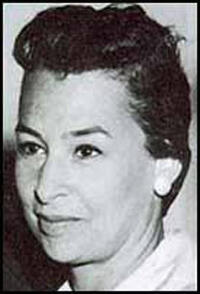
Dorothy Hunt, Michelle Clark and George W. Collins took the Flight 533 from Washington to Chicago. The aircraft hit the branches of trees close to Midway Airport: "It then hit the roofs of a number of neighborhood bungalows before plowing into the home of Mrs. Veronica Kuculich at 3722 70th Place, demolishing the home and killing her and a daughter, Theresa. The plane burst into flames killing a total of 45 persons, 43 of them on the plane, including the pilot and first and second officers. Eighteen passengers survived." Hunt, Clark and Collins were all killed in the accident. (66)
Just before Dorothy Hunt boarded the aircraft, she purchased $250,000 in flight insurance payable to E. Howard Hunt from an airport vending machine. In his book American Spy: My Secret History in the Cia, Watergate and Beyond (2007) Hunt claims he was unaware that his wife planned to do this. In the book he also tried to explain what his wife was doing with $10,000 in her purse. According to Hunt it was money to be invested with Hal Carlstead in "two already-built Holiday Inns in the Chicago area". (67)
H. R. Haldeman, who was fully aware of the negotiations taking place between Hunt and John Dean found this account difficult to believe. "Howard Hunt, supposedly so desperate for $122,000 he would threaten the White House with blackmail, should have been floating in money. He not only had had received thousands of dollars from Kalmbach and LaRue, but his wife had been tragically killed in an aeroplane crash, and the insurance Hunt collected was substantial. Mrs Hunt was carrying thousands of dollars in cash when her plane crashed enroute to Chicago. She was the paymaster for the burglars. But the burglars were in Washington and Miami. Why was she taking the money to Chicago? Hunt reportedly said he intended to lavish the cash in a real estate venture in Illinois. If he had enough money for real estate speculation, why was he so desperate for funds as we were led to believe?" (68)
As Peter Dale Scott has pointed out: "Of the more than a dozen suspicious deaths in the case of Watergate... perhaps the most significant death was that of Dorothy Hunt in the crash of United Air Lines in December 1972. The crash was investigated for possible sabotage by both the FBI and a congressional committee, but sabotage was never proven. Nevertheless, some people assumed that Dorothy Hunt was murdered (along with the dozens of others in the plane)." Howard Hunt saw his wife death as a warning and dropped all further demands on the White House and agreed to plead guilty to the Watergate burglary in January 1973. (69)
Negotiations were also carried out directly with James McCord. John Dean promised McCord an eventual government job and his family's financial security. McCord proposed that the trial could be dismissed if prosecutors introduced telephone conversations regarding Watergate that he had made to the Israeli and Chilean embassies - both of which were illegally wiretapped. Dean rejected this strategy. (70)
Daniel Schultz who represented Frank Sturgis, Virgilio Gonzalez, Eugenio Martinez and Bernard L. Barker claimed at their trial that they believed they were involved in a legitimate national security operation rather than in a crime, saying that his clients were "men convicted of a crime who are not criminals." Sturgis, Gonzalez, Martinez, Barker and Hunt all pleaded guilty and received the following sentences: Sturgis (1 to 4 years in prison); Gonzalez (1 to 4 years in prison); Martinez (1 to 4 years in prison); Barker: (18 months to 6 years in prison); Hunt (2½ years to 8 years in prison and fined $10,000). (71)
Seymour Hersh wrote an article in the New York Times claiming that all these men were receiving hush money and were pressured to plead guilty. Hersh speculated that the money came from the Committee for the Re-election of the President. Officials of the organisation "had acknowledged privately that they are unable to account for $900,000 in cash raised for President Nixon's 1972 campaign - far more than the $235,000 mentioned in court as the cost of the activities of the Watergate group." (72)
On 19 March 1973 James McCord sent a letter to Judge John J. Sirica where he argued: "Several members of my family have expressed fear for my life if I disclose knowledge of the facts in this matter, either publicly or to any government representative. Whereas I do not share their concerns to the same degree, nevertheless, I do believe that retaliatory measures will be taken against me, my family, and my friends should I disclose such facts." However, he was willing to state that: "(i) There was political pressure applied to the defendants to plead guilty and remain silent. (ii) Perjury occurred during the trial in matters highly material to the very structure, orientation, and impact of the government's case, and to the motivation and intent of the defendants. (iii) Others involved in the Watergate operation were not identified during the trial, when they could have been by those testifying." (73)
Days later, McCord appeared before the Senate Watergate committee and testified that G. Gordon Liddy had told him John N. Mitchell, the re-election committee chairman and former U.S. attorney general, had approved the bugging scheme. McCord further said he had been informed that White House counsel John Dean and Richard Nixon aide Jeb Magruder knew in advance of the plan. (74)
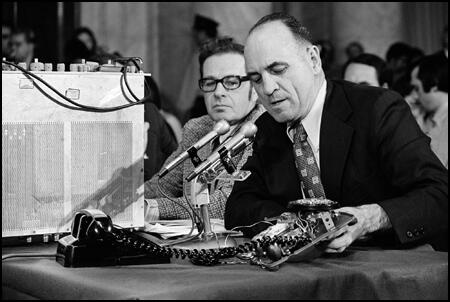
After considerable prompting from Bob Woodward, the committee's chief counsel, Samuel Dash, agreed to arrange an interview the presidential aide Alexander P. Butterfield. (75) Donald Sanders, deputy minority counsel, interviewed Butterfield, on Friday, 13 July 1973, in a background interview prior to his public testimony before the full committee. Sanders asked if there was any validity to John Dean's hypothesis that the White House had taped conversations in the Oval Office. Butterfield replied, "I was wondering if someone would ask that. There is tape in the Oval Office." He said that he knew it was probably the one thing that Richard Nixon would not want revealed. Butterfield then told the investigators that, while he had hoped that no one would ask about the taping system, he had previously decided he would disclose its existence if asked a direct question. (76)
Butterfield was the man responsible for the installation of the taping system which Nixon ordered for the White House in February 1971. Butterfield testified in public before the Senate Watergate Committee on 16 July 1973. The testimony was carried on live television by all the major broadcast networks. It has been argued that Butterfield's testimony "fundamentally altered the entire Watergate investigation." William Doyle, in his book, Inside the Oval Office: the White House tapes from FDR to Clinton (1999) has argued that it "electrified Washington and triggered a constitutional crisis". (77)
Jim Hougan has pointed out that H. R. Haldeman believed that Butterfield was working for the CIA. William McMahon, a technical security expert who had worked for McCord at the CIA, and later for the Secret Service detachment at the White House, was interviewed by Hougan. McMahon believed that "McCord's seconding of CIA personnel in undercover assignments at the White House amounted to the calculated infiltration of a uniquely sensitive Secret Service unit; the staff responsible for maintain and servicing the presidential taping system and storing its product." Hougan quotes Charles Colson as saying the "CIA had tapes of everything relating to the White House. And they destroyed them two days after Senator Mansfield asked them to save all of their tapes." (78)
As a result of the Nixon tapes, McCord's confessions and investigations by journalists several members of the Nixon administration served time in prison: John N. Mitchell: U.S. Attorney General (19 months); H. R. Haldeman: White House Chief of Staff (18 months); John D. Ehrlichman: Chief Domestic Policy Advisor (18 months); Charles Colson: Special Counsel to the President (7 months); G. Gordon Liddy: Finance counsel for the re-election committee and White House aide (52 months); E. Howard Hunt: White House consultant (33 months); Jeb Stuart Magruder: Deputy director of the re-election committee and White House aide (7 months) and John Dean: White House Legal Counsel (four months). On the brink of impeachment Nixon resigned on 9 August 1974 and was pardoned by his successor, President Gerald R. Ford.
James McCord's sentencing was postponed until June and then postponed again. Finally, in November 1973, McCord was sentenced to one to five years. "I have no regrets in telling the truth," McCord said when he reported to the penitentiary in March 1975. "I think in the long run it's been extremely beneficial to the country to have become aware of what occurred. I was probably the first to tell the truth on Watergate." McCord was released after only four months because of his cooperation in the Watergate investigation. (79)
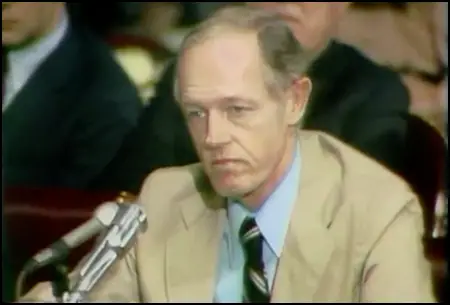
The Supreme Court ruled against Richard Nixon attempts not to release the tapes and members of the Senate began calling for him to be impeached, he changed his mind. However, some tapes were missing while others contained important gaps. Under extreme pressure, Nixon supplied tape scripts of the missing tapes. Nixon's secretary, Rose Mary Woods, denied deliberately erasing the tape. It was now clear that Nixon had been involved in the cover-up and members of the Senate began to call for his impeachment. (80)
On 9th August, 1974, Richard Nixon became the first President of the United States to resign from office. Nixon was granted a pardon but other members of his staff involved in helping in his deception were imprisoned. Nixon was granted a pardon, but several members of his staff involved in the cover-up were imprisoned. This included: H. R. Haldeman, John Ehrlichman, Charles Colson, John Dean, John N. Mitchell, Jeb Magruder, Egil Krogh, Frederick LaRue, Robert Mardian and Dwight L. Chapin. (81)
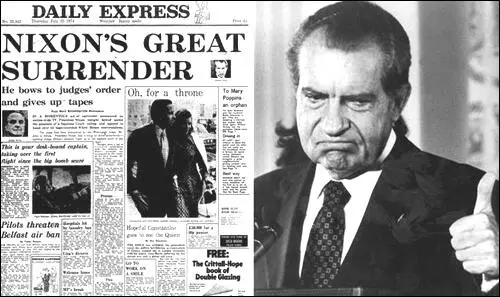
Christopher Reed has pointed out: "Watergate hurt Washington, but was also cited as proof that its political system worked – eventually. It made stars of the two reporters and thrust newspaper journalism into a heroic new mould.... Bradlee embraced the truth theme fervently ... and taught courses on truth at Harvard and Georgetown universities... It was a curious stance for someone who spent many years undercover as a counter-espionage informant, a government propagandist, and unofficial asset of the Central Intelligence Agency. It started publicly enough with his Pacific war posting as a navy destroyer intelligence officer. Thereafter it became much more clandestine." (82)
Douglas Caddy had been wise not to have got involved in distributing "hush money". From what he learnt since he has a theory about the Watergate operation. "The CIA, which had successfully positioned Hunt inside White House, had prior knowledge of the planned break-in. Once the arrest of the burglars occurred, the CIA turned its attention to manipulating the cover-up using Hunt to mount the campaign to get ‘hush' money. I believe the CIA was behind the break-in and assigned Hunt to influence Gordon Liddy to mount it. Its aim was to install a wiretap. The CIA's purpose was to bring down the Nixon presidency because of the threat to it of the Huston Plan and of Nixon's encroachment on the most important intelligence concern of the CIA." (83)
Primary Sources
(1) Richard Nixon, diary entry (June, 1972)
I got the disturbing news from Bob Haldeman that the break-in of the Democratic National Committee involved someone who is on the payroll of the Committee to Re-elect the President. Mitchell had told Bob on the phone enigmatically not to get involved in it, and I told Bob that I simply hoped that none of our people were involved for two reasons - one, because it was stupid in the way it was handled; and two, because I could see no reason whatever for trying to bug the national committee.
(2) H. R. Haldeman, The Ends of Power (1978)
Chuck Colson had become the President's personal 'hit man'; his impresario of 'hard ball' politics. I had been caught in the middle of most of these, as complaints thundered in about 'Wildman' Colson either crashing arrogantly; or sneaking silently, through political empires supposedly controlled by White House staffers such as Domestic Counselor John Ehrlichman or Cabinet Officers such as Attorney General John Mitchell. Colson cared not who complained. Nixon, he said, was his only boss. And Nixon was behind him all the way on projects ranging from his long-dreamed-of hope of catching Senator Teddy Kennedy in bed with a woman not his wife, to more serious struggles such as the I.T.T. anti-trust 'scandal'.
Colson had signed up an ex-C.I.A, agent named Howard Hunt to work for him and thereafter became very secretive about his exploits in the name of Nixon. Years later I heard of such wild schemes as the proposed fire bombing of a politically liberal foundation (Brookings) in order to retrieve a document Nixon wanted; feeding LSD to an anti-Nixon commentator (Jack Anderson) before he went on television; and breaking into the offices of a newspaperman (Hank Greenspun) who was supposed to have documents from Howard Hughes that revealed certain secrets about Nixon.
But Colson's 'black' projects were so widely rumoured around the White House that I believe almost every White House staffer thought of his name the minute they heard the news of Watergate.
(3) Bob Woodward and Carl Bernstein, Washington Post (19th June, 1972)
One of the five men arrested early Saturday in the attempt to bug the Democratic National Committee headquarters is the salaried security coordinator for President Nixon's reelection committee.
The suspect, former CIA employee James W. McCord Jr., 53, also holds a separate contract to provide security services to the Republican National Committee, GOP national chairman Bob Dole said yesterday.
Former Attorney General John N. Mitchell, head of the Committee for the Re-Election of the President, said yesterday McCord was employed to help install that committee's own security system.
In a statement issued in Los Angeles, Mitchell said McCord and the other four men arrested at Democratic headquarters Saturday "were not operating either in our behalf or with our consent" in the alleged bugging attempt.
Dole issued a similar statement, adding that "we deplore action of this kind in or out of politics." An aide to Dole said he was unsure at this time exactly what security services McCord was hired to perform by the National Committee.
Police sources said last night that they were seeking a sixth man in connection with the attempted bugging. The sources would give no other details.
Other sources close to the investigation said yesterday that there still was no explanation as to why the five suspects might have attempted to bug Democratic headquarters in the Watergate at 2600 Virginia Ave., NW, or if they were working for other individuals or organizations..
"We're baffled at this point.... the mystery deepens," a high Democratic party source said.
Democratic National Committee Chairman Lawrence F. O'Brien said the "bugging incident... raised the ugliest questions about the integrity of the political process that I have encountered in a quarter century.
"No mere statement of innocence by Mr. Nixon's campaign manager will dispel these questions."
The Democratic presidential candidates were not available for comment yesterday.
O'Brien, in his statement, called on Attorney General Richard G. Kleindienst to order an immediate, "searching professional investigation" of the entire matter by the FBI.
A spokesman for Kleindienst said yesterday. "The FBI is already investigating. . . . Their investigative report will be turned over to the criminal division for appropriate action."
The White House did not comment.
McCord, 53, retired from the Central Intelligence Agency in 1970 after 19 years of service and established his own "security consulting firm," McCord Associates, at 414 Hungerford Drive, Rockville. He lives at 7 Winder Ct., Rockville.
McCord is an active Baptist and colonel in the Air Force Reserve, according to neighbors and friends.
In addition to McCord, the other four suspects, all Miami residents, have been identified as: Frank Sturgis (also known as Frank Florini), an American who served in Fidel Castro's revolutionary army and later trained a guerrilla force of anti-Castro exiles; Eugenio R. Martinez, a real estate agent and notary public who is active in anti-Castro activities in Miami; Virgilio R. Gonzales, a locksmith; and Bernard L. Barker, a native of Havana said by exiles to have worked on and off for the CIA since the Bay of Pigs invasion in 1961.
All five suspects gave the police false names after being arrested Saturday. McCord also told his attorney that his name is Edward Martin, the attorney said.
Sources in Miami said yesterday that at least one of the suspects - Sturgis - was attempting to organize Cubans in Miami to demonstrate at the Democratic National Convention there next month.
The five suspects, well-dressed, wearing rubber surgical gloves and unarmed, were arrested about 2:30 a.m. Saturday when they were surprised by Metropolitan police inside the 29-office suite of the Democratic headquarters on the sixth floor of the Watergate.
The suspects had extensive photographic equipment and some electronic surveillance instruments capable of intercepting both regular conversation and telephone communication.
Police also said that two ceiling panels near party chairman O'Brien's office had been removed in such a way as to make it possible to slip in a bugging device.
McCord was being held in D.C. jail on $30,000 bond yesterday. The other four were being held there on $50,000 bond. All are charged with attempted burglary and attempted interception of telephone and other conversations.
McCord was hired as "security coordinator" of the Committee for the Re-election of the President on Jan. 1, according to Powell Moore, the Nixon committee's director of press and information.
Moore said McCord's contract called for a "take-home salary of $1,200 per month and that the ex-CIA employee was assigned an office in the committee's headquarters at 1701 Pennsylvania Ave., N.W.
Within the last one or two weeks, Moore said, McCord made a trip to Miami beach -- where both the Republican and Democratic National Conventions will be held. The purpose of the trip, Moore said, was "to establish security at the hotel where the Nixon Committee will be staying."
In addition to McCord's monthly salary, he and his firm were paid a total of $2,836 by the Nixon Committee for the purchase and rental of television and other security equipment, according to Moore.
Moore said that he did not know exactly who on the committee staff hired McCord, adding that it "definitely wasn't John Mitchell." According to Moore, McCord has never worked in any previous Nixon election campaigns "because he didn't leave the CIA until two years ago, so it would have been impossible." As of late yesterday, Moore said. McCord was still on the Re-Election Committee payroll.
In his statement from Los Angeles, former Attorney General Mitchell said he was "surprised and dismayed" at reports of McCord's arrest.
"The person involved is the proprietor of a private security agency who was employed by our committee months ago to assist with the installation of our security system," said Mitchell. "He has, as we understand it, a number of business clients and interests and we have no knowledge of these relationships."
Referring to the alleged attempt to bug the opposition's headquarters, Mitchell said: "There is no place in our campaign, or in the electoral process, for this type of activity and we will not permit it nor condone it."
About two hours after Mitchell issued his statement, GOP National Chairman Dole said, "I understand that Jim McCord... is the owner of the firm with which the Republican National Committee contracts for security services . . . if our understanding of the facts is accurate, added Dole, "we will of course discontinue our relationship with the firm."
Tom Wilck, deputy chairman of communications for the GOP National Committee, said late yesterday that Republican officials still were checking to find out when McCord was hired, how much he was paid and exactly what his responsibilities were.
McCord lives with his wife in a two-story $45,000 house in Rockville.
After being contacted by The Washington Post yesterday, Harlan A. Westrell, who said he was a friend of McCord's, gave the following background on McCord:
He is from Texas, where he and his wife graduated from Baylor University. They have three children, a son who is in his third year at the Air Force Academy, and two daughters.
The McCords have been active in the First Baptist Church of Washington.
Other neighbors said that McCord is a colonel in the Air Force Reserve, and also has taught courses in security at Montgomery Community College. This could not be confirmed yesterday.
McCord's previous employment by the CIA was confirmed by the intelligence agency, but a spokesman there said further data about McCord was not available yesterday.
In Miami, Washington Post Staff Writer Kirk Schartenberg reported that two of the other suspects - Sturgis and Barker - are well known among Cuban exiles there. Both are known to have had extensive contracts with the Central Intelligence Agency, exile sources reported, and Barker was closely associated with Frank Bender, the CIA operative who recruited many members of Brigade 2506, the Bay of Pigs invasion force.
Barker, 55, and Sturgis, 37, reportedly showed up uninvited at a Cuban exile meeting in May and claimed to represent an anticommunist organization of refugees from "captive nations." The purpose of the meeting, at which both men reportedly spoke, was to plan a Miami demonstration in support of President Nixon's decision to mine the harbor of Haiphong.
Barker, a native of Havana who lived both in the U.S. and Cuba during his youth, is a U.S. Army veteran who was imprisoned in a German POW camp during the World War II. He later served in the Cuban Buro de Investigationes - secret police - under Fidel Castro and fled to Miami in 1959. He reportedly was one of the principal leaders of the Cuban Revolutionary Council, the exile organization established with CIA help to organize the Bay of Pigs Invasion.
Sturgis, an American soldier of fortune who joined Castro in the hills of Oriente Province in 1958, left Cuba in 1959 with his close friend, Pedro Diaz Lanz, then chief of the Cuban air force. Diaz Lanz, once active in Cuban exile activities in Miami, more recently has been reported involved in such right-wing movements as the John Birch Society and the Rev. Billy James Hargis' Christian Crusade.
Sturgis, more commonly known as Frank Florini, lost his American citizenship in 1960 for serving in a foreign military force - Castro's army - but, with the aid of then-Florida Sen. George Smathers, regained it.
(4) Richard Nixon, The Memoirs of Richard Nixon (1978)
My reaction to the Watergate break-in was completely pragmatic. If it was also cynical, it was a cynicism born of experience. I had been in politics too long, and seen everything from dirty tricks to vote fraud. I could not muster much moral outrage over a political bugging.
Larry O'Brien might affect astonishment and horror, but he knew as well as I did that political bugging had been around nearly since the invention of the wiretap. As recently as 1970 a former member of Adlai Stevenson's campaign staff had publicly stated that he had tapped the Kennedy organization's phone lines at the 1960 Democratic convention Lyndon Johnson felt that the Kennedys had had him tapped - Barry Goldwater said that his 1964 campaign had been bugged; and Edgar Hoover told me that in 1968 Johnson had ordered my campaign plane bugged. Nor was the practice confined to politicians. In 1969 an NBC producer was fined and given a suspended sentence for planting a concealed microphone at a closed meeting of the 1968 Democratic platform committee. Bugging experts told the Washington Post right after the Watergate break-in that the practice "has not been uncommon in elections past... it is particularly common for candidates of the same party to bug one another."
(5) Bob Woodward and Carl Bernstein, Washington Post (10th October, 1972)
FBI agents have established that the Watergate bugging incident stemmed from a massive campaign of political spying and sabotage conducted on behalf of President Nixon's re-election and directed by officials of the White House and the Committee for the Re-election of the President.
The activities, according to information in FBI and Department of Justice files, were aimed at all the major Democratic presidential candidates and - since 1971 - represented a basic strategy of the re-election effort.
During the Watergate investigation federal agents established that hundreds of thousands of dollars in Nixon campaign contributions had been set aside to pay for an extensive undercover campaign aimed at discrediting individual Democratic presidential candidates and disrupting their campaigns.
"Intelligence work" is normal during a campaign and is said to be carried out by both political parties. But federal investigators said what they uncovered being done by the Nixon forces is unprecedented in scope and intensity.
Following members of Democratic candidates' families; assembling dossiers of their personal lives; forging letters and distributing them under the candidates' letterheads; leaking false and manufactured items to the press; throwing campaign schedules into disarray; seizing confidential campaign files and investigating the lives of dozens of campaign workers.
In addition, investigators said the activities included planting provocateurs in the ranks of organizations expected to demonstrate at the Republican and Democratic conventions; and investigating potential donors to the Nixon campaign before their contributions were solicited.
(6) Bob Woodward and Carl Bernstein, The Final Days (1976)
John Dean, the President's former counsel had been fired on April 30 and was now busily leaking stories all over Washington about the Watergate scandal. Some of them hinted that the President was involved in the cover-up. Dean seemed to have some record of White House misdeeds; he told Judge John Sirica that he had removed certain documents from the White House to protect them from "illegitimate destruction". Dean had put them in a safe-deposit box and given the keys to the judge. The New York Times, also citing anonymous informers, said that one of its sources "suggested that Mr. Dean may have tape-recorded some of his White House conversations".
(7) Taped conversation between Richard Nixon and John Dean (21st March, 1973)
John Dean: We have a cancer within, close to the Presidency, that is growing. Basically it is because we are being blackmailed.
Richard Nixon: How much money do you need?
John Dean: I would say these people are going to cost a million dollars over the next two years.
Richard Nixon: You could get a million dollars. You could get it in cash. I know where it could be gotton.
(8) James W. McCord, statement (23rd March, 1973)
In the interests of justice and in the interests of restoring faith in the criminal justice system, which faith has been severely damaged in this case, I will state the following to you at this time which I hope may be of help to you in meting out justice in this case.
1. There was political pressure applied to the defendants to plead guilty and remain silent.
2. Perjury occurred during the trial in matters highly material to the very structure, orientation and impact of the government's case, and to the motivation and intent of the defendants.
3. Others involved in the Watergate operation were not identified during the trial, when they could have been by those testifying...
Following sentencing, I would appreciate the opportunity to talk with you privately in chambers. Since I cannot feel confident in talking with an FBI agent, in testifying before a grand jury whose U.S. attorneys work for the Department of Justice, or in talking with other government representatives, such a discussion would be of assistance to me.
(9) John Dean, statement (20th April, 1973)
To date, I have refrained from making any public comment whatsoever about the Watergate case. Some may hope or think that I will become a scapegoat in the Watergate case. Anyone who believes this does not know me, know the true facts, nor understands our system of justice.
(10) Richard Nixon, private notes made in May, 1974.
(1) Cox had to go. Richardson would inevitably go with him. Otherwise, if we had waited for Cox making a major mistake which in the public mind would give us what appeared to be good cause for him to go would mean that we had waited until Cox had moved against us.
(2) We must learn from the Richardson incident what people we can depend on. Establishment types like Richardson simply won't stand with us when chips are down and they have to choose between their political ambitions and standing by the President who made it possible for them to hold the high positions from which they were now resigning.
(3) As far as the tapes were concerned we need to put the final documents in the best possible PR perspective. We must get out the word with regard to no "doctoring" of the tapes.
(4) We must compare our situation now with what it was on April 30. Then the action with regard to Haldeman and Ehrlichman, Gray, Dean, and Kleindienst did not remove the cloud on the President as far as an impression of guilt on his part was concerned. In fact it increased that doubt and rather than satisfying our critics once they had tasted a little blood they liked it so much they wanted far more. Since April 30 we have slipped a great deal. We had 60 percent approval rating in the polls on that date and now we stand at 30 percent at best.
(5) Now the question is whether our action on turning over the tapes or the transcripts thereof helps remove the cloud of doubt. Also on the plus side, the Mideast crisis, probably if the polls are anywhere near correct, helped some what because it shows the need for RN's leadership in foreign policy.
(6) Our opponents will now make an all-out push. The critical question is whether or not the case for impeachment or resignation is strong enough in view of the plus factors I noted in previous paragraph.
(11) Bob Woodward memo to Ben Bradlee (16th May, 1973)
Dean talked with Senator Baker after Watergate committee formed and Baker is in the bag completely, reporting back directly to White House...
President threatened Dean personally and said if he ever revealed the national security activities that President would insure he went to jail.
Mitchell started doing covert national and international things early and then involved everyone else. The list is longer than anyone could imagine.
Caulfield met McCord and said that the President "knows that we are meeting and he offers you executive clemency and you'll only have to spend about 11 months in jail."
Caulfield threatened McCord and said "your life is no good in this country if you don't cooperate..."
The covert activities involve the whole U.S. intelligence community and are incredible. Deep Throat refused to give specifics because it is against the law.
The cover-up had little to do with the Watergate, but was mainly to protect the covert operations.
The President himself has been blackmailed. When Hunt became involved, he decided that the conspirators could get some money for this. Hunt started an "extortion" racket of the rankest kind.
Cover-up cost to be about $1 million. Everyone is involved - Haldeman, Ehrlichman, the President, Dean, Mardian, Caulfield and Mitchell. They all had a problem getting the money and couldn't trust anyone, so they started raising money on the outside and chipping in their own personal funds. Mitchell couldn't meet his quota and... they cut Mitchell loose. ...
CIA people can testify that Haldeman and Ehrlichman said that the President orders you to carry this out, meaning the Watergate cover-up... Walters and Helms and maybe others.
Apparently though this is not clear, these guys in the White House were out to make money and a few of them went wild trying.
Dean acted as go-between between Haldeman-Ehrlichman and Mitchell-LaRue.
The documents that Dean has are much more than anyone has imagined and they are quite detailed.
Liddy told Dean that they could shoot him and/or that he would shoot himself, but that he would never talk and always be a good soldier.
Hunt was key to much of the crazy stuff and he used the Watergate arrests to get money... first $100,000 and then kept going back for more...
Unreal atmosphere around the White House - realizing it is curtains on one hand and on the other trying to laugh it off and go on with business. President has had fits of "dangerous" depression.
(12) Richard Nixon, The Memoirs of Richard Nixon (1978)
Over the past months I had talked about resignation with my family with a few close friends, and with Haig and Ziegler. But the idea was anathema to me. I believed that my resignation under pressure would change our whole form of government. The change might not be apparent for many years; but once the first President had resigned under fire and thereby established a precedent, the opponents of future Presidents would have a formidable new leverage. It was not hard to visualize a situation in which Congress, confronted with a President it did not like could paralyze him by blocking him on legislation, foreign affairs and appointments. Then, when the country was fed up with the resulting stalemate, Congress could claim that it would be better for the country if the President resigned. And Nixon would be cited as the precedent. By forcing Presidents out through resignation, Congress would no longer have to take the responsibility and bear the verdict of history for voting impeachment.
(13) Richard Nixon, diary entry (20th April, 1974)
I realize that these transcripts will provide grist for many sensational stories in the press. Parts will seem to be contradictory with one another and parts will be in conflict with some of the testimony given in the Senate Watergate Committee hearings.
I have been reluctant to release these tapes not just because they will embarrass me and those with whom I have talked - which they will - and not just because they will become the subject of speculation and even ridicule - which they will - and not just because certain parts of them will be seized upon by political and journalistic opponents - which they will.
I have been reluctant because, in these and in all the other conversations in this office, people have spoken their minds freely, never dreaming that specific sentences or even parts of sentences would be picked out as the subjects of national attention and controversy.
I am confident that the American people will see these transcripts for what they are, fragmentary records from a time more than a year ago that now seems very distant, the records of a President and of a man suddenly being confronted and having to cope with information which, if true, would have the most far-reaching consequences not only for his personal reputation but, more important, for his hopes, his plans, his goals for the people who had elected him as their leader.
In giving you these records - blemishes and all - I am placing my trust in the basic fairness of the American people.
I know in my own heart that through the long, painful, and difficult process revealed in these transcripts I was trying in that period to discover what was right and to do what was right.
(14) Richard Nixon, The Memoirs of Richard Nixon (1978)
I called Steve Bull, who had greeted Goldwater and his colleagues in the West Lobby. "Take the boys into the office," I said, "and make them comfortable until I get over."
They were all seated when I arrived: Barry Goldwater, the former standard-bearer and now the silver-haired patriarch of the party; Hugh Scott, the Senate Republican Leader, and John Rhodes, the House Republican Leader. Over the years I had shared many successes and many failures with these men. Now they were here to inform me of the bleakness of the situation, and to narrow my choices. I pushed back my chair, put my feet up on the desk, and asked them how things looked.
Scott said that they had asked Goldwater to be their spokesman. In a measured voice Goldwater began, "Mr. President, this isn't pleasant, but you want to know the situation, and it isn't good."
I asked how many would vote for me in the Senate. "Half a dozen?" I ventured.
Goldwater's answer was maybe sixteen or perhaps eighteen.
Puffing on his unlighted pipe, Scott guessed fifteen. "It's pretty grim," he said, as one by one he ran through a list of old supporters, many of whom were now against me. Involuntarily I winced at the names of men I had worked to help elect, men who were my friends.
(15) Richard Nixon, The Memoirs of Richard Nixon (1978)
I asked St. Clair how long he thought we could take to turn over the sixty-four tapes covered by the decision. He said that with all the problems involved in listening to them and preparing transcripts, we could probably take a month or more.
I thought that we should assess the damage right away. When Haig called Buzhardt to discuss the decision, I took the phone and asked him to listen to the June 23 tape and report back to Haig as soon as possible. This was the tape I had listened to in May on which Haldeman and I discussed having the CIA limit the FBI investigation for political reasons rather than the national security reasons I had given in my public statements. When I first heard it, I knew it would be a problem for us if it ever became public - now I would find out just how much of a problem.
Buzhardt listened to the tape early in the afternoon. When he called back, he told Haig and St. Clair that even though it was legally defensible, politically and practically it was the "smoking gun" we had been fearing.
On Thursday, August 1, I told Haig that I had decided to resign. If the June 23 tape was not explainable, I could not very well expect the staff to explain and defend it.
(16) Richard Nixon resignation speech (9th August, 1974)
In the past few days ... it has become evident to me that I no longer have a strong enough political base in the Congress to justify continuing that effort. As long as there was such a base, I felt strongly that it was necessary to see the constitutional process through to its conclusion, that to do otherwise would be unfaithful to the spirit of that deliberately difficult process, and a dangerously destabilizing precedent for the future.
But with the disappearance of that base, I now believe that the constitutional purpose has been served, and there is no longer a need for the process to be prolonged.
Therefore, I shall resign the presidency effective at noon tomorrow. By taking this action, I hope that I will have hastened the start of that process of healing which is so desperately needed in America.
I regret deeply any injuries that may have been done in the course of the events that led to this decision. I would say only that if some of my judgments were wrong - and some were wrong - they were made in what I believed at the time to be in the best interest of the nation.
I have done my very best in all the days since to be true to that pledge. As a result of these efforts. I am confident that the world is a safer place today, not only for the people of America, but for the people of all nations, and that all of our children have a better chance than before of living in peace rather than dying in war. This, more than anything, is what I hoped to achieve when I sought the presidency. This, more than anything, is what I hope will be my legacy to you, to our country, as I leave the presidency.
(17) Peter Dale Scott, Deep Politics and the Death of JFK (1993)
The Watergate break-in of 1972 (in which, I have always been convinced, Nixon was not so much a guilty perpetrator as a guilty victim) followed Nixon's secret negotiations with Hanoi for disengagement from Vietnam, significantly advanced by his May 1972 visit to Moscow, where he signed the first Strategic Arms Limitation Agreement.
(18) Eugenio Martinez, Mission Impossible (October, 1974)
We Cubans have never stopped fighting for the liberation of our country. I have personally carried out over 350 missions to Cuba for the CIA. Some of the people I infiltrated there were caught and tortured, and some of them talked.
My mother and father were not allowed to leave Cuba. It would have been easy for me to get them out. That was my specialty. But my bosses in the Company - the CIA - said I might get caught and tortured, and if I talked I might jeopardize other operations. So my mother and father died in Cuba. That is how orders go. I follow the orders.
I can't help seeing the whole Watergate affair as a repetition of the Bay of Pigs. The invasion was a fiasco for the United States and a tragedy for the Cubans. All of the agencies of the U.S. government were involved, and they carried out their plans in so ill a manner that everyone landed in the hands of Castro - like a present.
Eduardo was a name that all of us who had participated in the Bay of Pigs knew well. He had been the maximum representative of the Kennedy administration to our people in Miami. He occupied a special place in our hearts because of a letter he had written to his chief Cuban aide and my lifelong friend, Bernard Barker. He had identified himself in his letter with the pain of the Cubans, and he blamed the Kennedy administration for not supporting us on the beaches of the Bay of Pigs.
So when Barker told me that Eduardo was coming to town and that he wanted to meet me, that was like a hope for me. He had chosen to meet us at the Bay of Pigs monument, where we commemorate our dead, on April 16, 1971, the tenth anniversary of the invasion. I always go to the monument on that day, but that year I had another purpose - to meet Eduardo, the famous Eduardo, in person.
He was different from all the other men I had met in the Company. He looked more like a politician than a man who was fighting for freedom. He was there with his pipe, relaxing in front of the memorial, and Barker introduced me. I then learned his name for the first time - Howard Hunt.
There was something strange about this man. His tan, you know, is not the tan of a man who is in the sun. His motions are very meticulous--the way he smokes his pipe, the way he looks at you and smiles. He knows how to make you happy--he's very warm, but at the same time you can sense that he does not go all into you or you all into him. We went to a Cuban restaurant for lunch and right away Eduardo told us that he had retired from the CIA in 1971 and was working for Mullen and Company.1 I knew just what he was saying. I was also officially retired from the Company. Two years before, my case officer had gathered all the men in my Company unit and handed us envelopes with retirement announcements inside. But mine was a blank paper. Afterward he explained to me that I would stop making my boat missions to Cuba but I would continue my work with the Company. He said I should become an American citizen and soon I would be given a new assignment. Not even Barker knew that I was still working with the Company. But I was quite certain that day that Eduardo knew.
We talked about the liberation of Cuba, and he assured us that "the whole thing is not over." Then he started inquiring: "What is Manolo doing?" Manolo was the leader of the Bay of Pigs operation. "What is Roman doing?" Roman was the other leader. He said he wanted to meet with the old people. It was a good sign. We did not think he had come to Miami for nothing.
Generally I talk to my CIA case officer at least twice a week and maybe on the phone another two times. I told him right away that Eduardo was back in town, and that I had had lunch with him. Any time anyone from the CIA was in town my CO always asked me what he was doing. But he didn't ask me anything about Eduardo, which was strange. That was in April. In the middle of July, Eduardo wrote to Barker to tell him he was in the White House as a counselor to the President. He sent a number of memos to us on White House stationery, and that was very impressive, you know. So I went back to my CO and said to him, "Hey, Eduardo is still in contact with us, and now he is a counselor of the President."
A few days later my CO told me that the Company had no information on Eduardo except that he was not working in the White House. Well, imagine! I knew Eduardo was in the White House. What it meant to me was that Eduardo was above them and either they weren't supposed to know what he was doing or they didn't want me to talk about him anymore. Knowing how these people act, I knew I had to be careful. So I said, well, let me keep my mouth shut.
Not long after this, Eduardo told Barker there was a job, a national security job dealing with a traitor of this country who had given papers to the Russian Embassy. He said they were forming a group with the CIA, the FBI, and all the agencies, and that it was to be directed from within the White House, with jurisdiction to operate where all the others did not fit. Barker said Eduardo needed two more individuals and he had thought of me. Would I like my name submitted for clearance? I said yes.
To me this was a great honor. I believed it was the result of my sacrifice for the previous ten years, for my work with the Company. In that time I had carried out hundreds of missions for the U.S. government. All of them had been covert, and most were very dangerous. Three or four days later, Barker told me my name had been cleared and several weeks after that came the first assignment. "Get clothes for two or three days and be ready tomorrow," he said. "We're leaving for the operation."
Barker didn't tell me where we were going and I did not ask. I was an operative. I couldn't afford to be aware of any more sensitive information than was critical for the success of my missions. There would be times when I would take men wearing hoods to Cuba. They might have been my friends. But I did not want to know. Too many of my friends have been caught and tortured and forced to talk. In this kind of work you learn to lose your curiosity.
So it was not until I got to the airport in Miami that I discovered we were going to Los Angeles. There were three of us on the mission. The third man, Felipe de Diego, was a real-estate partner of ours. He is an old Company man and a Bay of Pigs veteran whom we knew we could trust.
In all my years in this country I had never been out of the Miami area before that day. I had always been on twenty-four-hour call. I kind of expected my CO to ask where I was going, but he simply said it was fine for me to take a few days off, that there wasn't much to do at the time. I sort of thought he did not want to know what I was doing.
We stayed at the Beverly Hills Hotel and met in Eduardo's room for our only briefing. As we walked in I noticed the equipment - devices to modify the voice, wigs and fake glasses, false identification. Eduardo told us all these things belonged to the Company. Barker recognized the name on Hunt's false identification - Edward J. Hamilton - as the same cover name Eduardo had used during the Bay of Pigs.
The briefing was not like anything I was used to in the Company. Ordinarily, before an operation, you have a briefing and then you train for the operation. You try to find a place that looks similar and you train in disguise and with the code you are going to use. You try out the plan many times so that later you have the elasticity to abort the operation if the conditions are not ideal.
Eduardo's briefing was not like this. There wasn't a written plan, not even any mention of what to do if something went wrong. There was just the man talking about the thing. We were to get into an office to take photographs of psychiatric records of a traitor. I was to be the photographer. The next day we went to Sears and bought some little hats and uniforms for Barker and Felipe. They were supposed to dress up as delivery men and deliver the photographic equipment inside the office. Later that night we would break in and complete the mission.
They looked kind of queerish when they put on the clothes, the Peter Lorre-type glasses, and the funny Dita Beard wigs. But that was not my responsibility, so I waited in the car while they went to the office of Dr. Fielding to deliver the package. Just before leaving Barker had whispered to me: "Hey, remember this name - Ellsberg." Eduardo had told him the name, and he told me because he was worried he would forget it. The name meant nothing to me.
Barker and Felipe were supposed to put the bag inside the office, unlatch the back door, and come out. After the cleaning lady left, we were to go back in. Now, it happened that we had to wait for hours and hours because no one had figured out when the cleaning woman would leave. Finally, I believe, a gentleman came in a car and picked her up.
So at last we went to open the door - and what happened? The door was locked. Barker went around to see if the other door was open, and after a long wait he still did not show up. We didn't know what to do. There had been another man in the briefing the night before in Eduardo's room who hadn't said anything. Later, I learned it was probably Gordon Liddy, but at the time I only knew him as George. Just at that moment, he came up to us and said, "Okay, you people go ahead and force one of the windows and go in."
Eduardo had given us a small crowbar and a glass cutter. I tried to cut the glass, but it wouldn't cut. It was bad, bad. It would not cut anything! So then I taped the window and I hit it with this very small crowbar, and I put my hand in and unlocked the window.
According to the police, we were using gloves and didn't leave any fingerprints. But I'm afraid that I did because I didn't wear my gloves when I put the tape on the window - you know, sometimes it's hard to use gloves. I went all through the offices with my bare hands but I used my handkerchief to wipe off the prints.
Inside the doctor's office we covered the windows and took out the equipment. Really, it was a joke. They had given us a rope to bail out from the second floor if anyone surprised us; it was so small, it couldn't have supported any of us.
This was nothing new. It's what the Company did in the Bay of Pigs when they gave us old ships, old planes, old weapons. They explained that if you were caught in one of those operations with commercial weapons that you could buy anywhere, you could be said to be on your own. They teach you that they are going to disavow you. The Company teaches you to accept those things as the efficient way to work. And we were grateful. Otherwise we wouldn't have had any help at all. In this operation it seemed obvious - they didn't want it to be traced back to the White House. Eduardo told us that if we were caught, we should say we were addicts looking for drugs.
I had just set up the photographic equipment when we heard a noise. We were afraid. Then we heard Barker's familiar knock and we let him in. I took a Polaroid picture of the office before we started looking for the Ellsberg papers so we could put everything back just as it was before. But there was nothing of Ellsberg's there. There was nothing about psychiatry, no one file of sick people, only bills. It looked like an import-export office more than a psychiatrist's. The only thing with the name of Ellsberg in it was the doctor's telephone book. I took a photo of this so that we could bring something back. Before leaving I took some pills from Dr. Fielding's briefcase--vitamin C, I think--and spread them all over the floor to make it look like we were looking for drugs. Eduardo was waiting for us outside. He was supposed to be keeping watch on Dr. Fielding so he could let us know if the doctor was returning to his office, but Eduardo had lost Dr. Fielding and he was nervous. A police car appeared as we drove away and it trailed behind us for three or four blocks. I thought to myself that the police car was protecting us. That is the feeling you have when you are doing operations for the government. You think that every step has been taken to protect you.
Back at the hotel, Barker, Felipe, and I felt very bad. It was our first opportunity, and we had failed; we hadn't found anything. "Yes, I know, but they don't know it," Eduardo said, and he congratulated us all. He said, "Well done," and then he opened a bottle of champagne. And he told us, "This is a celebration. You deserve it."
I told Diego and Barker that this had to have been a training mission for a very important mission to come or else it was a cover operation. I thought to myself that maybe these people already had the papers of Ellsberg. Maybe Dr. Fielding had given them out and for ethical reasons he needed to be covered. It seemed that these people already had what we were looking for because no one invites you to have champagne and is happy when you fail.
The whole thing was strange, but Eduardo was happy so we were happy. He thanked us and we left for the airport. We took the plane back to Miami and we never talked about this thing until we were all together in the District of Columbia jail. In Miami I again told my CO about Eduardo. I was certain then that the Company knew about his activities. But once again my CO did not pursue the subject.
Meanwhile, Hunt started to do more and more things that convinced us of his important position in the White House. Once he called Barker and told him the President was about to mine Haiphong Harbor. He asked us to prepare letters and a rally of support in advance. It was very impressive to us when the announcement of the mining was made several days later.
I made a point of telling my CO at our next meeting that Hunt was involved in some operations and that he was in the White House, even if they said he wasn't. After that the CIA chief of the Western Hemisphere asked me for breakfast at Howard Johnson's on Biscayne Boulevard, and he said he was interested in finding out about Howard Hunt's activities. He wanted me to write a report. He said I should write it in my own hand, in Spanish, and give it to my CO in a sealed envelope. Right away I went to see my CO. We are very close, my CO and I, and he told me that his father had once given him the advice that he should never put anything in writing that might do him any harm in the future. So I just wrote a cover story for the whole thing. I said that Hunt was in the Mullen Company and the White House and things like that that weren't important. What I really thought was that Hunt was checking to see if I could be trusted.
Little by little I watched Eduardo's operation grow. First Barker was given $89,000 in checks from Mexican banks to cash for operational money. And then Eduardo told Barker to recruit three more men, including a key man. He signed up Frank Sturgis and Reinaldo Pico, and then Eduardo flew down to talk to our friend Virgilio Gonzales, who is a locksmith, before recruiting him. Finally orders come for us to report to Washington. The six of us arrived in Washington on May 22 and checked into the Manger Hay-Adams Hotel in time for Eduardo's first briefing.
By that time Liddy, whom we had known as George from the Fielding break-in, was taking a visible role in the planning. Eduardo had started calling him "Daddy," and the two men seemed almost inseparable. We met McCord there for the first time. Eduardo said he was an old man from the CIA who used to do electronic jobs for the CIA and the FBI. We did not know his whole name. Eduardo just introduced him as Jimmy. He said we would be using walkie-talkies, and Jimmy was to be our electronics expert. There was also a boy there who had infiltrated the McGovern headquarters.
There was no mention of Watergate at that meeting. Eduardo told us he had information that Castro and other foreign governments were giving money to McGovern, and we were going to find the evidence. The boy was going to help them break into the McGovern headquarters, but I did not pay much attention. They didn't need me for that operation so I had some free time.
During the day I went off to see the different sights around Washington. I like those things--particularly the John Paul Jones monument and the Naval Academy in Annapolis. Remember that, prior to this, all of my operations for the United States were maritime. After three days Eduardo aborted the McGovern operation. I think it was because the boy got scared. Anyway, Eduardo told us all to move into the Watergate Hotel to prepare for another operation. We brought briefcases and things like that to look elegant. We registered as members of the Ameritus Corporation of Miami, and then we met in Eduardo's room.
Believe me, it was an improvised briefing. Eduardo told us he had information that Castro money was coming into the Democratic headquarters, not McGovern's, and that we were going to try to find the evidence there. Throughout the briefing, McCord, Liddy, and Eduardo would keep interrupting each other, saying, "Well, this way is better," or, "That should be the other way around."
It was not a very definite plan that was finally agreed upon, but you are not too critical of things when you think that people over you know what they are doing, when they are really professionals like Howard Hunt. The plan called for us to hold a banquet for the Ameritus Corporation in a private dining room of the Watergate. The room had access to the elevators that ran up to the sixth floor where the Democratic National Committee Headquarters are located. Once the meal was underway, Eduardo was to show films and we were to take the elevator to the sixth floor and complete the mission. Gonzales, our key man, was to open the door; Sturgis, Pico, and Felipe were to be lookouts; Barker was to get the documents; I was to take the photographs and Jimmy (McCord) was to do his job.
We were all ready to go, but the people in the DNC worked late. Eduardo was drinking lots of milk. He has ulcers, so he was mixing his whiskey with the milk. We waited and waited. Finally, at 2:00 a.m., the night guards said we had to leave the banquet hall. So then there was a discussion. Eduardo said he would hide in the closet of the banquet room with Gonzales, the key man, while the guard let the rest of us out. As soon as the coast was clear, they would let us back in. But then they couldn't open the door. It is difficult for me to tell you this story. I do not want it to become a laughing matter. More than thirty people are in jail already, and a lot of people are suffering. I spent more than fifteen months in jail, and you must understand that this is a tragedy. It is not funny. But you can imagine Eduardo, the head of the mission, in the closet. He did not sleep the whole night. It was really a disaster.
So, more briefings, and we decided to go the next night. This time the plan was to wait until all the lights had gone out on the sixth floor of the Watergate and then go in through the front door.
They gave us briefcases, and I remember that there was a Customs tag hanging on Eduardo's case, so I pulled it off for him. He got real mad. He said that every time he did something he did it with a purpose. I could not see the purpose, but then I don't know. Maybe the tag had an open sesame command to let us in the doors.
Anyway, all seven of us in McCord's army walked up to the Watergate complex at midnight. McCord rang the bell, and a policeman came and let us in. We all signed the book, and McCord told the man we were going to the Federal Reserve office on the eighth floor. It all seemed funny to me. Eight men going to work at midnight. Imagine, we sat there talking to the police. Then we went up to the eighth floor, walked down to the sixth--and do you believe it, we couldn't open that door, and we had to cancel the operation.
I don't believe it has ever been told before, but all the time while we were working on the door, McCord would be going to the eighth floor. It is still a mystery to me what he was doing there. At 2:00 a.m. I went up to tell him about our problems, and there I saw him talking to two guards. What happened? I thought. Have we been caught? No, he knew the guards. So I did not ask questions, but I thought maybe McCord was working there. It was the only thing that made sense. He was the one who led us to the place and it would not have made sense for us to have rooms at the Watergate and go on this operation if there was not someone there on the inside. Anyway, I joined the group, and pretty soon we picked up our briefcases and walked out the front door.
Eduardo was furious that Gonzales hadn't been able to open the door. Gonzales explained he didn't have the proper equipment, so Eduardo told him to fly back to Miami to get his other tools. Before he left the next day, Barker told Gonzales that he might have to pay for his own flight back to Miami. I really got mad and told Barker I resented the way they were treating Gonzales. I was a little hard with Barker. I said there wasn't adequate operational preparation. There was no floor plan of the building; no one knew the disposition of the elevators, how many guards there were, or even what time the guards checked the building. Gonzales did not know what kind of door he was supposed to open. There weren't even any contingency plans.
Barker came back to me with a message from Eduardo: "You are an operative. Your mission is to do what you are told and not to ask questions."
Gonzales got back from Miami that night with his whole shop. I've never seen so many tools to open a door. No door could hold him. This time everything worked. Gonzales and Sturgis picked the lock in the garage exit door; once inside, they opened the other doors and called over the walkie-talkie: "The horse is in the house." Then they let us in. I took a lot of photographs--maybe thirty or forty--showing lists of contributors that Barker had handed me. McCord worked on the phones. He said his first two taps might be discovered, but not the third.
With our mission accomplished, we went back to the hotel. It was about 5:00 a.m. Eduardo said he was happy. But this time there was no champagne. He said we should leave for Miami right away. I gave him the film I had taken and we left for the airport. There were things that bothered me about the operation, but I was satisfied. It is rare that you are able to check the effect of your work in the intelligence community. You know, they don't tell you if something you did is very significant. But we had taken a lot of pictures of contributions, and I had hopes that we might have done something valuable. We all had heard rumors in Miami that McGovern was receiving money from Castro. That was nothing new. We believe that today.
A couple of weeks later I was talking with Felipe de Diego and Frank Sturgis at our real-estate office when Barker burst in like a cyclone. Eduardo had been in town, and he had given Barker some film to have developed and enlarged. Barker did not know what the film was, and he had taken it to a regular camera shop. And then Eduardo had told him it was the film from the Watergate operation. Barker was really excited. He needed us to come with him to get it back. So we went to Rich's Camera Shop, and Barker told Frank and me to cover each door to the shop in case the police came while he was inside. I do not think he handled the situation very well. There were all these people and he was so excited. He ended up tipping the man at the store $20 or $30. The man had just enlarged the pictures showing the documents being held by a gloved hand and he said to Barker: "It's real cloak-and-dagger stuff, isn't it?" Later that man went to the FBI and told them about the film.
My reaction was that it was crazy to have those important pictures developed in a common place in Miami. But Barker was my close friend, and I could not tell him how wrong the whole thing was. The thing about Barker was that he trusted Eduardo totally. He had been his principal assistant at the Bay of Pigs, Eduardo's liaison with the Cubans, and he still believed tremendously in the man. He was just blind about him.
It was too much for me. I talked it over with Felipe and Frank, and decided I could not continue. I was about to write a letter when Barker told me Eduardo wanted us to get ready for another operation in Washington.
When you are in this kind of business, and you are in the middle of something, it is not easy to stop. Everyone will feel that you might jeopardize the operation. "What to do with this guy now?" I knew it would create a big problem so I agreed to go on this last mission.
Eduardo told us to buy surgical gloves and forty rolls of film with thirty-six exposures on a roll. Imagine, that meant 1,440 photographs. I told Barker it would be impossible to take all those pictures. But it did seem to mean that what we got before encouraged Eduardo to go back for more.
We flew into National Airport about noon on June 16, and Barker and I went off to rent a car. In the airport lobby, Frank Sturgis ran into Jack Anderson, whom he had known since the Bay of Pigs, when Anderson wrote a column about him as a soldier-adventurer. Frank introduced Gonzales to Anderson, and he gave him some kind of excuse about why he was in town.
On our way to the Watergate, we made some jokes about the car Barker had rented. It gave me a premonition of a hearse. The mission was not one I was looking forward to.
Eduardo was waiting for us at the Watergate. This time he had two operations planned, and we were supposed to perform them both that night. There was no time for anything, it was all rush.
We went to eat at about five o'clock. Barker ate a lot and when he came back he felt really bad. I was not feeling too good myself. I had just gotten my divorce that day and had gone from the court to the airport and from the airport to the Watergate. The environment in each one of us was different, but the whole thing was bad; there was tension in those people.
Liddy was already in the room when Eduardo came in to give the briefing. Eduardo was wearing loafers and black pants with white stripes. They were very shiny. Liddy was not happy with those pants. He criticized them in front of us and he told Eduardo to go change them.
So Eduardo went and changed his pants. The briefing he gave when he came back was very simple. He said we were going to photograph more documents at the Democratic headquarters and then move on to another mission at the McGovern headquarters after that. McCord was critical of the second operation. He said he didn't like the plan. It was very rare to hear McCord talking because usually he didn't say anything and when he did talk he only whispered.
Before we left, Eduardo took all of our identification. He put it in a briefcase and left it in our room. He gave Sturgis his Edward J. Hamilton identification that the CIA had provided to him before, and he gave us each $200 in cash. He said we should use it as a bribe to get away if we were caught. Finally, he told us to keep the keys to our room, where he had left the identification. I don't know why. Even today, I don't know. Remember, I was told in advance not to ask about those things.
McCord went into the Watergate very early in the evening. He walked right through the front door of the office complex, signed the book, and, I'm sure, went to the eighth floor as he had before. Then he taped the doors from the eighth floor to the bottom floor and walked out through the exit door in the garage. It was still very early, and we were not going to go in until after everyone left the offices. We waited so long that Eduardo went out to check if the tapes were still there. He said they were but when we finally got ready to go in, Virgilio and Sturgis noticed that the tape was gone, and a sack of mail was at the door.
So we said, well, the tape has been discovered. We'll have to abort the operation. But McCord thought we should go anyway. He went upstairs and tried to convince Liddy and Eduardo that we should go ahead. Before making a decision, they went to the other room.
I believe they made a phone call, and Eduardo told us to go ahead. McCord did not come in with us. He said he had to go someplace. We never knew where he was going. Anyway, he was not with us, so when Virgilio picked the locks to let us in, we put tape on the doors for him and went upstairs. Five minutes later McCord came in, and I asked him right away: "Did you remove the tapes?" He said, "Yes, I did."
But he did not, because the tape was later found by the police. Once inside, McCord told Barker to turn off his walkie-talkie. He said there was too much static. So we were there without communications. Soon we started hearing noises. People going up and down. McCord said it was only the people checking, like before, but then there was running and men shouting, "Come out with your hands up or we will shoot!" and things like that. There was no way out. We were caught. The police were very rough with us, pushing us around, tying our arms, but Barker was able to turn on his walkie-talkie, and he asked where the police were from. And then he said, "Oh, you are the metropolitan policemen who catch us." So Barker was cool. He did a good job in advising Eduardo we were caught.
I thought right away it was a set-up or something like that because it was so easy the first time. We all had that feeling. They took our keys and found the identification in the briefcase Eduardo had left in our room.
McCord was the senior officer, and he took charge. He was talking loudly now. He told us not to say a thing. "Don't give your names. Nothing. I know people. Don't worry, someone will come and everything will be all right. This thing will be solved."
(19) The Guardian (28th July, 2003)
President Richard Nixon personally ordered the Watergate break-in of the Democratic party headquarters, according to a senior aide who was jailed for his part in the affair. Hitherto it has been assumed that the president took part only in covering up the break-in organised by other members of his team in 1972.
Jeb Magruder, who was jailed for seven months for his part in the break-in, now claims, in a television documentary to be shown in the US this week, that Nixon was involved from the beginning.
Mr Magruder, now a Presbyterian minister, says he was with the attorney general, the late John Mitchell, on March 30 1972 and heard the president give instructions on the telephone to go ahead with the break-in. It took place on June 17 1972.
He says he heard Nixon's voice say: "John ... we need to get the information on (the Democratic party chairman) Larry O'Brien, and the only way we can do that is through Liddy's plan. And you need to do that."
Mr Magruder says he could not hear every word but he "heard the import".
(18) St Petersburg Times (28th July, 2004)
Fred LaRue, a Watergate figure and high-ranking Nixon administration official who once was rumored to be Deep Throat, has died of natural causes. He was 75.
His body was discovered Tuesday by a maid who entered his hotel room in Biloxi, Coroner Gary Hargrove said. The coroner said he believes Mr. LaRue died Saturday (July 24, 2004).
Mr. LaRue was known as the "bagman" who delivered payoffs to keep participants in the Watergate breakin quiet, and served 41/2 months in federal prison for conspiracy to obstruct justice.
Mr. LaRue served as special assistant to John Mitchell, the former attorney general who later headed President Richard Nixon's reelection committee. Mr. LaRue was at a 1972 meeting with Mitchell and Nixon aide Jeb Stuart Magruder in Key Biscayne, where the plan to break into the Watergate complex allegedly was hatched.
After his political career ended in scandal, Mr. LaRue returned to his home state of Mississippi to work in his family's business.
Mr. LaRue discounted rumors that he was Deep Throat, saying the mysterious source for Washington Post reporters Bob Woodward and Carl Bernstein was not one person, but probably a combination of people.