

Labour Together
Labour Together was registered with Companies House on June 9, 2015, only six days after Jeremy Corbyn announced his intention to run for the leadership of the Labour Party. A key figure in the organisation was Sir Trevor Chinn a wealthy entrepreneur with a long history of funding figures on the right of the Labour Party. He has been associated with Labour Friends of Israel and has an extended history of involvement in pro-Israel causes. Chinn is a member of the executive committee of the Britain Israel Communications and Research Centre, a pro-Israel lobby group. In November 2024, Chinn was awarded the Israeli Presidential Medal of Honour. The award recognises individuals "who have made an extraordinary contribution to the State of Israel or to humanity through their talents, their service, or in any other way." (1)
Chinn had initially wanted Chuka Umunna to head the organisation. At the time he was the leading light of the Labour centrists and considered potential leadership material. Umunna rejected the overture and so did Tristram Hunt, who decided to leave politics and take up the role of Director of the Victoria and Albert Museum. Eventually, Steve Reed was selected as the official leader of Labour Together. According to Reed: "In 2017, Labour Together developed a strategy for defeating the Hard Left and reconnecting Labour with the voters it had abandoned. In 2020, it played a key role in Keir Starmer's leadership campaign, and Keir has since transformed our party. Now, Labour Together is helping to build a politics for Labour." (2)
According to Paul Holden, the author of Fraud: Keir Starmer, Labour Together and the Crisis of British Democracy (2025), Reed recruited other opponents of Jeremy Corbyn. This included Wes Streeting, Lisa Nandy, Steve Reed, Rachael Reeves, Shabana Mahmood, Bridget Phillipson, Lucy Powell, Jon Cruddas, and Jim McMahon in order to make Labour "electable again" during "Labour wilderness years" under Corbyn. (3) Maurice Glasman also joined the Labour Together project. He was the leader of Blue Labour, which he founded in 2009. At its first meeting Glasman defined the movement as "a deeply conservative socialism that places family, faith and work at the heart of a new politics of reciprocity, mutuality and solidarity". (4)
Peter Mandelson was another political figure from the past who became involved in Labour Together. Peter Mandelson was quoted as saying in February 2017 that he worked "every single day" to end Corbyn's leadership. (5) It was Mandelson who was behind the recruitment of Morgan McSweeny as director and company secretary in 2017. (6) In 2015, McSweeny, a long-time member of the right-wing faction of the Labour Party, ran the leadership campaign of Liz Kendall, who came fourth with 4.5% of the vote. (7)
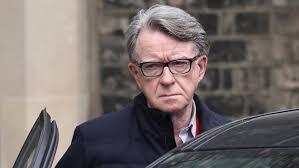
McSweeny was the long-time protégé of Mandelson, the architect of New Labour. However, by 2015 the majority of the membership of the Labour Party was clearly on the left. Mandelson believed that McSweeny had the ability to move Labour back to its more right-wing days. Mandelson has been quoted saying of McSweeny: "I don't know who and how and when he was invented, but whoever it was... they will find their place in heaven." (8) Anushka Asthana pointed out that McSweeny "despised" Corbyn and his "hard-left" politics he represented. (9) According to another source, McSweeny believed that "Corbyn's politics were not just wrong. They were evil." (10)
The Funding of Labour Together
The Times reported that Labour Together was starting to raise money on a scale and at a speed rarely seen in British politics." (11) Further donations were made in 2018 by several other wealthy businessmen such as Paul Myners (£25,000), Clive Hollick (£10,000), Simon Tuttle (£10,000), Richard Greer ((£10,000) and Sean Wadsworth (£10,000). Labour Together failed at the time to report fully £739,429 of the cash and non-cash donations it received between June 2017 and September 2020 to the electoral commission, as required by law. (12)
After Sir Trevor Chinn the most important financial contributor to Labour Together was Martin Taylor, who established Nevsky Capital in 2007. Under his management, the Nevsky fund achieved an average annual USD net return of 18.4% for its investors from the period 2000 to 2015, over double the average of other emerging market funds. He initially focused on companies in the former Soviet Bloc, investing in those deemed set to benefit from economic reforms as these economies democratized. His investments include Russian telecom companies such as Vimpelcom and assorted companies in the energy sector, including Gazprom and Lukoil. The fund eventually reached $3.3bn. (13)
Another important funder of Labour Together is Francesca Perrin, the daughter of Lord David Sainsbury. On March 31st, she gave the organisation £100,000. This year, Perrin has also given two Labour MPs £30,000: Zubir Ahmed and David Pinto-Duschinsky . Perrin has funded several high-ranking Labour MPs in the recent past. Bridget Phillipson received £15,000 and Josh Simons £30,000. Wes Streeting and Shabana Mahmood were given £50,000 each. (14)
Also involved was William Reeves, an American Hedge Fund boss with a fortune estimated at £375 million. Reeves, who gave Labour Together £50,000, was a longstanding Liberal Democrat funder, who gave a large sum to David Laws when he was a minister in David Cameron's austerity government. People like Reeves, Chinn, Taylor, Sainsbury, Perrin, Myers, and Hollick, have never been interested in funding political parties because they wanted a more equal party, in fact, they wanted to maintain a system where they would be able to keep us much of their money as possible. That is why they are so opposed to politicians such as Jeremy Corbyn who support measures to redistribute wealth.
As Solomon Hughes has said about Labour Together: "They have many things in common with Westminster's corporate-funded policy shops, but Labour Together's single-minded drive for back-room sway with Labour's leadership is something different. The organisation looks more like a scheme for a band of high-net-worth individuals to shape Labour's leadership, fixing them to the low-tax, pro-market policies they and their bank balances prefer." (15)
Labour Together used the money provided by these wealthy individuals to poll party members on their policy priorities, splitting members into "instrumentalists" (who would vote for any leader that they thought would win the next election), "idealists" (who projected onto Corbyn what they wanted of him), and "ideologues" (who initially signed up to Labour in the 1970s and 1980s, left or were removed, and then rejoined for Corbyn). The group decided that a successor to Corbyn would need to appeal to all of the "instrumentalists" and over one third of the "idealists", and would need to have served under and backed Corbyn. (16)
Research carried out by Paul Holden showed that Labour Together raised £3,920,400 between 2023-July 2024. This included £2,102,000 from Martin Taylor. It was also revealed that Lord David Sainsbury (£313,000) and his daughter, Francesca Perrin (£210,000) had become major investors in the Starmer Project. In 2022 Gary Lubner began making large donations to the Labour Party in the build-up to the 2024 General Election. This included £5,930,000 to the Labour Party and a further £288,000 to the associated Co-operative Party. Lubner also gave £663,900 to Labour Together in June 2024 (17)
Keir Starmer's Leadership Campaign
Labour Together had a problem as the members of the Labour Party had twice overwhelmingly voted for Jeremy Corbyn. It seemed certain that when Corbyn resigned he would be replaced by another left-wing socialist. The only way that Labour Together could get a right-wing candidate to win the election was to recruit Keir Starmer to pretend he was left-wing by making his ten socialist pledges. (18)
During the leadership campaign, Andrew Neil asked Starmer in a television interview, "Can you guarantee that under your leadership the 2019 Labour commitments to nationalise water, energy, rail, the Royal Mail - they'll all be in Labour's next election manifesto?" Starmer said yes because "I've made that commitment." Starmer was asked, "Will you remain committed to scrapping university tuition fees, will you remain committed to scrapping them? Starmer replied: "They are pledges, Andrew, so the answer to these questions is yes." (19)
Andrew Neil also questioned the fact that Starmer, unlike his opponents, had not published details of the people or organisations who were funding his campaign. Starmer replied that he would do this later. Jon Trickett, a member of the Socialist Campaign Group pointed out that Starmer's failure to publish donations contemporaneously was "anti-democratic" because "voters deserve to know what lies behind the candidates they are being asked to vote for, before they cast their vote, not afterwards." He added that he feared Starmer was being funded by people who had no desire for socialist measures to be introduced: "I've been campaigning against the influence of money in politics for years. Whether it's in general elections or internal party elections, we need to end the secrecy" (20)
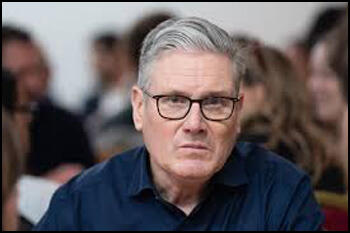
The only way Starmer could become leader was to say he fully supported the policies of Jeremy Corbyn. This enabled him to win by beating Rebecca Long-Bailey (27.6%) and Lisa Nandy (16.2%), with 56.2% of the vote in the first round. Starmer's full donation list was not published until after the election. In total Starmer took £706,135 in donations between January and April 2020. Most of the donors were known to be hostile to the political policies that had been advocated by Starmer. For example, Martin Clarke, a former executive at the roadside recovery firm AA, had long criticised Corbyn and had openly supported the anti-Corbyn breakaway party Change UK in 2019 provided £25,000. Other large donors included Waheed Alli (£100,000) and the two founders of Labour Together, Martin Taylor (£95,000) and Trevor Chinn (£50,000). (21)
It was not long before Starmer began dropping his socialist pledges. For example: (i) "Increase income tax for the top 5% of earners, reverse the Tories' cuts in corporation tax and clamp down on tax avoidance, particularly of large corporations. No stepping back from our core principles." (ii) "Abolish Universal Credit and end the Tories' cruel sanctions regime. Stand up for universal services and defend our NHS. Support the abolition of tuition fees and invest in lifelong learning." (iii) "Put the Green New Deal at the heart of everything we do. There is no issue more important to our future than the climate emergency. A Clean Air Act to tackle pollution locally. Demand international action on climate rights." (iv) "No more illegal wars. Introduce a Prevention of Military Intervention Act and put human rights at the heart of foreign policy. Review all UK arms sales and make us a force for international peace and justice." (v) "Public services should be in public hands, not making profits for shareholders. Support common ownership of rail, mail, energy and water; end outsourcing in our NHS, local government and justice system." (vi) "Full voting rights for EU nationals. Defend free movement as we leave the EU. An immigration system based on compassion and dignity. End indefinite detention and call for the closure of centres such as Yarl's Wood." (vii) "Push power, wealth and opportunity away from Whitehall. A federal system to devolve powers – including through regional investment banks and control over regional industrial strategy. Abolish the House of Lords – replace it with an elected chamber of regions and nations." (22)
Starmer did not put his ten socialist measures in the Labour Party Manifesto for the 2024 General Election. When he became prime minister Starmer appointed to his cabinet several people who had been funded by the Labour Together group. This included Wes Streeting, Lisa Nandy, Steve Reed, Rachael Reeves, Shabana Mahmood, Bridget Phillipson, Jim McMahon, Angela Rayner, Yvette Cooper, David Lammy, John Healey, Ian Murray, Nick Thomas-Symonds, Louise Haigh and Josh Simons. As Solomon Hughes has pointed out: "This kind of backstage contribution is way beyond typical ‘think tank' practice." (23)
Following the Labour Party's victory in the 2024 general election and Keir Starmer's ascension to the office of prime minister, Sue Gray became his Downing Street Chief of Staff. Stories soon emerged that she was in conflict with Morgan McSweeny. It was leaked that she adopted a "micromanagerial" leadership style with substantial control over ministerial and special adviser appointments, and had "extraordinary" control over access to Starmer and his agenda. The Guardian revealed that "Gray had twice moved McSweeney's desk further away from the prime minister's office. It was also reported that Simon Case, the cabinet secretary, had refused to authorise Gray's request for McSweeney to be denied access to a secure computer system unless he heard it from Starmer himself." (24)
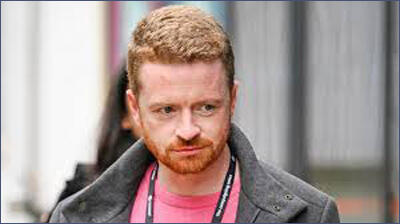
On 6 October 2024, Gray resigned as Downing Street chief of staff, citing the "intense commentary" around her position risking becoming a "distraction" to the government. Following the resignation of Sue Gray, McSweeney, the former director and company secretary of Labour Together. was appointed as Starmer's chief of staff. McSweeny was now in a good position to persuade Starmer to appoint Peter Mandelson as ambassador to Washington. According to Ailbhe Rea of The New Statesman: "When Keir Starmer first entered Downing Street as Prime Minister, appointing Peter Mandelson ambassador to Washington wasn't part of the plan. Sue Gray, Starmer's then chief of staff, had compiled a shortlist of two for that crucial diplomatic role, and Mandelson - despite media reports linking his name to the role - was not on it.... The shortlist Gray had drawn up contained the existing post-holder, Karen Pierce, and an intriguing potential political appointment: David Miliband." (25)
Josh Simons and APCO
Morgan McSweeny was the main figure at Labour Together until becoming chief of staff to Keir Starmer, after he became elected as leader of the Labour Party. In October 2022 Josh Simons was appointed director of the organisation. Simons is a specialist in artificial intelligence and was considered to be an expert in electoral strategy. Simons had originally worked as a policy advisor for Jeremy Corbyn until he left the party in 2016 over the leader's criticisms of Israel. Simons complained: "After six months working as a policy adviser for Jeremy Corbyn , it was clear to me that the way Corbyn and those around him think about Jewish people is shaped by a frenetic anti-imperialism, focused on Israel and America.... Antisemitism is not rife in the British Labour party, quite the opposite in fact. It is only thought to be so because Labour is currently led by a team whose political identity is driven first and foremost by a visceral contempt for America and for Israel." (26)
By 2024, Simons were describing the organisation he fronted as "Keir Starmer's provisional wing". The journalist Paul Holden began to investigate the activities of Simons and the Labour Together group. In return, Simons began to investigate Holden. On 8 February 2024, The Guardian's political editor, Pippa Crerar, informed Holden that they were 24 hours away from publishing an article that would significantly damage, if not destroy Holden's reputation. The email stated: "We are planning on running a story on the Guardian site tomorrow, and in Saturday's paper, that the National Cyber Security Centre (NCSC) is investigating whether information obtained from an Electoral Commission hack may have been used to target the Labour Party. We understand the NCSC probe centres on a series of private legal emails between the political think tank Labour Together, which was previously run by Morgan McSweeney, and the Electoral Commission." (27)
Holden replied: "I want to make this very, very clear. If there is any hint in your reporting that I received material from the hack of the Electoral Commission referred to above, whether knowingly or unknowingly, I will immediately be bringing defamation proceedings against you and the Guardian... The allegation that I have received information from a hack of the Electoral Commission is not only false, but I can positively prove it to be false." (28)
The Guardian did not print the story nor did they investigate the motives of the people who had provided this false information. The reason for this was the newspaper had worked very closely with Labour Together in its original antisemitism claims against Jeremy Corbyn and had given its strong support for Keir Starmer. It was to be another couple of years before the full story was published. It was later revealed that Simons had hired APCO Worldwide to investigate the private affairs of several journalists, including Paul Holden, Henry Dyer, John McAvoy, Aletha Adu, Solomon Hughes, Jody McIntyre, Gabriel Pogrund and Harry Yorke, who were investigating the finances of Labour Together. An article in Democracy for Sale in February 2026 exposed the fact that Labour had paid at least £30,000 to identify the source of stories about its funding. (29)
The report from APCO Worldwide stated: "After a review of publicly available information, there appears to be two potential sources for the information about Labour Together's funding that appeared in the Times article: a leak from someone within the Electoral Commission or Labour Together to the author; or illegally gathered information collected from the 2023 hack of the Electoral Commission that has been passed on to the author." It was clearly linked to the article that Pippa Crerar wanted to publish in February 2024. (30)
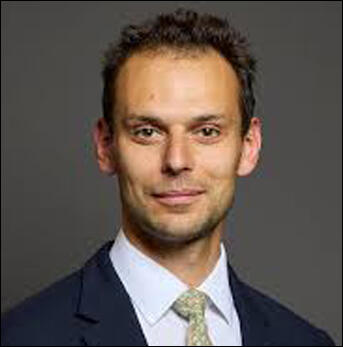
In response to the allegations, Labour MP John McDonnell, who had himself been a victim of Labour Together, called for his party to launch an inquiry into the organisation and those in the party connected to it. In a letter to Hollie Ridley, the party's general secretary, McDonnell called the investigation of journalists "truly shocking" and added: "If the reports of [Labour Together's] activities in surveilling journalists are accurate it is clear that this organisation and its operators and controllers are bringing our party into disrepute." (31)
By this time Josh Simons had been parachuted into a safe Labour seat of Makerfield and his salary is now paid by taxpayers instead of Labour Together's mega-rich donors. In September 2025 Starmer appointed him as Parliamentary Secretary for the Cabinet Office. On 1 March 2026, Simons resigned from government, stating that he did not wish to become a "distraction". Paul Holden said that "Josh Simons doesn't deserve to be an MP, let alone a cabinet minister" adding: "I will now work to make sure parliamentary authorities hold him to account if our weak and supine prime minister will not." He claimed Simons' actions threatened his livelihood and reputation, and had caused him "significant distress". (32)
Andy Burnham
On 14 May 2016, Josh Simons announced he would stand down, triggering a byelection, so that Andy Burnham could win the seat and then beat Keir Starmer in a leadership contest.. In a letter to constituents announcing his decision to resign, Simons said: "I do not believe this government is delivering the urgent, radical, brave reform we need. We need a new direction. I believe that Andy Burnham can provide it. I could not stand here and tell you that our politics is broken and things need to change, then stand in the way of supporting that change. That means stepping aside as your MP for Makerfield to make way for a leader who has the radicalism, energy and immense courage to meet the moment. A leader who is authentic, honest and trusted, who says what he believes and does what he says." (33)
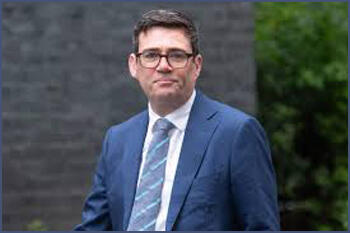
It has been suggested that offering the seat of Makerfield might be a Labour Together trap. It used to be seen as a Labour safe seat, as it has been in the party's hands since its creation in 1983. However, Simons won the seat by a majority of just 5,399 over Reform UK at the 2024 general election. Since then, Labour's polling has collapsed, while Reform's has surged. This month's local elections saw the Reform Party win every council ward in the Makerfield constituency, securing around half the vote. Labour was left trailing behind, having secured little more than a quarter of those who voted. (34)
Is it possible that Labour Together want Burnham to be defeated so that it will make it possible for its candidate, Wes Streeting to become the prime minister. It is clear that Labour Together realised that Starmer was so unpopular that he had to be replaced. Several members of the organisation, Chris Curtis, Zubir Ahmed, Joe Morris and Tom Rutland, were some of the first people to call for Starmer to resign. Or maybe, a deal has been done, for example, that Simons, would become Burnham's chief of staff or head of policy. After all, he started off by working for Jeremy Corbyn (he was sacked for leaking information to Labour Together) and so maybe he is willing to work for anyone who has got power. (35)
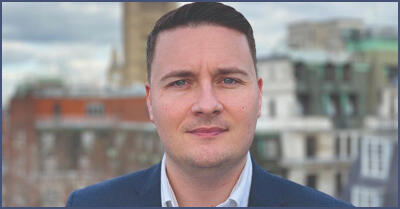
In the pre-election campaign to become the leader of the Labour Party and the prime minister, Wes Streeting,although closely associated with the conservative policies of Keir Starmer, began adopting left-wing positions that previously he had criticised when in the government. For example, in an interview with Nick Robinson he called for a wealth-tax, similar to the one proposed by Starmer when he campaigned for the leadership in 2019. Streeting said that this "wealth tax" would work by equalising capital gains tax with income tax. He believed this would raise £12bn a year. The problem for Streeting is that Starmer lied about the introduction of wealth taxes to get elected as party leader. Is Streeting doing the same thing? Streeting also has the added problem of being in a government that has constantly ruled out the introduction of such a tax. (36)
Currently, the "soft left" has got a good chance of selecting the next prime minister. There are three Labour pressure groups on the centre-left: Tribune Group, Socialist Campaign Group and Mainstream. Tribune alone has over 100 members. It has seven co-leaders: Beccy Cooper, Debbie Abrahams, Vicky Foxcroft, Louise Haigh, Justin Madders,
Sarah Owen and Yuan Yang. They have argued: "Advocating for the interests of ordinary people is what many of us in the Labour Party became involved in politics to do. And it's the relentless mission of the recently relaunched Tribune Group of Labour MPs, which we are proud to lead. We are fuelled by a mixture of determination that British people be allowed to build a politics and economy that works for them; by intense frustration that this is not the case today; and by hope, that we can and will achieve our mission... It is true that we have a labour market that runs on exploitation, denies workers agency, and funnels wealth to those who contribute the least." (37)
Labour Together and the Electoral Commission
It had always been important to Labour Together to hide the fact that it was being financed by wealthy donors who had been hostile to socialist policies. In January 2021, the Electoral Commission, began investigating Labour Together for failing to declare over £800,000 of donations within 30 days. The investigation became public in February 2021, when Business Insider revealed that only £165,000 of the £970,492 donated between October 2015 and January 2021 had been declared within the specified period. (38)
It is estimated that £730,000 of this money was not disclosed when McSweeney was director. McSweeney had falsely asserted in a January 2019 meeting in parliament that donations were being declared fully and promptly. Labour Together claimed that this "administrative oversight" was "entirely unintentional" and asserted that "we are now fully transparent and compliant with regards to our donations, and are cooperating fully with the Electoral Commission to assist them in their ongoing inquiry." the Electoral Commission stated that "admin error" was not a reasonable excuse, and fined Labour Together £14,250 in September 2021 after finding it had committed over 20 offences under electoral law, including disclosures with incorrect information and a failure to appoint a "responsible person" for declaring funds. (39)
In September 2025, Labour Together was reported by The National to have hired private investigators to go after author and journalist Paul Holden, who was writing a book on Starmer entitled Fraud: Keir Starmer, Labour Together and the Crisis of British Democracy (2025), and anti-corruption campaigner Andrew Feinstein , who had stood against Starmer in his constituency of Holborn and St Pancras at the 2024 general election. (40)
Other journalists were working on the story. In February 2026, Emanuele Midolo, revealed that Labour Together had paid £36,000 to American public relations firm APCO to discredit journalists Gabriel Pogrund and Harry Yorke by falsely suggesting its journalists might be part of a Russian conspiracy or had relied on emails hacked by the Russian government. Paul Holden was also investigated because he had provided documents to Pogrund and Yorke. The report was named "Operation Cannon", and was allegedly made with the full knowledge of Morgan McSweeney. The report made various claims about Pogrund's journalism, Jewish faith and relationships, whilst concluding that the emails that Pogrund had used in his article were leaked from Russian hacks. Neither Pogrund or Yorke were made aware of the investigations, even though the report was shared with British intelligence agency GCHQ which reportedly declined to investigate the claims. (41)
These two stories were very damaging to Labour Together and it was decided in April 2026 that the think tank would completely overhaul its operations and change its name to ThinkLabour. Chief executive Alison Phillips stated that a full rebrand of the organization will take place in mid-May as it attempts to tackle perceptions of it being a factional boys' club... That's hung around us, even though I think it does a big disservice to the people that have been working here," she said. "It's why we'll be coming out in May in a very different form. I think that's the only way to really signal that change." (42)
Andy Burnham stood unapposed for the leadership of the Labour Party. However, he accepted over £350,000 worth of donations from individuals and organisations historically affiliated with the Starmer ffaction of the Labour Party. Notable among these was over £22,100 from ThinkLabour the "rebranded Peter Mandelsonite astroturf organisation formerly known as Labour Together." (43)
Primary Sources
(1) Steve Reed, Labour Together (archived 21 May 2023)
Britain has a long and proud history, talented and hard-working citizens, brilliant businesses and world-leading industries. But today, our economy is stagnating, our public services are crumbling, and our place in the world is diminished. Labour Together exists to generate bold ideas that show what Britain could achieve with Labour in power.
Labour Together played a decisive role in Labour's recovery after the 2019 election defeat. Now it will play an even more important role in generating the ideas we need for Britain's renewal.
In 2017, Labour Together developed a strategy for defeating the Hard Left and reconnecting Labour with the voters it had abandoned. In 2020, it played a key role in Keir Starmer's leadership campaign, and Keir has since transformed our party. Now, Labour Together is helping to build a politics for Labour in power rooted in work, family and community - the things that are at the heart of British people's lives.
(2) The Daily Telegraph (28 February 2026)
Sir Keir Starmer 's campaign manager failed to declare £700,000 in donations amid concern that some of the funds came from a Jewish donor who needed to be protected from anti-Semitism in the Labour Party , The Telegraph has learned.
Morgan McSweeney's think tank was investigated by the Electoral Commission after he failed to register donations received by Labour Together , an organisation he ran until 2020, when he became Sir Keir's chief of staff.
Now The Telegraph has learnt that during the time Mr McSweeney failed to register support from millionaire venture capitalists and businessmen, concerns had been raised about protecting a high-profile Jewish donor.
Well-placed sources said that senior figures at the think tank wanted to ensure that Sir Trevor Chinn, who is a director of the organisation and a regular donor, kept a low profile because of "growing" anti-Semitism in the Labour Party.
Documents obtained under the Freedom of Information Act (FOI) also revealed Mr McSweeney was told to declare donations received by the think tank but disregarded the instructions.
Around £100,000 of donations given by Sir Trevor were reported late by the think tank.
Last night, the retired businessman said he had been "surprised" to learn his financial support had not been registered.
(3) Solomon Hughes, Tribune Magazine (18 June 2024)
Labour Together calls itself ‘a think tank offering bold ideas for Britain under a Labour government'. They have many things in common with Westminster's corporate-funded policy shops, but Labour Together's single-minded drive for back-room sway with Labour's leadership is something different. The organisation looks more like a scheme for a band of high-net-worth individuals to shape Labour's leadership, fixing them to the low-tax, pro-market policies they and their bank balances prefer.
(4) Khadija Sharife and Peter Geoghegan, Democracy for Sale (5 Februay 2026)
Labour Together paid a controversial PR firm at least £30,000 to investigate journalists that were digging into how its undeclared funding bankrolled Keir Starmer's successful Labour leadership campaign, Democracy for Sale can reveal.
The influential Starmerite think tank, once run by Morgan McSweeney and then by Josh Simons, now a minister in Starmer's government, hired APCO Worldwide to investigate journalists from the Sunday Times, the Guardian and other outlets and to identify their sources, documents we have seen show.
ACPO was hired in 2023, when Simons ran Labour Together. Sources close to Morgan McSweeney, who joined Starmer's team in 2020, said that he did not make the decision to hire APCO but did not dispute that he was aware of it.
A political think tank hiring a PR firm to investigate journalists is highly unusual, and the revelations have sparked furious response from a senior figure in Labour Together's formation.
Former Labour MP Jon Cruddas, who helped found the organisation in 2015, said our findings were "shocking" and "extraordinary".
"I have heard of black briefings, but never heard of anything like this," he told us. "This is dark shit."
The news that Labour Together put private investigators onto journalists will raise fresh questions about the conduct of senior figures around Starmer as the prime minister fights for his political survival.
November 2023. Panic at Labour Together. The Sunday Times had just published an explosive investigation into the organisation, revealing in detail how McSweeney had failed to declare £730,000 in donations to his think tank between 2017 and 2020. The money paid for polling and campaigning powered Starmer's rise to the Labour leadership.
The story, bylined by Gabriel Pogrund and Harry Yorke, was filled with serious accusations. At its core, is that McSweeney had intentionally kept Labour Together's donors secret so the think tank would look like a humble, grassroots initiative when in fact it was a well-funded vehicle to take over the party.
With a general election now pending, questions about Labour Together's money - and its genesis - could seriously derail an operation that had become a pivotal part of Starmer's Labour.
So Labour Together turned to APCO Worldwide, a controversial PR firm whose work includes crisis comms. The think tank would pay at least £30,000 to identify the source of stories about its funding.
The work was led by Tom Harper, a former Times journalist who is now APCO's head of European media relations. APCO, which has previously worked for big tobacco companies, has recently faced protests in the UK over its work for Israeli defence firm Elbit Systems.
Internal reports prepared by APCO's London office for Labour Together, and seen by Democracy for Sale, name Pogrund, Yorke , The Guardian 's Henry Dyer, Declassified 's John McAvoy and journalists from other outlets as "significant persons of interest" and discuss potential "leverage" over other reporters.
APCO's briefings suggest - without providing any evidence - that one possible source of the Sunday Times story about Labour Together's funding was a Russian or Chinese hack of the Electoral Commission. It is understood that the contents of some of the documents were shared with other journalists on Fleet Street, seemingly in an attempt to discredit the initial story.
A briefing document entitled "Grimsby Town" and marked "memo for Labour Together - December 2023" states "it is important to identify the source of the information" behind the revelations about Labour Together's funding.
"After a review of publicly available information, there appears to be two potential sources for the information about Labour Together's funding that appeared in The Times article: A leak from someone within the Electoral Commission or Labour Together to the author; or Illegally-gathered information collected from the 2023 hack of the Electoral Commission that has been passed on to the author," the memo says.
Two weeks later, on December 29, APCO provided another report for Labour Together. Headed ‘strictly private and confidential', the two-dozen page long briefing is titled "executive summary: investigation into Shadow World Investigations", a London-based investigative outlet run by South African investigative journalists Paul Holden and Andrew Feinstein.
The memo seems designed to discredit Holden, who collaborated on the Sunday Times story about Labour Together's finances and later brought out a well-received book, titled The Fraud, about Labour Together and McSweeney's role in Starmer's rise to power.
"Holden's activities blur the lines between journalism, activism, and political campaigning, particularly in relation to the UK's Labour Party," the briefing states. It adds that Holden's organisation had received funding from George Soros' Open Society Foundations, which "complicates the conflict of interest and represents a significant leverage point."
The memo also plays up his co-founder Feinstein's support for Jeremy Corbyn and his appearances on Russia Today. The South African went on to stand as an independent against Starmer in the 2024 general election, winning 7,312 votes in the prime minister's Holborn and St Pancras constituency.
Westminster insiders expressed shock that Labour Together had hired a PR firm to investigate journalists and their sources. A public affairs veteran told us they "haven't seen or been involved in anything like this in [their] career".
Holden, one of the journalists targeted, said that the revelations "really show how afraid Labour Together were of proper scrutiny and transparency, and where my investigation was going: the undeclared money that goes to the heart of this current government and implicates not just McSweeney, but sitting Cabinet Ministers and Starmer himself."
Labour Together has also been one of the most influential funders of Starmer's Labour, donating more than £2 million to the Labour Party, Electoral Commission records show, and directly financed the election campaigns of more than a dozen current government ministers.
The think tank spent over £445,000 backing Rachel Reeves, David Lammy, Shabana Mahmood, Yvette Cooper, John Healey and Darren Jones ahead of the 2024 general election – now six of Starmer's most senior cabinet members – according to the MPs register of interests.
Jon Cruddas, who stepped down as a director of Labour Together in January 2023, says the organisation has strayed far from its original mission to unite the party.
"The organisation was set up to nurture pluralism across the party, to be open. It's been bent into something very different."
Simons, McSweeney, Labour Together, the Labour Party and APCO all declined to comment on the record about this story.
(5) John Johnson, Politico (27 April 2026)
The think tank credited with helping to deliver Keir Starmer's 2024 election landslide is set to overhaul its operations and change its name after being rocked by scandal.
In her first public interview since being appointed as chief executive of Labour Together last September, Alison Phillips told POLITICO a full rebrand of the organization will take place in mid-May as it attempts to tackle perceptions of it being a "factional boys' club."
"That's hung around us, even though I think it does a big disservice to the people that have been working here," she said. "It's why we'll be coming out in May in a very different form. I think that's the only way to really signal that change."
The group was thrust into the headlines earlier this year after reporting by Democracy for Sale showed that in 2023, its then-director Josh Simons had paid lobbying firm APCO Worldwide to conduct secret research into journalists investigating undisclosed donations to the group.
APCO's report claimed � without evidence � that the story had been based on data hacked from the Electoral Commission. Some journalists targeted by the probe also had their religious and ideological positions examined by the lobbying firm.
Simons, who was elected as a Labour MP following his time at Labour Together, was forced to resign as a government minister in the wake of the affair.
Coming just months after taking up the role, it was left to Phillips to handle the fallout. While she remains of the view that APCO acted far beyond the agreed brief, she expressed frustration in her POLITICO interview that the work of her current team had been "undermined by something that happened long before they arrived."
"It was just disappointing. I can't imagine why they thought that was either appropriate, a good idea, or of any value either," she said of the lobbying group's probe. "I'm not quite sure what they thought it was all going to achieve."
Phillips spent six years as editor of the left-leaning Daily Mirror newspaper before taking up the role. She says she has already reached out to some of the journalists targeted in the incident.