

January: Struggle for Women's Equality
1 January 1857: After a long campaign by Caroline Norton, the Divorce and Matrimonial Causes Act comes into effect.
1 January 1919: Elsie Duval, an active member of Women Social & Political Union died during the influenza epidemic.
1 January 1921: Mary Macarthur, Secretary of the Women's Trade Union League, died of cancer.
1 January 1969: Vera Holme, leading Women Social & Political Union member, died.
2 January 1867: The birth of Henria Williams, who died after being badly beaten by police after a Women Social & Political Union demonstration on 18th November 1910.
2 January 1946: Eleanor Rathbone, leading member of the National Union of Women's Suffrage Societies and president of the National Union for Equal Citizenship, died.
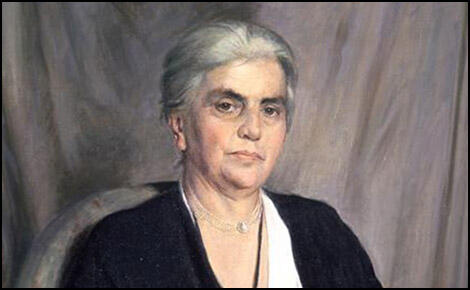
2 January 1951: Edith New, an active member of the Women's Social and Political Union, died.
3 January 1930: Radclyffe Hall wrote to Maude Royden explaining her motivation for writing the novel The Well of Loneliness.
3 January 1963: The death of Octavia Wilberforce, a member of the Women's Social and Political Union who later joined Elizabeth Robins and Louisa Martindale in their campaign for a new fifty-bed, women's hospital in Brighton. After the New Sussex Hospital for Women in Brighton opened, Octavia became one of the three visiting doctors.
5 January 1807: The birth of Elizabeth Pease, a Quaker and anti-slavery campaigner.
5 January 1891: The birth of Lilian Lenton, Women's Social and Political Union activist, who endured several terms in prison and force-feedings.
6 January 1878: The birth of twins, Marian Ellis and Edith Ellis, Quaker peace campaigners.
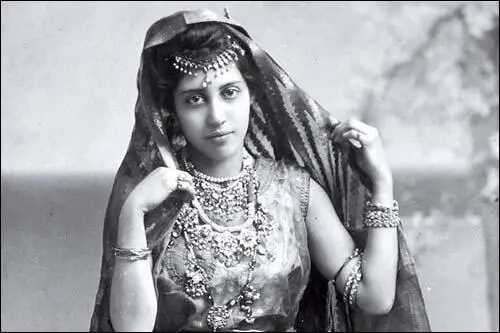
6 January 1914: Bailiffs arrive at the home of Sophia Duleep Singh, a member of Women's Tax Resistance League, and take away a necklace and gold bangle to pay her tax debts.
7 January 1792: Mary Wollstonecraft’s Vindication of the Rights of Women is published.
7 January 1912: Sophia Jex-Blake, doctor and author of Medicine as a Profession for Women (1869), died.
8 January 1888: The birth of Octavia Wilberforce, a member of the Women's Social and Political Union who as a doctor looked after released hunger strikers at her home in Henfield and one of the main figures behind the opening of the New Sussex Hospital for Women in Brighton.
8 January 1891: Margaret Storm Jameson, a pacifist and member of the National Union of Women Suffrage Societies was born.
9 January 1899: The birth of Eileen Power, the ground-breaking historian who was the author of The Paycockes of Coggeshall, (1919), Medieval English Nunneries (1922), Medieval People (1924), The Goodman of Paris (1928), Studies in English Trade in the 15th Century (1933), The Wool Trade in English Medieval History (1941) and Medieval Women (1975).
10 January 1913: May Billinghurst told the jury at the Old Bailey: “My heart ached and I thought surely if women were consulted in the management of the state happier and better conditions must exist for hard-working sweated lives such as these… It was gradually unfolded to me that the unequal laws which made women appear interior to men were the main cause of these evils. I found that the man-made laws of marriage, parentage and divorce placed women in every way in a condition of slavery - and were as harmful to men by giving them power to be tyrants…. The government authorities may further maim my body by the torture of forcible feeding as they are torturing weak women in prison at the present time. They may even kill me in the process for I am not strong, but they cannot take away my freedom of spirit or my determination to fight this good fight to the end."
11 January 1852: The death of Elizabeth Sharples, journalist and lecturer, who campaigned for women’s rights.
11 January 1858: The birth of Margaret Nevinson, a member of the National Union of Women's Suffrage Societies, Church League for Suffrage, Women's Writers Suffrage League, the Women Social & Political Union, and the Women's Freedom League.
11 January 1889: Vera Terrington was born. In December 1923 Terrington was elected to the House of Commons as representative for Wycombe.
11 January 1903: Helen Blackburn died. A member of the National Union of Women's Suffrage Societies and the author of The Condition of Working Women (1896) and Women's Suffrage: A Record of the Women's Suffrage Movement in the British Isles (1902).
12 January 1881: The birth of Mary Gawthorpe. One of the main speakers at Women Social & Political Union public meetings. Gawthorpe was also the co-editor of the Freewoman.
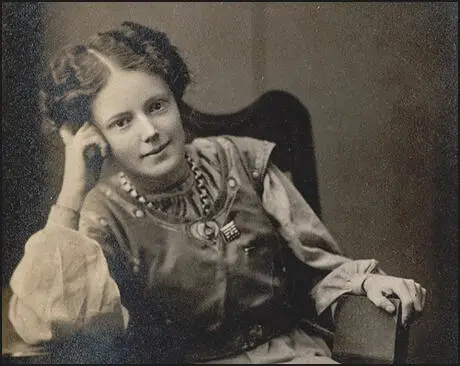
13 January 1914: Beatrice Harraden writes a letter to Christabel Pankhurst accusing her of alienating too many old colleagues by her dictatorial behaviour
16 January 1855: The birth of Eleanor Marx, trade unionist and campaigner for women’s rights.
17 January 1829: Catherine Booth was born.
17 January 1841: Emma Martin starts a series of three lectures in Macclesfield entitled: "Religion of the New Moral World"; "The Doctrine of Responsibility" and "The Marriage System".
17 January 1872: First meeting of the Central Committee for Women's Suffrage. Women attending include Frances Power Cobbe, Priscilla Bright McLaren, Agnes Garrett, Lilias Ashworth Hallett, Millicent Garrett Fawcett, Florence Nightingale and Harriet Martineau..
17 January 1908: Edith New and Ada Nield Chew are arrested after chaining themselves to the railings of 10 Downing Street.
17 January 1949: Flora Drummond, a leading member of the Women's Social and Political Union, died.
18 January 1869: The birth of Constance Lytton. A member of the Women's Social and Political Union she served several terms in prison and endured force-feeding, that contributed to her early death.
18 January 1910: Henry N. Brailsford writes letter to Millicent Garrett Fawcett suggesting that he should attempt to establish a Conciliation Committee for Women's Suffrage.
19 January 1856: Margaret Ashton, chairperson of the North of England Society for Women's Suffrage, was born
20 January 1820: The birth of Anne Jemima Clough who in 1867 formed the North of England Council for Promoting the Higher Education of Women.
20 January 1857: Charlotte Payne-Townshend Shaw is born.
20 January 1959: Cicely Corbett Fisher, a member of National Union of Women's Suffrage Societies, International Woman Suffrage Alliance and the Women's Industrial Council, died.
21 January 1840: The birth of Sophia Jex-Blake who published a pamphlet, Medicine as a Profession for Women (1869), where she argued the case for women doctors. In 1887 she joined forces with Elizabeth Garrett Anderson to establish the Edinburgh School of Medicine for Women.
21 January 1879: The birth of Helen Gwynne-Vaughan, the leader of the Women's Auxiliary Army Corps (WAAC) during the First World War.
21 January 1960: Mary Sheepshanks, secretary of the International Women's Suffrage Alliance, died.
22 January 1858: The birth of Beatrice Webb, sociologist, economist, socialist, labour historian and social reformer.
22 January 1876: Flora Sandes was born. in December 1916, she reached the rank of sergeant-major in the Serbian Army.
22 January 1915: Clare Mordan, a member of the National Union of Suffrage Societies and the Women's Social and Political Union (WSPU), died.
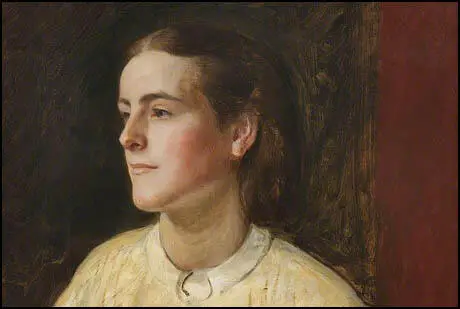
22 January 1953: Kathlyn Oliver, General Secretary of Domestic Workers' Union of Great Britain, died.
23 January 1932: Marion Phillips, member of the People's Suffrage Federation and Labour MP died.
24 January 1864: The birth of Beatrice Harraden a member of the Women Social & Political Union, Women's Writers Suffrage League and Women's Tax Resistance League
25 January 1877: The birth of Lilian Dove-Wilcox, a member of the Women Social & Political Union who went on hunger-strike while in prison.
25 January 1882: The birth of Virginia Woolf, a member of the Adult Suffrage Society, and the author of Mrs Dalloway (1925), To the Lighthouse (1927), Orlando (1928), A Room of One's Own (1929) and The Waves (1931).
26 January 1890: Miriam Pratt, a member of the Women Social & Political Union and a convicted arsonist, was born.
27 January 1855: Mary Seacole leaves from London on her journey to the Crimean War.
27 January 1866: The birth of Alice Wheeldon, a member of the Women Social & Political Union and the No-Conscription Fellowship who was framed and imprisoned for an assassination plot against David Lloyd George.
27 January 1905: Selina Cooper argues at the Labour Representation Committee conference at Liverpool that the leadership should fully support women's suffrage
27 January 1911: Dora Marsden and Grace Jardine resigned from the Women Social & Political Union and joined the Women's Freedom League (WFL).
28 January 1870: The birth of Ada Nield Chew, paid organiser of the Women's Trade Union League and the National Union of Women's Suffrage Societies.
29 January 1907: Helen Taylor, a member of the Kensington Society and co-author of The Subjection of Women (1869), died
28 January 1932: Flora Mayor, a member of the National Union of Women's Suffrage Societies, died.
29 January 1914: Christabel Pankhurst expels Sylvia Pankhurst from the Women Social & Political Union.
29 January 2011: Dorothy Thompson, the socialist and feminist historian, died.
30 January 1864: Birth of Helena Swanwick , a member of the National Union of Women's Suffrage Societies and editor of its weekly journal, The Common Cause (1909-1912) and author of The Future of the Women's Movement (1913).the Manchester Guardian.
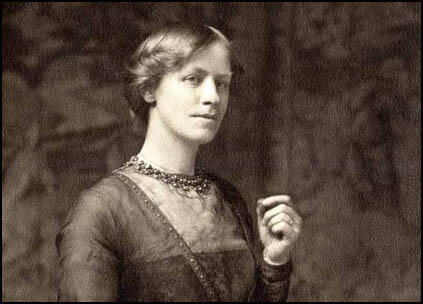
30 January 1961: Dorothy Thompson , important anti-fascist journalist, died.
31 January 1869: Birth of Violet Douglas-Pennant, the first commander of the Women's Royal Air Force (1918).
31 January 1917: Alice Wheeldon, Hettie Wheeldon, Winnie Mason, former members of the Women Social & Political Union and current members of the No-Conscription Fellowship are arrested and charged with plotting to murder the British Prime Minister David Lloyd George and Arthur Henderson, the leader of the Labour Party.