On this day on 31st October
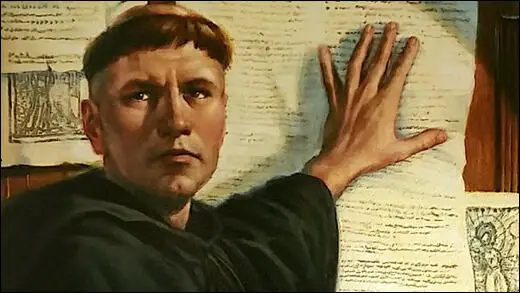
On this day in 1517 Martin Luther affixed to the castle church door, which served as the "black-board" of the university, on which all notices of disputations and high academic functions were displayed, his Ninety-five Theses. The same day he sent a copy of the Theses to the professors of the University of Mainz. They immediately agreed that they were "heretical". For example, Thesis 86, asks: "Why does not the pope, whose wealth today is greater than the wealth of the richest Crassus, build the basilica of St. Peter with his own money rather than with the money of poor believers?"
Pope Leo X ordered Luther to stop stirring up trouble. This attempt to keep Luther quiet had the opposite effect. Luther now started issuing statements about other issues. For example, at that time people believed that the Pope was infallible (incapable of error). However, Luther was convinced that Leo X was wrong to sell indulgences. Therefore, Luther argued, the Pope could not possibly be infallible.
During the next year Martin Luther wrote a number of tracts criticising the Papal indulgences, the doctrine of Purgatory, and the corruptions of the Church. "He had launched a national movement in Germany, supported by princes and peasants alike, against the Pope, the Church of Rome, and its economic exploitation of the German people."
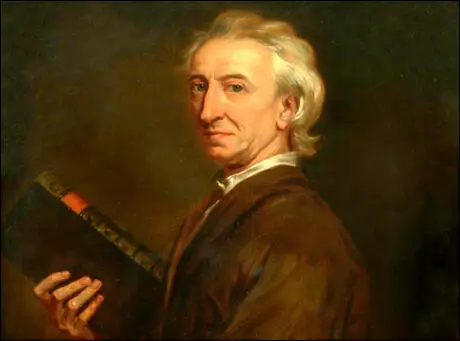
On this day in 1620 John Evelyn was born. Evelyn was a supporter of Charles I and after his execution in 1649 he went into exile. He returned in 1652 and eventually became a fellow of the Royal Society. A royalist, Evelyn described the return of Charles II to London: There were 20,000 soldiers... shouting with joy; the streets covered with flowers, the bells ringing, fountains running with wine."
After the Restoration Evelyn joined the royal court of the king. On 17th October 1660 he described the executions of some of the leaders of the Commonwealth: "The traitors executed were Scroop, Cook and Jones. I did not see their execution, but met their quarters mangled and cut and reeking as they were brought from the gallows in baskets."
In 1661 he published a book on pollution, The Inconvenience of the Air and Smoke of London Dissipated. This was followed by A Disclosure of Forest Trees (1664). After the Great Fire of London in 1666 Evelyn submitted proposals for the rebuilding of the capital. He also published Navigation and Commerce (1674). On the death of Charles II: "He (Charles II) was a prince of many virtues, and many great imperfections. He would doubtless have been an excellent prince had he been less addicted to women. He had many great faults... He neglected the needs of the people... Wars, plagues, fires made his reign very troublesome and unprosperous."
John Evelyn died in 1706. His diaries covering the years 1641-1706 were found in an old clothes-basket in 1817 and provide vivid portraits of public figures of the period.
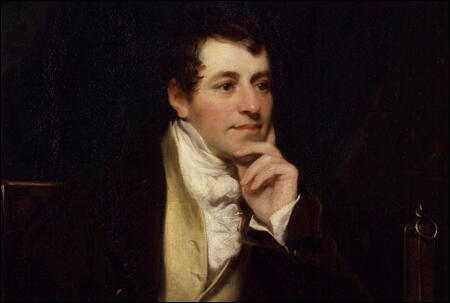
On this day in 1815 Humphry Davy patented the miner's safety lamp. Michael Faraday saw Davy lecture in 1813: "Sir H. Davy proceeded to make a few observations on the connections of science with other parts of polished and social life. Here it would be impossible for me to follow him. I should merely injure and destroy the beautiful and sublime observations that fell from his lips. He spoke in the most energetic and luminous manner of the Advancement of the Arts and Sciences. Of the connection that had always existed between them and other parts of a Nation's economy. During the whole of these observations his delivery was easy, his diction elegant, his tone good and his sentiments sublime." In 1813 Faraday became his temporary assistant and spent the next 18 months touring Europe while during Davy's investigations into his theory of volcanic action.
Humphry Davy invented a safety lamp for use in gassy coalmines, allowing deep coal seams to be mined despite the presence of firedamp (methane). This led to some controversy as George Stephenson, working in a colliery near Newcastle, also produced a safety lamp that year. Both men claimed that they were first to come up with this invention. Stephenson wrote in The Philosophical Magazine in 1817: "The principles upon which a safety lamp might be constructed I stated to several persons long before Sir Humphrey Davy came into this part of the country. The plan of such a lamp was seen by several and the lamp itself was in the hands of the manufacturers during the time he was here."
One of Davy's most important contributions to history was that he encouraged manufacturers to take a scientific approach to production. His discoveries in chemistry helped to improve several industries including agriculture, mining and tanning.
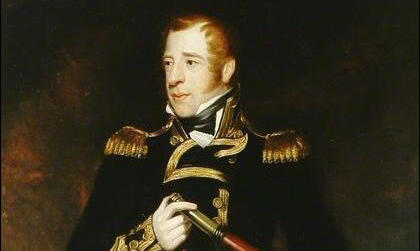
On this day in 1860 Thomas Cochrane died. In 1805 Cochrane, the son of the son of the ninth Earl of Dundonald, was a candidate for the parliamentary seat in Honiton. He recorded in his autobiography: "To the intense disgust of the majority of the electors, I refused to bribe at all, announcing my determination to 'stand on patriotic principles' which, in the electioneering parlance of those days, meant 'no bribery'. To my astonishment, however, a considerable number of the respectable inhabitants voted in my favour. Having had decisive proof as to the nature of Honiton politics, I made up my mind that the next time there was a vacancy in the borough, the seat should be mine without bribery. Accordingly, immediately after my defeat, I sent the bellman round the town, having first primed him with an appropriate speech, intimating that 'all who had voted for me, might repair to my agent and receive ten pounds ten.' The novelty of a defeated candidate paying double the current price expended by the successful one made a great sensation. The impression produced was simply this - that if I gave ten guineas for being beaten, my opponent had not paid half enough for being elected."
In 1806 Thomas Cochrane met the radical journalist William Cobbett, who had also been involved in attempting to expose corruption in the armed forces. The two men became close friends and Cobbett encouraged Cochrane to win election to the House of Commons where he would have an opportunity to expose those members of the armed forces who were misusing their power.
Cochrane was elected to represent Honiton in 1806. However, Cochrane's ideas were too progressive for the electors of Honiton and in 1807 he decided to accept the invitation to stand with Sir Francis Burdett as one of the two Radical candidates for the Westminster constituency.
After his election to the House of Commons Captain Cochrane spent much of his time at sea in the war against the French. When in Parliament, Cochrane made several speeches attacking corruption in the Royal Navy. The naval authorities were furious with Cochrane and he demoted. Aware that he had lost the opportunity of advancing his naval career, Cochrane concentrated his efforts on campaigning for parliamentary reform.
In 1814 Cochrane was accused with his uncle and his stockbroker of fraud on the stock market. Cochrane claimed he had been framed but he was found guilty of fraud and sentenced to a year's imprisonment, a fine of £1,000 and two hours in the pillory. When Sir Francis Burdett threatened to stand next to Cochrane in the pillory, this part of the sentence was withdrawn to avoid a riot taking place. (In 1832 King William IV awarded him a free pardon for his alleged role in the 1814 stock market fraud.)
After his release from prison Cochrane gave support to Major John Cartwright and the formation of the Hampden Clubs. He also argued in favour of universal suffrage and spoke against the Gagging Acts. Cochrane once said: "If the individual is to be happy in the contemporary order, he must be open-minded with respect to new values and new arrangements."
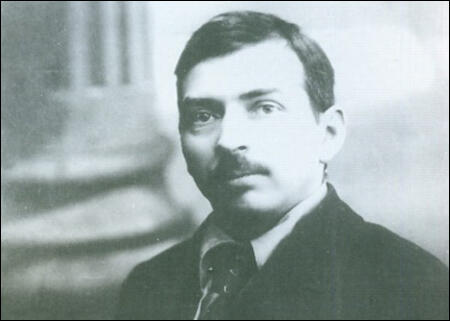
On this day in 1880 Mikhail Tomsky was born. After being blacklisted in St Petersburg for his union activities he moved to Revel. During the 1905 Revolution Tomsky helped establish the Revel Soviet of Workers' Deputies. Following the publication of the October Manifesto, Tomsky helped form the Revel Union of Metal Workers. However, Nicholas II soon changed his mind about trade union reform and Tomsky was arrested and deported to Siberia.
A Bolshevik, Tomsky was once again arrested and imprisoned in May, 1908. On his release in 1909 he lived for a while in France before returning to Russia where he organized the publication of Rabocheye Znamya in Moscow. Tomsky was arrested in December, 1909 and was kept in custody for two years before he was brought to court and sentenced to five years hard labour.
After the abdication of Nicholas II Tomsky was freed by the Provisional Government and he returned to Moscow where he took part in the October Revolution. Iin 1920 became General Secretary of the Red International of the Trade Unions. He was also elected to the Central Committee of the Communist Party and the Politburo in 1922.
A close ally of Joseph Stalin, Tomsky was on the right-wing of the party and was extremely hostile to the group led by Leon Trotsky. In 1926 he joined with Stalin, Nikolay Bukharin and Alexei Rykov to begin the purge of the left from the party.
After the removal of the left Stalin turned on the right of the party. As head of the trade union movement, Tomsky posed a threat to Stalin's power. In April, 1929, he was forced to resign from his trade union posts. He remained a member of the Central Committee and in 1934 became director of the State Publishing House. Two years later he was arrested by the NKVD, Mikhail Tomsky committed suicide on 23rd August, 1936.
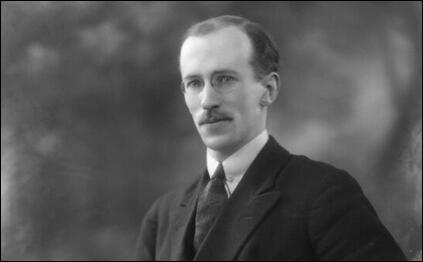
On this day in 1895 – Basil Liddell Hart was born. Educated at St. Paul's School and Corpus Christi College, Cambridge he left on the outbreak of the First World War to join the British Army. He became an officer in the King's Own Yorkshire Light Infantry. During the war he saw action at Ypres and the Somme. Wounded twice he was company commander by the end of the war.
After the war Liddell Hart wrote Infantry Training Manual (1920) before being invalided out of the British Army in 1924. He was military correspondent for the Daily Telegraph (1925-35), The Times (1935-39) and the Daily Mail (1939-45). In his articles and books Liddell Hart became the world's leading exponent of using tanks as an independent striking force to make deep penetrations into enemy territory, cutting off enemy troops from their supplies and high command. Whereas German soldiers such as Erwin Rommel and Heinz Guderian read his books and developed what later became known as Blitzkreig. His ideas were largely ignored in Britain, although he did serve briefly as personal adviser to Leslie Hore-Belisha, the Secretary of State for War (1937-1940).
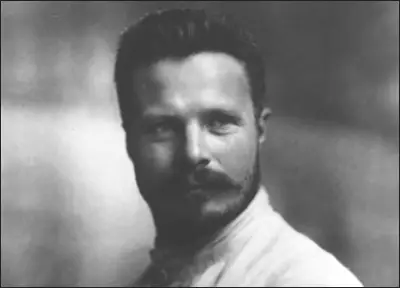
On this day in 1925 Mikhail Frunze died. Frunze, the son of a peasant, was born in Turkestan in 1885. After studying at his local school he continued his education at the Gymnasium at Verny and the Polytechnical Institute in St. Petersburg. As a student Frunze joined the Social Democratic Party where he supported the Bolshevik faction. In November, 1904, he was arrested during a political demonstration and expelled from the city.
In 1915 Frunze managed to escape from Siberia and reached Chita where he edited the Bolshevik weekly, Vostochnoe Obozrenie. During the February Revolution Frunze led the Bolsheviks in Minsk and became chief of the city's civilian militia before being elected President of the Byelorussian Soviet. Frunze went to Moscow during the October Revolution and led a 2,000 strong force of workers and soldiers in the Bolshevik struggle for the city.
In 1918 Frunze became Military Commissar for the Voznesensk Province. During the early days of the Civil War, Frunze was appointed as head of the Southern Army Group. After defeating Alexander Kolchak and the White Army in Omsk, Leon Trotsky gave him command of the whole of the Eastern Front. Frunze went on to clear Turkestan of anti-Bolshevik forces.
In November, 1920, Frunze led troops that captured the Crimea and managed to force General Peter Wrangel and his troops from Russia. He also crushed the rebellion led by Nestor Makhno in the Ukraine. In 1921 Frunze was elected to the Central Committee and in January, 1925, became the Chairman of the Revolutionary Military Council. As a close supporter of Gregory Zinoviev, this brought him into conflict with Joseph Stalin. Mikhail Frunze died during an operation for stomach ulcers on 31st October, 1925. Some historians have argued that Stalin was involved in arranging Frunze's death.
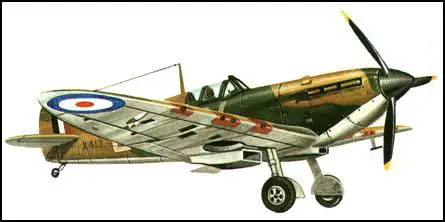
On this day in 1940 the Battle of Britain came to an end. A. J. P. Taylor has pointed out that: "Pilots on both sides naturally exaggerated their claims in the heat of combat. The British claimed to have destroyed 2,698 German areoplanes during the Battle of Britain and actually destroyed 1,733. (35) There were 2,353 men from Great Britain and 574 from overseas who were members of the air crews that took part in the Battle of Britain. An estimated 544 were killed and a further 791 lost their lives in the course of their duties before the war came to an end.
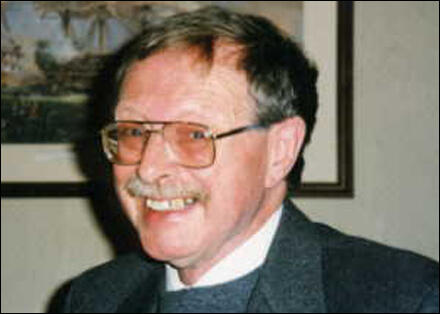
On this day in 2006 Peter Fryer, English journalist died. Fryer, the son of a Hull master mariner, was born on 18th February, 1927. Initially he was an anarchist but inspired by the efforts of the Red Army during the Second World War he joined the Young Communist League in 1942.
After the war he worked as a journalist for the Yorkshire Post but now a member of the Communist Party of Great Britain, Fryer joined the Daily Worker in 1947. Peter Fryer was sent to Budapest in 1956 and reported the Hungarian Uprising for the newspaper. Fryer, who was critical of the actions of the Soviet Union, found his reports were censored. Fryer responded by having the material published in the New Statesman. As a result he was suspended from the party for "publishing in the capitalist press attacks on the Communist Party." The loyal Sam Russell was now sent to the country to report on the uprising.
The cartoonist James Friell condemned John R. Campbell, the editor of the newspaper for supporting the invasion. He told Campbell: "How could the Daily Worker keep talking about a counter-revolution when they have to call in Soviet troops? Can you defend the right of a government to exist with the help of Soviet troops? Gomulka said that a government which has lost the confidence of the people has no right to govern." When Campbell refused to publish a cartoon by Friell on the Hungarian Uprising he left the newspaper and the CPGB.
Over 7,000 members of the Communist Party of Great Britain resigned over what happened in Hungary. This included Peter Fryer, who later recalled: "The crisis within the British Communist Party, which is now officially admitted to exist, is merely part of the crisis within the entire world Communist movement. The central issue is the elimination of what has come to be known as Stalinism. Stalin is dead, but the men he trained in methods of odious political immorality still control the destinies of States and Communist Parties. The Soviet aggression in Hungary marked the obstinate re-emergence of Stalinism in Soviet policy, and undid much of the good work towards easing international tension that had been done in the preceding three years. By supporting this aggression the leaders of the British Party proved themselves unrepentant Stalinists, hostile in the main to the process of democratisation in Eastern Europe. They must be fought as such."
Books by Fryer include The Hungarian Tragedy (1956), The Battle for Socialism (1959), Oldest Ally, A Portrait of Salazar's Portugal (1961), Mrs Grundy, Studies in English Prudery (1964), The Birth Controllers (1965), Private Case - Public Scandal (1981), Staying Power: The History of Black People in Britain (1984), Black People in the British Empire (1988), Aspects of British Black History (1993), The Politics of Windrush (1999), Rhythms of Resistance (2000) and William Cuffay (2005).