

Cornelius Beal
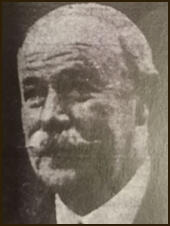
Cornelius Clarke Beal was born in Lambeth, on 25th November 1868, the son of Elizabeth Bethell (1837-1914) and George Beal (1843-1884), a general labourer. George Beal and his wife Elizabeth produced at least six children. Cornelius was the third child and the eldest son. The couple's first-born child, Annie Elizabeth, died in 1868 at the age of three. The family lived in Bromley-by-Bow in the East London district of Poplar. (1)
In the eight square miles of the East End lived over 400,000 people in appalling housing. It was known for its overcrowded living spaces and high criminal activity. In the area of Whitechapel alone, the mortality rate for children under the age of five was around 60% mostly due to the tight living conditions. "The Medical Inspector for Whitechapel reported in 1873 that one fifth of the district's children died before they were one year 14 old and one-third before they were five. In a section of the district close to St Jude's, moreover, the rate of mortality of 15 children under five was as high as 61.1%. (2)
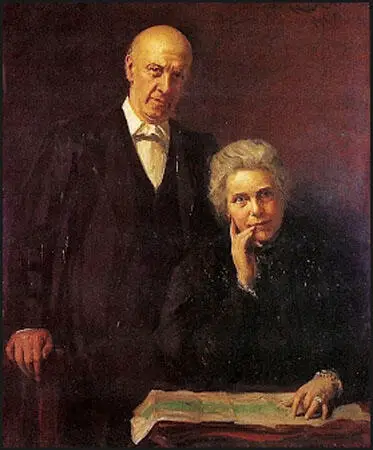
Thomas Henry Huxley described East London as joyless, a mass of starving, wretched, hopeless human beings", with some of its most vigorous inhabitants making no secret of their war against society." (3) Samuel Augustus Barnett and his wife, Henrietta Barnett moved to St Jude's, a parish in Whitechapel. Barnett argued that the people of East London "live without knowledge, without hope, and often without health." He added that "The needs of East London are often urged, but they are little understood". (4)
Cornelius Beal grew up with a sense of mission to help the people of the East End. In 1882, at the age of 14, he became a pupil teacher at St Anne's National School in Limehouse. After he finished his training, he moved on to Park Elementary school in Stratford. He was a talented all-round sportsman and was keen to teach his pupils the skills of football, cricket, boxing and swimming. (5)
Toynbee Hall
In December 1884 Samuel Augustus Barnett and his wife, Henrietta Barnett, established Toynbee Hall, based in Commercial Street, Spitalfields. It was Britain's first university settlement. It was named after their friend and social reformer, Arnold Toynbee, who had died when he was only thirty years old. The idea was to create a place where students from Oxford University and Cambridge University could work among and improve the lives of the poor during their holidays. Barnett argued: All real progress must be by growth. The new must be a development of the old, and not a branch added on from another root. A change which does not fit into and grow out of things that already exist is not a practicable change." (6)
Cornelius Beal was a strong supporter of Toynbee Hall and became captain of its football team Toynbee Rovers. He also embraced its idea of improving elementary education in the East End. In 1888 he established the West Ham swimming club and worked closely with the Life-Saving Society. Beal was also an excellent cricketer and topped the batting averages for the well-known Arlington Cricket Club for twenty consecutive years. (7)
Sporting Success
According to The Stratford Express: "For many years he (Cornelius Beal) has been one of the best-known figures associated with the school life of the Borough, for, apart from his scholastic duties he has always taken an interest in the sporting side. Football, cricket, swimming and boxing have always claimed a large share of his sympathies, and his work in this connection has done much to popularise these sports among many thousands of boys who have been under his charge." (8)
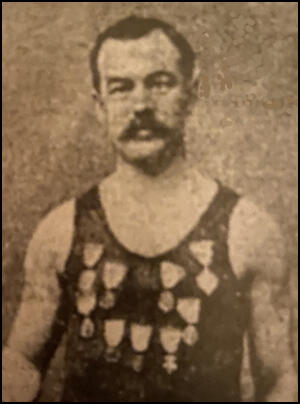
Cornelius Beal turned Park School into a breeding ground for professional footballers. In fact, Park School eventually became known as West Ham's first academy of football. It has been claimed that Park School team that played on a Saturday morning regularly attracted crowds of over 1,000 to the Ham Park Road ground in West Ham. His first student who he helped to turn into a great footballer was Charlie Dove who was captain of Park School football team, leading his team to victory in two local competitions. Soon after leaving school at thirteen Dove found work with the Thames Ironworks and Shipbuilding Company as an apprentice riveter and by 1897 was playing for Thames Ironworks. (9)
As the East Ham Echo pointed out: "Born just over 19 years ago, Charles Dove first began his football career with Park School - a team that has always been classed as one of the finest schoolboy combinations. There he figured at full back and just by way of encouragement won two medals when playing in this position.... Three seasons ago joined the ranks of Thames Ironworks and has played with them ever since. Even when joining them his true position was not apparent. He played centre forward and full back and it was not until he had occupied nearly every place - with the exception of goal - that his worth as a right half was demonstrated. In this berth he plays a brilliant game." (10)
Beal was a great fan of West Ham United and a significant number of boys from his school went on to play for the club. It has been claimed by John Helliar that Beal had a talent for music and rhymes and wrote special words to the tune of "I'm Forever Blowing Bubbles" and when former Park Elementary School boys "was having a good game the spectators would mention him by name in a parody of the tune." (11)
George Webb
Syd King, who had received a very good grammar school education, was seen as more intelligent than most players and at the end of the 1901-02 season he was appointed as club secretary/manager. Beal developed a good relationship with King and kept him informed of talented players in the Park Elementary School team. The first of these important signings was George Webb. The co-owner of a toy factory he originally signed as an amateur for West Ham United in August 1905 and for the first few years he only played for the reserves. (12)
In 1910 Webb represented England at amateur level against Switzerland. The following year he played against Wales, Belgium, Germany and Holland. Webb, the first West Ham United player to do this, won his first full international cap for England against Wales on 14th March 1911. Webb scored in England's 3-0 victory. Webb also played in the game against Scotland that was drawn 1-1 on 1st April 1911. He was described as "fast, had a great shot while a hefty physique made him even more redoubtable". In July 1912 Webb joined Manchester City in the First Division of the Football League. He had scored 32 cup and league goals for West Ham. (13)
Syd Puddefoot
Syd Puddefoot was a talented footballer and in his final year at Park School he scored 147 goals. Cornelius Beal later told a reporter, Puddefoot "was brilliant at his studies - brilliant all-round. He was one of the best scholars in the school. I never remember having to spank him, and sometimes one has to administer the cane a little. He was well-liked by everyone - a general favourite". (14) Cornelius Beal was a good friend of Charlie Paynter, the coach of West Ham United, he told him about his potential to become a top class striker. Paynter passed this information onto Syd King the manager. King watched him play for London Juniors against Surrey Juniors in 1912. (15)
Puddefoot later recalled: "Before I left school, I knew that someday I'd be given the opportunity to play for West Ham United FC. I was a member of Park School team, and during my schooldays I played many games on West Ham's ground. Mr Syd King, manager of the club, evidently thought I develop, because he sought me out one day and asked me if I would play for them when I had finished my school days. I replied that I would be only too pleased to do so. Play for West Ham? At that time that was my greatest ambition. However, I didn't say so to the club officials, and they kept an eye on me all the time I played with juniors." (16)
Syd Puddefoot,signed amateur forms for West Ham United on 25 June 1912. Reg Groves pointed out: "The lad was keen, eager to learn; many an evening he would spend with Charlie Paynter going over moves and movements in the game." (17) A centre-forward, he joined a team that already included two outstanding strikers in Danny Shea and George Hilsdon. However, he won a place in the starting line-up against Brighton & Hove Albion on 21st March, 1913, and scored in the 1-1 draw. However, he was unable to add to this total in the three other games he played in the 1912-1913 season. (18)
Danny Shea was transferred to Blackburn Rovers in 1913 for a record fee of £2,000. This increased his opportunities at West Ham United. In those early games star striker, George Hilsdon, helped him develop his game. " I have much to thank him for. He (George Hilsdon) pointed out my faults in a calm, quiet sort of way, and followed his criticisms with a few words telling me how to get over the faults… I was very grateful to George, and every time I scored a goal, I gave him a half-crown. When the others discovered that I was doing this they made it a standing joke. It certainly was an expensive habit when I got three of four goals in one game, but I didn't mind. I wouldn't have got the goals perhaps had George not given me so many wrinkles." (19)
Puddefoot did much better in the 1913-1914 season. The East Ham Echo reported on Puddefoot performance against Exeter City on Christmas Day. " "The outstanding feature of a very exciting game… was the form of Puddefoot. He is a young player who should develop into a first-class centre-forward. He has plenty of dash and pluck, feeds his wings and partners well, and is ever ready to take advantage of the least slip on the part of the opposition." (20)
The national press was taking an interest in this emerging talent. The Athletic News reported "He (Puddefoot) is not only fast, but becomes doubly so by his quickness off the mark, and this, with a tantalising swerve and the modesty of not being too anxious to score if he finds himself marked, will always go to make him a great danger to any defence that is at all shaky, like that of Bristol Rovers was on Saturday." (21) The Daily Mail commented on his youth: "He has the face and the smile of a boy in the Upper Sixth, legs like pine trees, and the swift savage blow of the panther" (22)
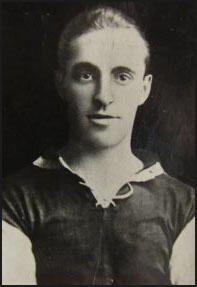
As Philip Stevens pointed out: "Puddy's goalscoring feats were becoming the stuff of legend... Puddy had made his mark at West Ham and established a growing reputation in the Southern League. In just over two seasons his physical courage, skill and goalscoring feats endeared the local boy to all Hammers fans. Syd King saw his young local hero as the heart of a West Ham side capable of promotion to the Football League." (23)
After scoring 102 goals in 158 games, Puddefoot was sold to the Scottish club Falkirk for £5,000. Puddefoot was keen on joining Falkirk as Scottish clubs did not follow the Football League in having a maximum wage or any official restriction on signing-on fees. In 1922 the maximum wage in England was £9 per week during the playing season, reduced to £6 for the 15-week summer close season. Falkirk offered Puddefoot £10 a week plus a £1,000 signing on fee and suggested they were willing to help him set up a business in Scotland after he retired from football. (24) Puddefoot later admitted: "Falkirk, apart from football, offers me business opportunities which would not come my way in London. A deciding factor. I believe in second strings. The footballer of today is the businessman of tomorrow." (25)
The fee was the highest ever paid for a professional footballer. Club supporters considered it a great betrayal. As West Ham historian, Brian Belton has pointed out: "The transfer became the most chronicled event involving an individual in the long history of West Ham United: the Hammers' supporters were angry at the departure of the local lad that they had come to call 'our Puddy', and accused the board of lacking ambition and of putting ground developments ahead of success on the field." (26)
Jim Barrett
Another great West Ham player coached by Cornelius Beal at Park School was Jim Barrett. He was born in West Ham on 19th January 1907. His father, Fred Barrett, was an iron worker. He also played for Fairbairn House Boys' Club. One of the Dockland Settlements, it provided a wealth of activities for young people and community services for the most disadvantaged in the area. (27)
Barrett played for England Schoolboys and was also a member of the West Ham Boys team that played Liverpool Boys in the 1921 English Shield Final at Upton Park. Syd King, the manager of West Ham United, signed the 16-year-old Barrett in 1923. Despite his obvious talent he had to wait two years before he replaced the injured George Kay in the first-team. (28)


Barrett played in all 42 league games in the 1925-26 season. The 20 year-old played in five different positions that year and managed to score five goals in three games at centre-forward. This included a hat-trick against Leeds United on 30th January 1926. Barrett's form remained good and he won his first international cap for England against Northern Ireland on 28th October, 1928. Also in the England team that day was Dixie Dean, Jimmy Ruffell, Joe Hulme and Tom Cooper. Barrett was carried off injured after only four minutes. He was never selected again and so it is the shortest recorded international career in history. (29)
As the authors of The Essential History of West Ham United (2000) pointed out: "Jim Barrett's name looms large in the history of West Ham. One of the great characters of the inter-war period, anecdotes about his exploits are legion but, most importantly, he formed the solid bedrock of Hammers' defence throughout the 1920s and 30s. He filled every defensive position in his 20 years as a player including one wartime match in goal and was drafted into attack on occasions with some success." (30)
Star Students
It has been claimed that Cornelius Beal coached five schoolboys who eventually won full international honours. This included the West Ham players George Webb (1911), Syd Puddefoot (1926) and Jim Barrett (1928). Albert Barrett, who after leaving Park School joined West Ham in 1923. However, he moved onto Fulham where he won a England cap in 1929.
Harold Hulse was born in Stratford in 1886. After leaving Park School he played for Barking before joining Southend United. where he scored 91 goals in 65 appearances in just under two seasons. He transferred to Manchester United in March 1908 for the maximum transfer fee allowed at that time, £350. Halse won two First Division league titles with the club in 1908 and 1911, and a FA Cup winner's medals in 1909. He scored twice for England in its 8-1 win over Austria in 1909. He also won a FA Cup winners medal in 1913 while playing for Aston Villa. (31)
Beal was very proud of the number of outstanding swimmers that he produced. The Essex Times noted that: "The Park School has long been noted for the swimmers, very few boys leaving the school without a knowledge of natation. To provide funds for the sports Mr Beal has always organised concerts and galas, which have proved very enjoyable and successful." Beal also coached boxers. This included Victor McLaglen, who after retiring from boxing became a famous actor who won an Academy Award for Best Actor for his role in the 1935 film The Informer. (32)
Other good players coached by Cornelius Beal at Park School including Joe Hughes, who made 113 appearances in goal for the Hammers between 1911 and 1919; Bert Pearce, who scored 50 goals in 97 Second Division appearances for Fulham between 1911 and 1915. Frank Rist, who played 50 times for Charlton Athletic (1933-1947) and was also a right-handed batsman and wicket-keeper, for Essex County Cricket Club (1934-1953). Beal also taught the boys swimming and his greatest success was with Charles Bugbee, whose main claim to fame was that he won Olympic Gold Medals as a member of the British Water Polo teams of 1912 and 1920. (33)
Other Achievements
In 1925 Cornelius Beal became the head of the West Ham Technical Institute in Water Lane, Stratford (now the site of the University of East London. Beal organised evening classes for local people. As The Stratford Express pointed out: "success there can be gathered from the fact that during each of the last three years there have been well over 1,000 students on the roll, and last year 400 awards were gained." (34)
Beal was also an excellent angler. The Daily News reported in 1926: "Angling at the Wilstone Reservoir, a square mile of water on Lord Rothschild's estate near Tring, Herts. Mr Cornelius C. Beal captured 55 pike, representing an aggregate weight of roughly 5 cwt., and containing, among other fine specimens, a pike of 26lb., which has been sent to Mr H. F. Homer, the Forest Gate taxidermist, to be cased. The catch represented 11 days' angling from boat and bank, and the seven largest fish brought home, outside the largest pike, which had been sent in advance, weighted over a hundredweight and included another fine specimen of nearly 20lb in weight, which has been presented to Mr. H. J. Wheatley, the Factories Inspector of West Ham. This is easily the record catch on the Wilstone Reservoir, which is said to contain a pike that scales at least 40lb." (35)
Retirement
After 44 years as a teacher, Cornelius Beal retired in June, 1932. He moved to a house, Park Villa in Astrope Lane, at Long Marsden. He contributed articles on sport for The Star and The Morning Leader. The Daily News reported that even in retirement he made good use of his swimming ability: "Cornelius Beal... has just saved a 10-year-old boy from drowning. Beal, who is 74 years old, dived fully dressed into the Grand Union Canal near Wilston Bridge, brought the unconscious boy safely to the bank, and successfully applied artificial respiration. After the event the grand old man cycled home. He was none the worse for the experience, though water had leaked into and stopped his presentation gold watch." (36)
On Friday, 11th June 1937, Mrs Mary Jane Beal, died at the age of 72, "after a long illness",at her married daughter's house in North Harrow. Cornelius Beal continued to live at Park Villa, 9 Astrope Lane, Long Marston, Hertfordshire, for the next 12 years. Cornelius Beal died at 91 High Road, Loughton, Essex, on 20th November 1949 at the age of 81. His married daughter, Mrs Elsie Faircloth, was named as executor of his will. (His eldest son, Charles Edward Beal, had died in 1943 at the age of 48, and his youngest son John Beal was possibly living abroad). Cornelius Beal's effects were valued at £130. 19s 10d. (37)
Primary Sources
(1) David Simkin, Family History Research (10th December, 2025)
Cornelius Clarke Beal was born in Lambeth, Surrey, on 25th November 1868, the son of Elizabeth Bethell (1837-1914) and George Beal (1843-1884), a general labourer from Buckland, Buckinghamshire. Cornelius's father George Beal was one of eight children born to Jane Smith and Jesse Beal, a farmer and licensed victualler.
George Beal began his working life as an agricultural labourer, but he later moved from Buckinghamshire to London, where he rose to become the foreman of a sawmill. George Beal died in East London in 1884 at the relatively early age of 41. When Cornelius Beal got married he declared that his deceased father had been a "Manager of Work".
George Beal and his wife Elizabeth produced at least six children. Cornelius Clark was the third child and the eldest son. The couple's first-born child, Annie Elizabeth, died in 1868 at the age of three. The second child, Mary Ann Beal (born 1866, Aston Clinton, Buckinghamshire), was working as a ‘pupil teacher' at the age of 14. Cornelius Clarke Beal followed in his sister's footsteps and when the 1891 Census was carried out he was recorded as a 22-year-old " Assistant School Master and his older sister, Mary Ann, was described as a 24-year-old " Assistant School Mistress.
At the time of the 1891 Census, Cornelius's widowed mother and her four surviving children were living in Bromley-by-Bow in the East London district of Poplar. On 3rd February 1894, at All Hallows Church in East India Dock Road, Bromley-by-Bow, Cornelius Beal, described as a 25-year-old "School Master", married 29-year-old Mary Jane Edson. Born in Islington, North London, in 1864, the daughter of an engine driver, Mary Jane Edson, like Cornelius's older sister, had been employed as a "Pupil Teacher" and as an "Assistant School Mistress". The marriage of Cornelius Beal and Mary Jane Edson produced three children: (1) Charles Edward Beal (born 4th December 1894, West Ham) (2) Elsie May Beal (born 1898, West Ham) (3) John Beal (born 1900, Forest Gate)
At the time of the 1901 Census, Cornelius Beal and his family were residing at 54 Elmhurst Road, Forest Gate, East London. Thirty-two-year-old Cornelius C. Beal is recorded on the census return as a "Certificated Teacher". Cornelius Clarke Beal had been employed as a school master at Park School, East London since 1888, when he was a 20-year-old assistant school master.
By the time the next census was taken ten years' later on 2nd April 1911, Cornelius Clarke Beal, his wife, Mary Jane, and their three children, were living at 30 Salisbury Road, Forest Gate, East London. His two youngest children were still at school, but the eldest boy, 16-year-old Charles Edward Beal, was employed as a clerk by the Port of London Authority at the Victoria Docks in East London. On the 1911 Census form, 42-year-old Cornelius Clarke Beal declared that he was working as a "Certificated Assistant School Master", employed by the West Ham Education Committee.
Cornelius Clarke Beal and his family were still residing at 30 Salisbury Road, Forest Gate, East London when the 1921 Census was carried out. On the 1921 census schedule 52-year-old Cornelius Clarke Beal revealed that his employment status was now "School Master" and that he was still teaching at Park School in West Ham. Cornelius Beal's eldest son, Charles Edward Beal, had married in 1913 and was now living with his wife, Ethel, and their 4-year-old daughter Irene at 18 Warwick Road, London, E.15. Cornelius's two younger children were still living at home with their parents. Twenty-three-year-old Elsie May Beal was employed as a "School Mistress" at Carpenter's Road School in West Ham, and 21-year-old John Beal was a Civil Service Clerk in the Statistical Department of the Board of Trade. Mrs Mary Jane Beal, Cornelius's wife, had returned to the teaching profession and was working as a "School Mistress" at West Ham's Pelly Memorial School.
Cornelius Beal and his wife retired to the small Hertfordshire village of Long Marston, taking up residence at Park Villa in Astrope Lane. On Friday, 11th June 1937, Mrs Mary Jane Beal, at the age of 72, "after a long illness", died at her married daughter's house in North Harrow.
Cornelius Clarke Beal continued to live at Park Villa, 9 Astrope Lane, Long Marston, Hertfordshire, for the next 12 years. Cornelius Beal died at 91 High Road, Loughton, Essex, on 20th November 1949 at the age of 81. His married daughter, Mrs Elsie Faircloth, was named as executor of his will. (His eldest son, Charles Edward Beal, had died in 1943 at the age of 48, and his youngest son John Beal was possibly living abroad). Cornelius Beal's effects were valued at £130. 19s 10d.
(2) East Ham Echo (23 April 1898)
If not absolutely the finest right half back in Essex, the subject of our sketch is undoubtedly one of the most brilliant men in the country in that position.
Born just over 19 years ago, Charles Dove first began his football career with Park School - a team that has always been classed as one of the finest schoolboy combinations. There he figured at full back and just by way of encouragement won two medals when playing in this position.
Leaving school life he migrated to Forest Swift Juniors as a centre forward and subsequently captained the old Plaistow Melville.
He also figured in the lines of Upton Park and South West Ham and three seasons ago joined the ranks of Thames Ironworks and has played with them ever since.
Even when joining them his true position was not apparent. He played centre forward and full back and it was not until he had occupied nearly every place - with the exception of goal - that his worth as a right half was demonstrated. In this berth he plays a brilliant game.
(3) West Ham and South Essex Mail (9 May 1903)
At the West Ham police court on Thursday, Henry Evans, 32, a fishmonger, of 26 Temple Street, Leytonstone, was charged with being drunk and disorderly and assaulting Cornelius Beal, a schoolmaster, and Robert Cummingham, 42, a greengrocer, of Elmhurst Road, Forest Gate, was charged with resisting the police. On Wednesday night Evans, who was drunk, was behaving in a disorderly manner in Elmhurst Road, Forest Gate, and was arrested by Constable Mason, 647K. Then he became violent, and Cunningham came up and got him out of the grasp of the constable. The latter then called on Mr Beal to come to his assistance, and this he did, and the prisoners were got to the station, but not before Evans had dealt Mr Beal a violent blow in the eye. The prisoners now pleaded guilty, and made no defence. Evans was fined £2 inclusive, and Cunningham 15s. Mr Gillespie addressing Mr Beal said the court greatly appreciated the assistance he had rendered to the constable in arresting the prisoners.
(4) The Essex Times (29 December 1909)
For twenty-one years Mr Cornelius Beal has worked hard and successfully to inculcate a love for manly sports amo9ng the boys of the Park School. Previous to 1888 he attended St Michael's School, Poplar, better known in later years as Byron Street, and thus came under the influence of Mr Robert Wild, to whom Mr Beal is indebted for his tuition at the nets and in the water. As a footballer he played for Toynbee Rovers (captain), Bromley Swifts, and the old Waverley, but it is as a swimmer that "Corney" is famous. Since 1888 he has been connected with the West Ham swimming clubs, and holds the highest honours of the Life-Saving Society, including the diploma, gained in April 1906. There are only 25 holders of this in the world. As a cricketer he has excelled, winning prizes for batting, including the championship of the Victoria Park (1891), and since 1895 has generally been the top scorer for the well-known Arlington Cricket Club. In 1895 he won the silver cup for batting. During the past 21 years the Park School has been famous for its success in the realm of sport, winning the football championship six times. The season 1898-99 was the best when they won the championship of West Ham and London (Lower Shield). Among the clever players who have been trained by Mr Beal we may mention Charles Dove, Bros. Pearce (3), Frank Rist, Harold Halse, R Halse, Sid Maclaglen, and R. Ewan. Their best goalkeeper was undoubtedly Herbert Russell, the lamented son of the genial Park Superintendent. The Park School has long been noted for the swimmers, very few boys leaving the school without a knowledge of natation. To provide funds for the sports Mr Beal has always organised concerts and galas, which have proved very enjoyable and successful. This year the school football teams is undefeated, and despite his long career as a trainer of "the young idea", Mr Beal is an enthusiastic as he was 21 years ago.
(5) The Daily News (19 January 1926)
Angling at the Wilstone Reservoir, a square mile of water on Lord Rothschild's estate near Tring, Herts. Mr Cornelius C. Beal captured 55 pike, representing an aggregate weight of roughly 5 cwt., and containing, among other fine specimens, a pike of 26lb., which has been sent to Mr H. F. Homer, the Forest Gate taxidermist, to be cased. The catch represented 11 days' angling from boat and bank, and the seven largest fish brought home, outside the largest pike, which had been sent in advance, weighted over a hundredweight and included another fine specimen of nearly 20lb in weight, which has been presented to Mr. H. J. Wheatley, the Factories Inspector of West Ham. This is easily the record catch on the Wilstone Reservoir, which is said to contain a pike that scales at least 40lb.
(6) Syd Puddefoot, Topical Times (19 June 1926)
Perhaps mother did not know this, or perhaps she had not heard that sport was one of Mr Beal's strong points. She did not know that Mr Beal was one of the finest sportsmen in the country. He was a grand cricketer, a clever footballer, and a gentleman.
At all events I was no soner settled down at my new school than Mr Beal found out that I could play football, and I became a member of the team. Mr Beal used to coach us and tell us our faults and show us how to overcome them. And a grand coach he was, too… We had some grand games. I started as an outside left and scored so many goals and I was transferred to the centre forward position. I was a very small boy, as was known as "Titch".
Before I left school, I knew that some day I'd be given the opportunity to play for West Ham United FC. I was a member of Park School team, and during my schooldays I played many games on West Ham's ground. Mr Syd King, manager of the club, evidently thought I develop, because he sought me out one day and asked me if I would play for them when I had finished my school days. I replied that I would be only too pleased to do so. Play for West Ham? At that time that was my greatest ambition. However, I didn't say so to the club officials, and they kept an eye on me all the time I played with juniors.
(7) The Stratford Express (28 May 1932)
The retirement, which is due to take place at the end of June, of Mr Cornelius C. Beal, a teacher in the service of the West Ham Education Committee, will bring to an end a remarkable record of continuity of service at one school. Mr Beal came to West Ham as a teacher 44 years ago, and during the whole of that period he has been at the Park School, having joined the staff when the school was opened. For many years he has been one of the best-known figures associated with the school life of the Borough, for, apart from his scholastic duties he has always taken an interest in the sporting side. Football, cricket, swimming and boxing have always claimed a large share of his sympathies, and his work in this connection has done much to popularise these sports among many thousands of boys who have been under his charge.
Mr Beal was born at Lambeth, but his parents came from Buckinghamshire, and when he retires he is going to live at Park Villa, a house he is having built at Long Marsden, his first connection with the teaching profession was when he became a pupil teacher at St Anne's National School, Limehouse. Later he came to West Ham, but stayed for only six weeks as the Abbey Road School, going from there to St Jude's National School, Whitechapel, for three years as an ex-pupil teacher. Even in those early years his love of games had its influence upon the boys in his care, and he secured permission to play for the scholars to play cricket and football in the Tower Moat.
His activities in the realm of sport at the Park made that school one of the best known in West Ham. Over a long period of years, it was well-known for its excellence of its football teams, and many famous players received their first tuition in the game from Mr Beal. Among them were Charles Dove, Harold Hulse, Herbert Pearce, and his brother Charles Pearce, and in more recent years Sydney Puddefoot, James Barrett and Albert Barrett, Victor McLaglen, the well-known film star, and his brother Sydney, also played in teams that were coached by Mr Beal.
Seven years ago he became the head of the Water Lane Evening Institute, and his success there can be gathered from the fact that during each of the last three years there have been well over 1,000 students on the roll, and last year 400 awards were gained.
(8) The Buckingham Herald (18 June 1937)
The funeral of Mrs M. J. Beal, wife of Mr Cornelius C. Beal of Park Villa, 7 Astrope Lane, Long Marston, who passed away at her daughter's house at North Harrow after a long illness on Friday, June 11th , took place at the Pinner Cemetery on Monday in the presence of the whole of the family and many friends.
(9) The Buckingham Herald (1 October 1937)
The Park School, West Ham, has turned out many notable sportsmen, but Mr William Denis Litchfield, who has been a regular visitor to Lord Marston for the past five years was perhaps the greatest all round athlete that the school has ever known. He was a fine swimmer, a good football exponent, and a splendid cricketer, who once batted for an entire week on the school practice ground, and scored the prodigious total of 740 not out for which he received a medal, of which he is still the proud possessor. He was married on Saturday to Miss Maud Francis Grossmith at Christ Church, Hampstead, to which district her parents migrated from West Ham. Mr Cornelius C. Beal, the old schoolmaster and trainer of Denis was one of the guests, and he states that it was one of the prettiest weddings that he has ever attended.
(10) The Daily News (3 September 1942)
Cornelius Beal, a Morning Leader and The Star reporting writer and a member of the Star cricket team nearly 50 years ago, has just saved a 10-year-old boy from drowning. Beal, who is 74 years old, dived fully dressed into the Grand Union Canal near Wilston Bridge, brought the unconscious boy safely to the bank, and successfully applied artificial respiration. After the event the grand old man cycled home. He was none the worse for the experience, though water had leaked into and stopped his presentation gold watch. Beal, formerly a West Ham schoolmaster, now lives at Tring, Herts.
(11) The Stratford Express (25 November 1949)
Mr C. Beal, who died on Sunday at the home of his daughter, 91 High Road, Loughton, was in his 81 st year. He had been ill with heart trouble for some time, and at the beginning of last week was brought by ambulance to Loughton from his home at Long Marston, near the Herts and Bucks border. In his day he was probably the best-known teacher in West Ham. He had the remarkable record of spending the whole of his teaching service in the borough, 44 years, at the Park School, the staff of which he joined when he was opened.
(12) Peter Morris, Puddy: The Life and Times of Syd Puddefoot (2025) pages 30
Cornelius Beal, or "Corney" as he was affectionately known by his many friends, was born in Lambeth in 1869. He started his teaching career as a pupil teacher at St Anne's National School in Limehouse, but soon moved on to Park Elementary school in Stratford. He was to stay at the school for the next 44 years, eventually becoming Headmaster. Mr Beal was a passionate all-round sportsman, winning awards for swimming, topping the batting averages for Arlington Cricket Club for twenty consecutive years, and playing football with distinction for prominent local amateur clubs Toynbee Rovers, Bromley Swifts and Waverley. But it was as a teacher that Corney Beal truly made his mark, as he turned Park School into a veritable breeding ground for professional footballers.
Page 33 - Topical Times (19 June 1926) Perhaps mother did not know this, or perhaps she had not heard that sport was one of Mr Beal's strong points. She did not know that Mr Beal was one of the finest sportsmen in the country. He was a grand cricketer, a clever footballer, and a gentleman. Page 33 - Topical Times (19 June 1926) At all events I was no soner settled down at my new school than Mr Beal found out that I could play football, and I became a member of the team. Mr Beal used to coach us and tell us our faults and show us how to overcome them. And a grand coach he was, too… We had some grand games. I started as an outside left and scored so many goals and I was transferred to the centre forward position. I was a very small boy, as was known as "Titch". Page 43 - Topical Times (19 June 1926) Before I left school, I knew that some day I'd be given the opportunity to play for West Ham United FC. I was a member of Park School team, and during my schooldays I played many games on West Ham's ground. Mr Syd King, manager of the club, evidently thought I develop, because he sought me out one day and asked me if I would play for them when I had finished my school days. I replied that I would be only too pleased to do so. Play for West Ham? At that time that was my greatest ambition. However, I didn't say so to the club officials, and they kept an eye on me all the time I played with juniors.