

Earl Robert Merritt
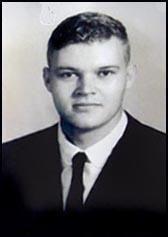
Earl Robert Merritt was born in Charleston, West Virginia on 22 June 1944. He wrote in his autobiography: "I am the great-grandson of slave masters and also the grandson of slaves. I was born and raised as a white man, but at the age of 28 years found out that I was also a black man… I was raised by my maternal grandparents because my mother and the white man whom I thought was my father quarrelled constantly and got married and divorced several times…. I witnessed my so-called father on many an occasion cruelly abuse my mother both physically and mentally. Eventually I came to despise him. No one will ever know how happy I was on the day that I found out that the white man was not my father, and that my real father was a black man. His name was Joseph Booker. He was light-skinned, with green eyes and light brown curly hair. He was killed in the Korean War." (1)
Marritt had an extremely unhappy childhood: "To spite my family, especially my uncles who were ardent Presbyterians, I became a convert to the Catholic faith. This sudden action on my part turned out to be a big mistake. At the age of 16 years, I was abused and raped by two catholic priests, the first being from my parish at St. John's Catholic church in Belle, West Virginia…. My mother had become an alcoholic because of her failed marriages. This affected my life terribly. It was difficult for me to continue to attend my nearby public high school out of shame and embarrassment. So, I switched from Dupont High School to Charleston Catholic High School, also known as Sacred Heart High School. Like my conversion to Catholicism, this switch was also a big mistake. I was again sexually molested, this time by a Franciscan priest. This occurred almost every day. I found it increasingly difficult to concentrate on my studies." (2)
Confidential Informan
In 1962 Merritt moved to Washington. He did a variety of different jobs. "In 1966… I got a job at a hospital in N.W. Washington. My job title was post-mortem technician. My task was to remove the hearts and aortas from children up to the age of 21 years. This was for government research on children's heart diseases under the auspices of the national institute of health in Bethesda, Maryland, so essentially my job was under a sub-contract from the government… After doing a thousand autopsies in less than two years at the hospital it seemed to me that the doctors there were experimenting on children from poor families that had no money or insurance." (3)
In 1969, Merritt, began hanging out in the Dupont Circle in Northwest Washington, D.C. that was known as a place where the gay community gathered. Merritt worked as a cashier for the Southern Drug Company, located a two-minute walk from the White House. It was at this job he got to know Detective Carl Shoffler. In January 1970 he was sacked without explanation. Soon after he lost his job he was visited by Shoffler who admitted he was responsible for Merritt losing his job. Shoffler worked for the Metropolitan Police Department Intelligence Division. He gave him $1000 in cash as compensation for the loss of his job. "Carl told me that for several months he, the Washington, D.C. Metropolitan Police Department (MPD) and federal agents had been profiling me as a prelude to requesting my enrolment as a confidential informant (CI) for the U.S. Government. Carl said my profile revealed that I was well-known and popular to the persons who constituted the Dupont Circle Community…. I accepted his offer, which, as things turned out, was the biggest mistake of my life! My intelligence work with Carl was to last more than two decades, from 1970 to 1994." (4)
Shoffler told Merritt that his task as a "CI was to get information on criminal activities in the Dupont Circle community, such as drugs, robberies, burglaries, fencing (selling stolen property), prostitution and anything else that he might find of interest. Soon thereafter Carl expanded my duties to intelligence gathering, which became paramount to the police because of the mobilization of anti-Vietnam war sentiment. Carl explained that the White House, under what later became known as the Houston Plan, was pressuring government intelligence agencies to monitor and build files on various groups that were planning to overthrow the U.S. Government, and the Communist Party was providing the financing to these groups." (5)
Federal Bureau of Investigation
Merritt later recalled "From the spring of 1970 until October 1971 I worked for Carl and for the MPD Intelligence Division… In October 1971… Carl arranged for me to be transferred to the Washington, D. C. field office of the Federal Bureau of Investigation. I was delegated to work with Special Agents Terry O'Connor and Bill Tucker. The FBI assignment primarily dealt with targeting the Institute for Policy Studies and the Weatherman Underground, two organisations deemed radical and dangerous under the government's COINTELPRO program, although no organization in the country was immune from investigation… Instructions included engaging in multiple criminal acts, such as planting drugs (they gave me about 500 ‘dime' bags of pot valued at $10 each and 5 or more ounces of cocaine) to clandestinely place upon unsuspecting protesters against the Vietnam War or radical political foes of the Nixon White House, bugging, instigating violence at demonstrations by throwing the first rocks at the police, cutting wires to sound equipment at left-wing public events and protests, giving misinformation to protestors, spreading lies and rumours, creating racial friction, causing thousands of protestors to be arrested, engaging in theft, burglary, mail fraud, filing false police reports against individuals, and many other crimes against citizens who were merely exercising their First Amendment rights." (6)
Merritt disliked this work: "I was slowly becoming disillusioned with the agency and was sick of targeting friends and innocent people and getting some of them arrested on trumped up charges. I felt I was losing my religious background and morality. I came to believe that the FBI was brainwashing me, believing that I merely a malleable hillbilly from West Virginia who never finished high school." (7)
Watergate
Merritt became friends with Rita Reed, a Private Branch Exchange (PBX) operator at the Columbia Plaza Apartments. "She loved to listen in on telephone conversations that went in and out through her PBX switchboard when she was on duty from 4 p.m. until midnight… Starting sometime during the 1972 May Day week she told me that she had heard telephone conversations about a planned break-in at a nearby building." Later she told him that the Democratic National Committee offices at Watergate on Sunday, June 18, 1972, at 2 a.m. Merritt passed this information to Carl M. Shoffler. (8)
Shoffler, who had been injured on duty some months before, was assigned to desk work on the evening of 16 June 1972. His shift ended at 10.00 p.m., but he voluntarily undertook a second shift, joining a plainclothes tactical unit cruising the streets in the early-morning hours. Jim Hougan has raised questions why Shoffler volunteered for a second shift that night. This meant two eight-hour shifts back-to-back. "The following day was Shoffler's birthday. His wife and children had gone to Pennsylvania on the afternoon of 16 June to spend the weekend at Shoffler's parents' home. Shoffler was to join them that weekend to celebrate his birthday with his parents. Given the long journey in front of him, it seems odd that he chose to work a second shift on that particular night." (9)
Carl Shoffler was sitting with three other officers, in a parked police car, a minute from Watergate building when Watergate Security Guard Frank Wills found the second taped door and called the police for help. Security Guard Frank Wills found the second taped door and called the police for help. (10)
Frank Sturgis, Virgilio Gonzalez, Eugenio Martinez, Bernard L. Barker and James W. McCord were arrested at 2.30 am during a break-in into the Democratic Party headquarters at Watergate Office Building. When arrested Barker had his hotel key in his pocket. In his hotel room found a briefcase containing $4,600. The money was in hundred-dollar bills in sequential serial numbers that linked to the money found on the Watergate burglars. They also found two address books with the name "Howard Hunt" and details that he worked in the White House. (11)
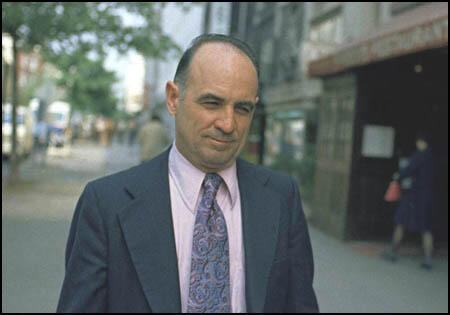
According to Merritt: "Shoffler came to my apartment in Washington, DC, late in the morning of the day of the events at Watergate and exulted in having made the arrests. He told me that he had had secretly telephoned the Washington Post soon after the arrests to tip the newspaper off to what had occurred… Shoffler said, ‘The intention of the Watergate break-in was to destroy the Nixon presidency. President Nixon was guilty of nothing in its planning'. Shoffler said that there were hidden motivations involved, such as the fear of law enforcement agencies that their turf would be reduced by President Nixon through a scheme known as the Huston Plan, the CIA's concern that President Nixon planned to reorganize the intelligence agencies and their operations, and the Defense Department's opposition to President Nixon's new China policy." (12)
Merritt told people at the time that he was an intelligent agent and was involved in the overthrow of President Richard Nixon. However, Michael Powell of the New York Times believes these stories were true: "Merritt loved to tell tall tales of his supposed connections to intelligence agencies and Watergate. But as it happened, those tales were true. Federal records confirm that Mr. Merritt worked with the Washington police and the FBI to infiltrate left-wing groups in Washington in the early 1970s; that his police handler apprehended the Watergate burglars." It is also true that he Merritt was interviewed by investigators for the Watergate special prosecutor, Archibald Cox. (13)
Douglas Caddy
Merritt, who was bi-sexual, claimed that Shoffler approached him and told him to establish a homosexual relationship with Douglas Caddy, stating falsely that Caddy was gay and a supporter of Communist causes. In fact, Caddy had a long record of being a right-wing activist being the National Director of the Young Americans for Freedom. (14)
Merritt recalled that on 20 June 1972, "Shoffler showed up at my apartment with his supervisor, Police Sergeant. Paul Leeper. They asked me if I knew someone by the name of Douglas Caddy, who lived at the Georgetown House, a high-rise apartment, at 2121 P St., N.W. which was directly across the street from my apartment. They wanted me to establish a sexual relationship with Douglas Caddy knew to show up for the arraignment of the burglars after the arrest. They asserted that Douglas Caddy had to be in on the conspiracy with the burglars and that in the past he had been shadowed when he frequented a leather-Levi gay bar in Greenwich Village in Manhattan… They told me that this was the most important thing that I could do for my country and that I would be well-paid if I undertook the assignment. Their initial offer was $10,000. I did not commit to doing the assignment." (15)
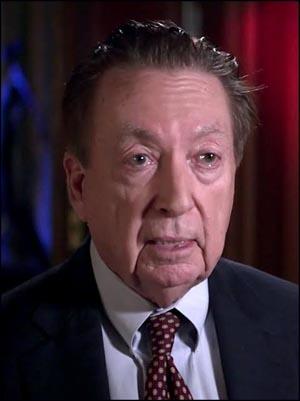
Merritt eventually told Shoffler that he was unwilling to carry out the assignment. In March 1973, nine months after the initial overture and a month after the first Watergate trial ended, Merritt met with Shoffler, Paul Leeper, and two FBI agents, Terry O'Connor and William T. Tucker. Once again, they attempted to persuade him to take the Caddy assignment, this time offering an initial $25,000. When he refused Leeper said that he could be paid as much as $100,000 if he took the assignment. According to his own testimony, Merritt again refused. (16)
In May 2008, Robert Merritt contacted Douglas Caddy by telephone to ask him if he would help him write a book about what he knew about Watergate. Caddy agreed to do so but they never met as he lived in Houston and Merritt lived in New York City. The book, Watergate Exposed: How the President of the United States and the Watergate Burglars Were Set-Up was published in 2010. (17)
In his review of the book Jim Hougan argued: "Merritt's book runneth over with startling revelations that are hopelessly entwined with what can only be described as dim-witted fabrications... The story begins in the tradition of the bildungsroman (coming-of-age novel), with the young Merritt leaving an unhappy home in West Virginia, only to wash-up at a Trailways bus station in the nation's capital. A good-looking kid with few, if any, moral inhibitions, it was apparently only a matter of minutes before he concluded a sex-for-hospitality arrangement with an employee at the bus station." (18)
Kenmore Hotel
On June 8, 1994, police officers, federal marshals and FBI agents invaded the 22-story, 641-room building known as the Kenmore Hotel. Michael Powell reported: "They ran into the lobby, which stank of mildew and urine. They ran up the stairs, as crack vials crackled beneath their feet. They battered down doors and rousted residents in that vast rabbit warren. They arrested 18 tenants on charges of drug dealing; the tenants sat, dazed, in handcuffs on the sidewalk. The takeover of the Kenmore was at the time the largest federal forfeiture to fight drug dealing in American history.... There is another, more unsettling version. Two police informers now claim that the conquest of the Kenmore was a dirty victory, another chapter in an era in which the police and prosecutors fought a blood tide of homicides, crack and heroin, and too often took disturbing liberties." (19)
The 620-room Kenmore Hotel was owned by Tran Dinh Truong, who came to New York from Vietnam at the end of the war in 1975. He was a shipowner in Saigon who made a fortune hauling cargo for the Pentagon. It has been reported that the police have made 122 drug-related arrests there since 1991, and residents have been robbed and sometimes killed for a few dollars, however, Tran Dinh Truong was not charged with any crime. In court papers relating to the seizure, Law official, Mary Jo White said that security guards at the hotel had been arrested for selling drugs. Apparently, the hotel staff deliberately left some of the rooms unlocked to allow the drug dealers and prostitute to operate. (20)
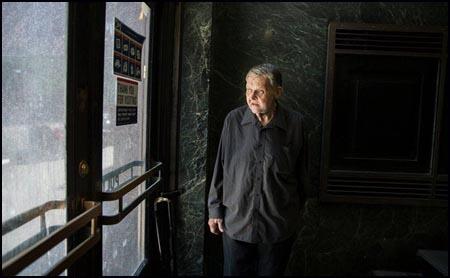
Earl Robert Merritt gave an interview to Michael Powell of the New York Times about the Kenmore Hotel. "This informer, Earl Robert Merritt, described how he had worked with narcotics officers - before and after the takeover - to frame more than 150 Kenmore residents as dealers. 'I planted drugs, I planted guns, I made false reports,' Mr. Merritt said. 'I was given a list - little stars by the list of tenants who I was supposed to set up. I helped send hundreds of people out in handcuffs,' he added, "and I'd say 80 percent were innocent.' Mr. Merritt, 70, who hobbles about with wrecked hips and two black canes, was an informer for nearly 40 years, according to federal and police records. The Manhattan district attorney confirmed that he had worked at the Kenmore; two officers said he was an excellent informer. He named dozens of people he said he had set up. Some served prison terms, records show. After the takeover of the Kenmore, he said, he undermined its tenants' association, again at the direction of federal agents... He insisted that I portray him as deeply flawed. 'You cannot paint me with a halo on my head,' he said. 'I'm a nasty son of a bitch.' " (21)
Robert Merritt died, aged 83, in 2019.
Primary Sources
(1) Robert Merritt, Watergate Exposed: How the President of the United States and the Watergate Burglars Were Set-Up (2010)
I was born on June 22, 1944 in Charleston, West Virginia and was controversial even before my birth. I am the great-grandson of slave masters and also the grandson of slaves. I was born and raised as a white man, but at the age of 28 years found out that I was also a Black man, or more aptly a zebra. I am the great-grandson of gentiles but also the great grandson of a Jewish maternal grandmother. So, by some accounts, I am also a Jew. …
I was raised by my maternal grandparents because my mother and the white man whom I thought was my father quarrelled constantly and got married and divorced several times. So my younger brother, Danny, and I was products of a broken home. I witnessed my so-called father on many an occasion cruelly abuse my mother both physically and mentally. Eventually I came to despise him. No one well ever know how happy I was on the day that I found out that the white man was not my father, and that my real father was a black man. His name was Joseph Booker. He was light-skinned, with green eyes and light brown curly hair. He was killed in the Korean War.
(2) Robert Merritt, Watergate Exposed: How the President of the United States and the Watergate Burglars Were Set-Up (2010)
To spite my family, especially my uncles who were ardent Presbyterians, I became a convert to the Catholic faith. This sudden action on my part turned out to be a big mistake. At the age of 16 years, I was abused and raped by two catholic priests, the first being from my parish at St. John's Catholic church in Belle, West Virginia….
My mother had become an alcoholic because of her failed marriages. This affected my life terribly. It was difficult for me to continue to attend my nearby public high school out of shame and embarrassment. So, I switched from Dupont High School to Charleston Catholic High School, also known as Sacred Heart High School. Like my conversion to Catholicism, this switch was also a big mistake. I was again sexually molested, this time by a Franciscan priest. This occurred almost every day. I found it increasingly difficult to concentrate on my studies.
(3) Robert Merritt, Watergate Exposed: How the President of the United States and the Watergate Burglars Were Set-Up (2010)
In 1966… I got a job at a hospital in N.W. Washington. My job title was post mortem technician or deiner (morgue assistant). My task was to remove the hearts and aortas from children up to the age of 21 years. This was for government research on children's heart diseases under the auspices of the national institute of health in Bethesda, Maryland, so essentially my job was under a sub-contract from the government… After doing a thousand autopsies in less than two years at the hospital it seemed to me that the doctors there were experimenting on children from poor families that had no money or insurance."
(4) Robert Merritt, Watergate Exposed: How the President of the United States and the Watergate Burglars Were Set-Up (2010)
An evening after I was fired there was a knock on one of the doors to my apartment. When I opened it, not so much to my surprise for some reason there was Carl Shoffler. He promptly invited himself inside by flashing a police badge in my face. Carl then admitted that he was responsible for making me lose my job in the drug company. At that point he thrust in my hand an envelope that contained $1000 in cash, explaining that it was compensation for the loss of my employment.
Carl told me that for several months he, the Washington, D.C. Metropolitan Police Department (MPD) and federal agents had been profiling me as a prelude to requesting my enrolment as a confidential informant (CI) for the U.S. Government. Carl said my profile revealed that I was well-known and popular to the persons who constituted the Dupont Circle Community….
I accepted his offer, which, as things turned out, was the biggest mistake of my life! My intelligence work with Carl was to last more than two decades, from 1970 to 1994.
Carl told me that my task as a CI was to get information on criminal activities in the Dupont Circle community, such as drugs, robberies, burglaries, fencing (selling stolen property), prostitution and anything else that he might find of interest. Soon thereafter Carl expanded my duties to intelligence gathering, which became paramount to the police because of the mobilization of anti-Vietnam war sentiment.
Carl explained that the White House, under what later became known as the Houston Plan, was pressuring government intelligence agencies to monitor and build files on various groups that were planning to overthrow the U.S. Government, and the Communist Party was providing the financing to these groups.
(5) Robert Merritt, Watergate Exposed: How the President of the United States and the Watergate Burglars Were Set-Up (2010)
From the spring of 1970 until October 1971, I worked for Carl and for the MPD Intelligence Division… In October 1971… Carl arranged for me to be transferred to the Washington, D. C. field office of the Federal Bureau of Investigation. I was delegated to work with Special Agents Terry O'Connor and Bill Tucker. The FBI assignment primarily dealt with targeting the Institute for Policy Studies and the Weatherman Underground, two organisations deemed radical and dangerous under the government's COINTELPRO program, although no organization in the country was immune from investigation… Instructions included engaging in multiple criminal acts, such as planting drugs (they gave me about 500 ‘dime' bags of pot valued at $10 each and 5 or more ounces of cocaine) to clandestinely place upon unsuspecting protesters against the Vietnam War or radical political foes of the Nixon White House, bugging, instigating violence at demonstrations by throwing the first rocks at the police, cutting wires to sound equipment at left-wing public events and protests, giving misinformation to protestors, spreading lies and rumours, creating racial friction, causing thousands of protestors to be arrested, engaging in theft, burglary, mail fraud, filing false police reports against individuals, and many other crimes against citizens who were merely exercising their First Amendment rights."
(6) Michael Powell, New York Times (2 July 2014)
It was as if the Fifth Infantry Division had come marching down East 23rd Street.
Late in the morning of June 8, 1994, police officers, federal marshals and F.B.I. agents invaded one of New York City's grand temples of dysfunction: the 22-story, 641-room ulcer known as the Kenmore Hotel.
They ran into the lobby, which stank of mildew and urine. They ran up the stairs, as crack vials crackled beneath their feet.
They battered down doors and rousted residents in that vast rabbit warren. They arrested 18 tenants on charges of drug dealing; the tenants sat, dazed, in handcuffs on the sidewalk.
The takeover of the Kenmore was at the time the largest federal forfeiture to fight drug dealing in American history...
There is another, more unsettling version. Two police informers now claim that the conquest of the Kenmore was a dirty victory, another chapter in an era in which the police and prosecutors fought a blood tide of homicides, crack and heroin, and too often took disturbing liberties.
We love to congratulate ourselves on New York's global reputation as a safe, even pasteurized metropolis. The informer's tale suggests that the trail the city traveled had more disquieting byways than we realized.
A confidential informer, a man whose career in snitching for the police and federal agencies extends back to the Watergate era, said the assault on the Kenmore was constructed of illegalities. This informer, Earl Robert Merritt, described how he had worked with narcotics officers � before and after the takeover � to frame more than 150 Kenmore residents as dealers.
"I planted drugs, I planted guns, I made false reports," Mr. Merritt said. "I was given a list � little stars by the list of tenants who I was supposed to set up."
"I helped send hundreds of people out in handcuffs," he added, "and I'd say 80 percent were innocent." (XXX) Mr. Merritt, 70, who hobbles about with wrecked hips and two black canes, was an informer for nearly 40 years, according to federal and police records. The Manhattan district attorney confirmed that he had worked at the Kenmore; two officers said he was an excellent informer.
He named dozens of people he said he had set up. Some served prison terms, records show. After the takeover of the Kenmore, he said, he undermined its tenants' association, again at the direction of federal agents.
Mr. Merritt took his accusations to the Manhattan district attorney last year. He said an assistant prosecutor in the mid-1990s had directed him to swear falsely that he had witnessed certain crimes.
A public-corruption prosecutor interviewed Mr. Merritt and pulled court files.
"Senior prosecutors have done extensive interviews with this informant, and followed several potential leads, but to date have not found provable allegations," a law enforcement official familiar with Mr. Merritt's allegations said. "But the file is open, and if more information comes to light it will certainly be taken seriously."
The district attorney's investigation appears to have been confined to pulling court files. In eight months of interviewing dozens of people connected with the Kenmore, including former tenants, those arrested and police officers, I did not find one who had been questioned anew.
Mr. Merritt's charges can be difficult to verify. Many former Kenmore tenants - impoverished, haunted by addictions and bouncing along the river bottom of life- have disappeared from the public record. By his own account, those whom Mr. Merritt fingered as drug dealers and illegally set up ran the gamut, from actual dealers to low-level drug users with mental health issues to tenant leaders who angered him or federal and city agents but were not dealing drugs at all.
Five people - two former tenants, a caseworker, a former lawyer and another police informer - confirmed Mr. Merritt's core accusations. Three of the five spoke on the record. "He'd tell us a tenant was going to be arrested and the next day, out they went, out in handcuffs," the former caseworker said. "They wanted to clean the place out, and they gave him lists, and he'd be swearing to God people were drug dealers."
In long interviews at his apartment off Fordham Road in the Bronx, however, Mr. Merritt rarely contradicted himself. Court records confirmed his mastery of details. He insisted that I portray him as deeply flawed. "You cannot paint me with a halo on my head," he said. "I'm a nasty son of a bitch."
Three law enforcement agents described Mr. Merritt as a cunning informer.
If there was a hero at the Kenmore Hotel, it was Scott Kimmins, a tall patrolman known to lawbreakers as Stretch. Before the federal takeover, he walked the hotel stairs alone. He rousted and arrested dealers and comforted marooned innocents.
He came to know Mr. Merritt, who accused him of no illegalities. (XXX) "He was on the money, for the most part," noted Mr. Kimmins, now operations director for the Flatiron 23rd Street Business Improvement District. "He'd mention a room, and sure enough, you'd see drug activity."
Mr. Kimmins emphasized that he did not know the narcotics officers or their relationship with Mr. Merritt. He saw no need for illegal subterfuges. "That's ridiculous," he said. "You could be deaf and dumb and make a bust there."
He said Mr. Merritt loved to tell tall tales of his supposed connections to intelligence agencies and Watergate.
But as it happened, those tales were true.
Federal records confirm that Mr. Merritt worked with the Washington police and the F.B.I. to infiltrate left-wing groups in Washington in the early 1970s; that his police handler apprehended the Watergate burglars; and that he was interviewed by investigators for the Watergate special prosecutor, Archibald Cox.
Told of this, Mr. Kimmins chuckled ruefully. Years ago, he noted, he assumed the charges against the police officers accused of abusing Abner Louima were absurd. Those accusations, too, proved true. "I don't believe Tony," he said. "But I've been surprised before."
Mr. Merritt offers his own caution: "A confidential informant is a very powerful character. We don't need a badge or gun. And we ruin lives."
THE KENMORE HOTEL had a seedy literary pedigree. It was a Gramercy Park refuge for Dashiell Hammett; Nathanael West worked as a night manager.
Its decline was baroque. In 1985, Tran Dinh Truong, a shipping magnate who prospered mysteriously during the Vietnam War, arrived in the United States with suitcases full of gold bars. He bought the Kenmore as a tax shelter, and ran it with no regard for safety.
He filled the place with ex-convicts, prostitutes and addicts. He hired security guards who waved in anyone for a few dollars. Mr. Merritt, a moth to that flame, got a job.
"My main job was to hand out cash envelopes to the building and elevator inspectors," Mr. Merritt said. "The only thing they inspected was their envelopes."
Conditions inside grew hideous. An 86-year-old was murdered in the communal bathroom. A woman was strangled in her room.
For residents of Gramercy Park, an embattled middle-class pocket, the hotel visited miseries from burglaries to drug dealing.
By the early 1990s, federal officials had set their eyes on Mr. Truong and his wayward hotel. Narcotics officers and federal agents made more than 100 arrests and, records show, they relied on an informer: Mr. Merritt.
He is gifted at ingratiating himself. He could laugh with a dealer, buy vials of crack and smoke it. Then he would point out that man for the police. "If I didn't like you, or the police wanted you gone, you were gone," he said.
It was as if he was inhaling chutzpah. "It was too outrageous for even dealers to think he'd come right back the next day," the former caseworker said.
Robert Chaney also worked there as a confidential informer. As pressure increased, narcotics officers plotted. "They would get really upset when they busted into a room and found nothing there," he said. "They gave him drugs and maybe a gun and he'd plant it."
Asked about this, Mr. Merritt nodded. "They would tell me which rooms to target, and I would slip crack behind a mattress or under the sink."
There is no doubt the Kenmore is a safer, better-run place. Social services are provided; security is insistent. Maybe we'll never know if more than 100 New Yorkers got walked out in cuffs and convicted on the basis of planted evidence and false testimony.
Or perhaps the ends justified the means, and it's a door better left closed.
Except that similar raids occurred at other single-room-occupancy hotels throughout the city. Mr. Merritt worked as a confidential informer at a couple of those, too. This story, you see, may not end on East 23rd Street.
"This is not just a Kenmore story," Mr. Merritt said. "This was happening everywhere."
(7) Jim Hougan, Garrison: A Journal of History and Deep Politics (August 2019)
Merritt's book runneth over with startling revelations that are hopelessly entwined with what can only be described as dim-witted fabrications...
The story begins in the tradition of the bildungsroman (coming-of-age novel), with the young Merritt leaving an unhappy home in West Virginia, only to wash-up at a Trailways bus station in the nation's capital. A good-looking kid with few, if any, moral inhibitions, it was apparently only a matter of minutes before he concluded a sex-for-hospitality arrangement with an employee at the bus station...
If we believe Merritt, Shoffler was in touch with White House counsel John Dean. This will give aficionados pause. There are those of us who believe that Dean unilaterally ordered the Watergate break-in. If then, it should turn out that in the weeks and months leading up to the break-in, Dean was meeting with the police officer who would eventually make the Watergate arrests, we will have arrived at an interesting and previously unknown intersection in the affair. That said, it must be noted that Merritt's recollections of the supposed Shoffler-Dean meetings is not in his book. It's a story he recounted on a radio program while attempting to publicize that book. As Merritt tells it, he accompanied Shoffler to a soiree at the Old Stein restaurant in April 1972.