
Nathan Witt
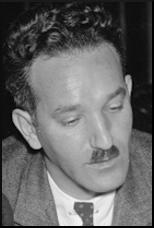
Nathan Witt was born into a Jewish family in New York City on 11th February, 1903. He came from a poor family and had to work while studying at New York University. He became active in politics and campaign for the release of Nicola Sacco and Bartolomeo Vanzetti.
After graduating in 1927 he studied law at Harvard Law School. One of his fellow students was Donald Hiss, the brother of Alger Hiss. A committed socialist he specialized in labour law.
Nathan Witt supported Franklin D. Roosevelt in the 1932 Presidential Election.He joined the Agricultural Adjustment Administration (AAA) Soon afterwards be began associating with other radical members of the New Deal administration. This included Harold Ware, Alger Hiss, Nathaniel Weyl, Laurence Duggan, Harry Dexter White, Abraham George Silverman, Marion Bachrach, Julian Wadleigh, Henry H. Collins, Lee Pressman and Victor Perlo.
Nathan Witt and the Ware Group
Susan Jacoby, the author of Alger Hiss and the Battle for History (2009), has pointed out: "Hiss's Washington journey from the AAA, one of the most innovative agencies established at the outset of the New Deal, to the State Department, a bastion of traditionalism in spite of its New Deal component, could have been nothing more than the rising trajectory of a committed careerist. But it was also a trajectory well suited to the aims of Soviet espionage agents in the United States, who hoped to penetrate the more traditional government agencies, like the State, War, and Treasury Departments, with young New Dealers sympathetic to the Soviet Union (whether or not they were actually members of the Party). Chambers, among others, would testify that the eventual penetration of the government was the ultimate aim of a group initially overseen in Washington by Hal Ware, a Communist and the son of Mother Bloor... When members did succeed in moving up the government ladder, they were supposed to separate from the Ware organization, which was well known for its Marxist participants. Chambers was dispatched from New York by underground Party superiors to supervise and coordinate the transmission of information and to ride herd on underground Communists - Hiss among them - with government jobs." (1)
Whittaker Chambers was a key figure in the Ware Group. He later argued: "I do not know how many of those young men and women were already Communists when Ware met them and how many joined the Communist Party because of him. His influence over them was personal and powerful.... But, by 1934, the Ware Group had developed into a tightly organized underground, managed by a directory of seven men. In time it included a number of secret sub-cells whose total membership I can only estimate probably about seventy-five Communists. Sometimes they were visited officially by J. Peters who lectured them on Communist organization and Leninist theory and advised them on general policy and specific problems. For several of them were so placed in the New Deal agencies (notably Alger Hiss, Nathan Witt, John Abt and Lee Pressman) that they were in a position to influence policy at several levels." (2)
Lee Pressman testified in 1951 that Witt joined the Communist Party of the United States during this period. In 1935, after the death of Harold Ware, Witt became the leader of the Ware Group. Witt continued to make good progress in his career: "He moved to the National Recovery Administration (NRA); in 1936 he transferred to the legal staff as assistant general counsel of the National Labor Relations Board (NLRB); in 1937 he was its secretary." (3)
Whittaker Chambers
Whittaker Chambers began to privately question the policies of Joseph Stalin. So also did his friend and fellow spy, Juliet Poyntz. In 1936 she spent time in Moscow and was deeply shocked by the purge that was taking place of senior Bolsheviks. Unconvinced by the Show Trials she returned to the United States as a critic of the rule of Joseph Stalin. As fellow member, Benjamin Gitlow, pointed out: "She (Juliet Poyntz) saw how men and women with whom she had worked, men and women she knew were loyal to the Soviet Union and to Stalin, were sent to their doom." (4)
Chambers asked Boris Bykov what had happened to Juliet Poyntz. He replied: "Gone with the wind". Chambers commented: "Brutality stirred something in him that at its mere mention came loping to the surface like a dog to a whistle. It was as close to pleasure as I ever saw him come. Otherwise, instead of showing pleasure, he gloated. He was incapable of joy, but he had moments of mean exultation. He was just as incapable of sorrow, though he felt disappointed and chagrin. He was vengeful and malicious. He would bribe or bargain, but spontaneous kindness or generosity seemed never to cross his mind. They were beyond the range of his feeling. In others he despised them as weaknesses." (5) . As a result of this conversation, Chambers decided to stop working for the Communist Party of the United States.
Adolf Berle
In August 1939, Isaac Don Levine arranged for Chambers to meet Adolf Berle, one of the top aides to President Franklin D. Roosevelt. After dinner Chambers told Berle about government officials spying for the Soviet Union: "Around midnight, we went into the house. What we said there is not in question because Berle took it in the form of penciled notes. Just inside the front door, he sat at a little desk or table with a telephone on it and while I talked he wrote, abbreviating swiftly as he went along. These notes did not cover the entire conversation on the lawn. They were what we recapitulated quickly at a late hour after a good many drinks. I assumed that they were an exploratory skeleton on which further conversations and investigation would be based." (6)
According to Isaac Don Levine the list of "espionage agents" included Nathan Witt, Alger Hiss, Donald Hiss, Laurence Duggan, Lauchlin Currie, Harry Dexter White, John Abt, Lee Pressman, Julian Wadleigh, Noel Field and Frank Coe. Chambers also named Joszef Peter, as being "responsible for the Washington sector" and "after 1929 the "head of the underground section" of the Communist Party of the United States.
Chambers later claimed that Berle reacted to the news with the comment: "We may be in this war within forty-eight hours and we cannot go into it without clean services." John V. Fleming, has argued in The Anti-Communist Manifestos: Four Books that Shaped the Cold War (2009) Chambers had "confessed to Berle the existence of a Communist cell - he did not yet identify it as an espionage team - in Washington." (7) Berle, who was in effect the president's Director of Homeland Security, raised the issue with President Franklin D. Roosevelt, "who profanely dismissed it as nonsense."
The authors of The Secret World of American Communism (1995) have argued: "Nathan Witt, a secret Communist and a former member of the Ware group, became the first secretary (staff director) of the NLRB and hired many secret Communists. One of the first three NLRB commissioners, Edwin S. Smith, also became a close ally of the CPUSA. The Communist group in the NLRB held regular caucuses to decide on policy and also communicated regularly with Lee Pressman, the former Ware group member who was also the chief attorney for the CIO. The result was a pronounced NLRB bias in favor of the CIO to the detriment of the AFL and employers who resisted CIO organizing drives. The NLRB's pro-CIO bias became so obvious and the rumors of the existence of the Communist caucus inside the NLRB so strong that by 1940 it became an embarrassment for the Roosevelt administration. Witt was forced to resign from his post, and President Roosevelt refused to reappoint Smith when his term as NLRB commissioner expired in 1941. Smith went on to become a registered agent (professional lobbyist) for the Soviet Union. The officials Roosevelt appointed to replace Smith and Witt quickly dispersed the Communist group in the NLRB." (8) After leaving the National Labor Relations Board he became a partner in the New York law firm of Witt & Cammer.
House of Un-American Activities Committee
On 3rd August, 1948, Whittaker Chambers appeared before the House of Un-American Activities Committee. He testified that he had been "a member of the Communist Party and a paid functionary of that party" but left after the signing of the Nazi-Soviet Pact in August 1939. He explained how the Ware Group's "original purpose" was "not primarily espionage," but "the Communist infiltration of the American government." Chambers claimed his network of spies included Nathan Witt, Alger Hiss, Harry Dexter White, Lauchlin Currie, Abraham George Silverman, John Abt, Lee Pressman, Henry H. Collins and Donald Hiss. Silverman, Collins, Abt, Pressman and Witt all used the Fifth Amendment defence and refused to answer any questions put by the HUAC. (9)
According to Christina Shelton: "He (Nathan Witt) also had been counsel to many unions and in 1955 gave up his law practice to become full-time counsel to the International Union of Mine, Mill and Smelter Workers. When that union merged with the United Steel Workers of America in the 1960s, Witt became associate counsel for the union's Mine, Mill and Smelter division. He retired from that position in 1975." (10)
Nathan Witt died at Rockefeller University Hospital, New York City, on 16th February, 1982.