
The 17th Century
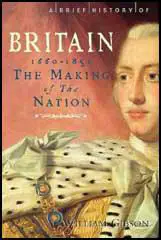
Title: Britain: The Making of the Nation
Author: William Gibson
Editor:
Publisher: Constable & Robinson
Price: £8.99
Bookshop: Amazon
Spartacus Website:
Category:
How Great Britain was born - from the restoration to the Great Exhibition. In 1660 England emerged from the devastations of the Civil Wars and restored the king, Charles II, to the throne. Over the next 190 years Britain would establish itself as the leading nation in the world - the centre of burgeoning Empire, at the forefront of the Enlightenment and the Industrial Revolution. However, radical change also brought with it anxiety and violence. America is lost in the War of Independence and calls for revolution at home are never far from the surface of everyday life. In this scintillating overview of the era in which Britain changed the world, and how that nation was transformed as a result. William Gibson also looks at the impact of this transformation had upon the ordinary men and women. This the is the third book in the four volume Brief History of Britain which brings together some of the leading historians to tell our nation's story from the Norman Conquest of 1066 to the present-day. Combining the latest research with accessible and entertaining story telling, it is the ideal introduction for students and general readers.
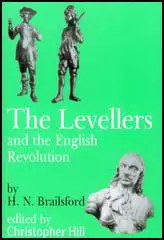
Title: The Levellers and the English Revolution
Author: H. N. Brailsford
Editor:
Publisher: Spokesman Books
Price: £12.50
Bookshop: Amazon
Spartacus Website: The Levellers
Category:
To our generation fell the good fortune of re-discovering the Levellers. To the classical liberal historian they meant rather less than nothing, this neglect is puzzling. At the crisis of the English Revolution
it was from the Levellers and not from its commanders that the victorious New Model Army derived its political ideas and its democratic drive. Even on a superficial glance the Levellers leaders are as personalities unusual and, indeed, unique. King Charles had Lilburne flogged as a youngster from
Ludgate Hill to Palace Yard; Cromwell banished him in middle age to a dungeon in Jersey. But what we have rediscovered is not merely the fact that the Levellers anticipated our fathers in most of the social and political reforms of the next 300 years; the theme of this book is rather that they were, until Cromwell crushed them, the dynamic pioneers, who had the initiative during the most formative years of the Inter-regnum. They would have won for our peasants in the mid-17th century what the Great Revolution gained for those of France at the close of the 18th.
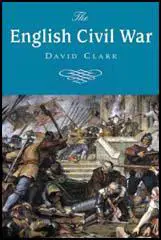
Title: The English Civil War
Author: David Clark
Editor:
Publisher: Pocket Essentials
Price: £7.99
Bookshop: Amazon
Spartacus Website: English Civil War
Category:
The author, who has been exploring battlefields for 50 years, describes the celebrated battles - including Edgehill, Marston Moor and Naseby - together with the major political events which characterised one of the most turbulent periods in English history. Contemporary documents and leading secondary sources have been used to produce a picture of those troubled times - years which revolutionised government and witnessed the first faltering steps of Parliamentarians towards the democratic form of government known today.

Title: The Enemy at the Gate
Author: Andrew Wheatcroft
Editor:
Publisher: Pimlico
Price: £14.99
Bookshop: Amazon
Spartacus Website: History Websites
Category:
In 1683, two empires – the Ottoman, based in Constantinople, and the Habsburg dynasty in Vienna – came face to face in the culmination of a 250-year power struggle: the Great Siege of Vienna. Within the city walls the choice of resistance over surrender to the largest army ever assembled by the Turks created an all-or-nothing scenario: every last survivor would be enslaved or ruthlessly slaughtered. Both sides remained resolute, sustained by hatred of their age-old enemy, certain that their victory would be won by the grace of God. Eastern invaders had always threatened the West, but the memory of the Turks, to whom the West’s ancient and deep fear of the East is viscerally attached, remains vivid and powerful. Long before their 1453 conquest of Constantinople, the Turks had raised the art of war to heights not seen since the Roman Empire. Although their best recorded and most infamous attack, the 1683 siege was the historical culmination, not the extent, of the Turks’ sustained attempt to march westwards and finally obtain the city they had long called ‘The Golden Apple’. Their defeat was to mark the beginning of the decline of the Ottoman Empire.

Title: The Struggle for Early Europe
Author: David H. Nexon
Editor:
Publisher: Princeton University Press
Price: £20.95
Bookshop: Amazon
Spartacus Website: History Websites
Category:
Scholars have long argued over whether the 1648 Peace of Westphalia, which ended more than a century of religious conflict arising from the Protestant Reformations, inaugurated the modern sovereign-state system. But they largely ignore a more fundamental question: why did the emergence of new forms of religious heterodoxy during the Reformations spark such violent upheaval and nearly topple the old political order? In this book, Daniel Nexon demonstrates that the answer lies in understanding how the mobilization of transnational religious movements intersects with--and can destabilize--imperial forms of rule. Taking a fresh look at the pivotal events of the sixteenth and seventeenth centuries--including the Schmalkaldic War, the Dutch Revolt, and the Thirty Years' War--Nexon argues that early modern "composite" political communities had more in common with empires than with modern states, and introduces a theory of imperial dynamics that explains how religious movements altered Europe's balance of power. He shows how the Reformations gave rise to crosscutting religious networks that undermined the ability of early modern European rulers to divide and contain local resistance to their authority. In doing so, the Reformations produced a series of crises in the European order and crippled the Habsburg bid for hegemony.

Title: Cavalier & Roundhead Spies
Author: Julian Whitehead
Editor:
Publisher: Pen & Sword
Price: £19.99
Bookshop: Amazon
Spartacus Website: English Civil War
Category:
The crucial part played by intelligence and espionage techniques - by spying - in Britain during the Civil Wars and the Commonwealth has rarely been studied, yet it is a key to understanding the dangerous politics and the open warfare of those troubled times. In this fascinating and original account, Julian Whitehead traces the rapid development of intelligence techniques during this, one of the most confused and uncertain phases of British history. His vivid narrative demonstrates how leaders on all sides set up increasingly effective systems for gathering and interpreting intelligence, and it shows the decisive impact intelligence had on events. The intrigue, the secret operations, the many plots and counter-plots, and the colourful personalities involved, make compelling reading.
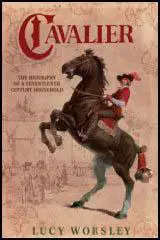
Title: Cavalier
Author: Lucy Worsley
Editor:
Publisher: Faber & Faber
Price: £10.99
Bookshop: Amazon
Spartacus Website: William Cavendish
Category:
William Cavendish embodies the popular image of a cavalier. He was both courageous and cultured. His passions were architecture, horses and women. And, along with the whole courtly world of King Charles I and his Cavaliers, he was doomed to failure. Cavendish was a master of manège (the art of teaching horses to dance) and obsessed with building beautiful houses in the latest style. He taught Charles I’s son to ride, and was the general of the king’s army in the North during the Civil War. Famously defeated at the Battle of Marston Moor in 1644, he went into a long continental exile before returning to England in triumph on the restoration of King Charles II to the throne in 1660. This is the story of one remarkable man, but it is also a rich evocation of the extraordinary organism which sustained him - his household. Lucy Worsley shows us the complex and fascinating hierarchies among the inhabitants of the great houses of the seventeenth-century, painting a picture of conspiracy, sexual intrigue, clandestine marriage and gossip.
Title: The Seventeenth Century
Author: Jenny Wormald
Editor:
Publisher: Oxford University Press
Price: £55.00
Bookshop: Amazon
Spartacus Website: English Civil War
Category:
The Union of the Crowns of England and Scotland in 1603 dramatically changed the nature and level of interaction between the constituent parts of the British Isles, and over the course of the century that followed the seismic shocks of constitutional revolutions and civil wars were felt in each one of three very different kingdoms that had been forced together under one king. The chapters in this volume, each written by a leading scholar of the period, analyse in turn the response to the Union of 1603, the religious controversies under the early Stuarts, the Civil War, Commonwealth, and Restoration periods, and the social and economic context within which these developments took place. The final chapter then looks at the vibrant cultural interaction between the kingdoms of the British Isles in the seventeenth century, which stands in sharp contrast to the political, religious, and social doubts and fears that permeated the period.Throughout, the book maintains a careful balance, focusing on the ways in which the various tensions within each individual kingdom came together, whilst at the same time looking beyond the confines of any one of the kingdoms and recognizing their interlinking 'British' impact.
Title: War in England 1642-1649
Author: Barbara Donagan
Editor:
Publisher: Oxford University Press
Price: £55.00
Bookshop: Amazon
Spartacus Website: English Civil War
Category:
A fresh approach to the English civil war, War in England 1642-1649 focuses on answering a misleadingly simple question: what kind of war was it to live through? Eschewing descriptions of specific battles or analyses of political and religious developments, Barbara Donagan examines the 'texture' of war, addressing questions such as: what did Englishmen and women believe about war and know about its practice before 1642? What were the conditions in which a soldier fought - for example, how efficient was his musket (not very), and how did he know where he was going (much depended on the reliability of scouts and spies)? What were the rules that were supposed to govern conduct in war, and how were they enforced (by a combination of professional peer pressure and severe but discretionary army discipline and courts martial)? What were the officers and men of the armies like, and how well did they fight? The book deals even-handedly with royalists and parliamentarians, examining how much they had in common, as well as discussing the points on which they differed.
Title: The Digger Movement
Author: Lewis H. Berens
Editor:
Publisher: Merlin Press
Price: £14.95
Bookshop: Amazon
Spartacus Website: Gerrard Winstanley
Category:
In April 1649 two 'Diggers', Gerrard Winstanley and William Everard, appeared in Whitehall before the leader of the army, Lord Fairfax, to declare that deliverance was at hand. "God is bringing his people out of slavery. Freedom is restored." This book surveys radical thinking arising from the Reformation, and writings that pressed for the rights to land. It includes important selected texts: Digger Manifestoes; The Appeal to the House of Commons; The Watchword to the City of London; and Winstanley's 'Utopia'. Lewis H. Berens was a Quaker whose study of Winstanley was first published in 1906.