

Bill Simpich
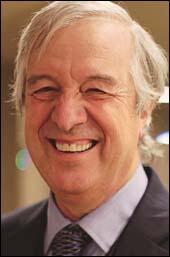
Bill Simpich is a Civil rights attorney in California. He is lead counsel in an ongoing lawsuit against the National Archives (NARA) for withholding access to the John F. Kennedy documents and failing to release additional documents pursuant to the JFK Records Act and the Federal Records Act.
Bill is the author of ground-breaking articles focusing on the hidden intricacies of the intelligence and security agencies. He is an analyst of the intelligence files associated with the legend of Lee Harvey Oswald, including Oswald's enigmatic episode in Mexico City seven weeks prior to President Kennedy's assassination.
Bill's eBooks can be read online courtesy of Bill and the Mary Ferrell Foundation: State Secret: Wiretapping in Mexico City, Double Agents, and the Framing of Lee Oswald and The Twelve Who Built the Oswald Legend.
Primary Sources
(1) Bill Simpich, State Secret: Wiretapping in Mexico City (2025)
My original goal in writing this book was to write about the cover-up, and to see if I could resolve the issue of the Mexico City tapes that survived after the assassination. The tale of the tapes took over my approach to this book. The result was a different book than I anticipated. The cover-up is a longer story that I can only sketch here.
I will confine myself mostly to the first days after the assassination, which shaped the investigations that followed, as well as just a few of the high points thereafter. Like the assassination, the cover-up story is so big that it will take many authors to adequately cover the ground. In this section, I rely more frequently on the work of researchers who have more expertise in other areas of the JFK case than myself. With the release of the bulk of the files in the 1990s, our ability to conduct an adequate analysis of the assassination and cover-up has just begun. There was no all-encompassing way to address this evidence without these documents. Most of the documents that survive are finally in our hands.
It is admittedly difficult at this late date to identify all of the individual perpetrators of the assassination. Naming the probable entities and the individuals who have plausibly admitted a role may be the best we can do – and that's a lot. But when it comes to the cover-up, it is not too late. If anything, it is the beginning. The evidence is available to anyone willing to read the documents. Dallas FBI agent Jim Hosty even revealed the cover-up in his book – however, his contention was that it was a benign cover-up by "President Johnson, the Warren Commission, the FBI, the CIA" that was conducted to avoid international tensions with the Soviet Union and Cuba, who he viewed as possible assassination co-perpetrators with Oswald.
Cover-up architect Jim Angleton was motivated by the Mexico City situation, but would have little reason to quibble with Hosty's sentiments until 1967. That was the year that Angleton learned some information from a double agent that " tended to absolve the Soviets". That was the same year that the KGB conducted a big study into the JFK assassination and concluded that it was a domestic operation. Angleton was shaken by this revelation, obtained from a double agent known only as "Byetkov" . Although he tried to dismiss it, he discussed it with the Church Committee during at least two depositions. In the ensuing years, Angleton had become so rabid in his search for moles within the CIA that he practically tore the Agency in two. He was forced to resign at the end of 1974.
There was a Gallup poll right after the assassination, asking Americans how many of them thought the Soviets, Cubans or Communists killed the President. Right during the height of the Cold War, only 1% of the population bought that story. See the adjoining Dallas Morning News article, 12/6/63.
Many chiefs simply didn't want to reveal intelligence secrets – some didn't want the Mexico City wiretap story to be made public.
Other CIA and FBI chiefs differed as to whether the assassination was perpetrated by foreign or domestic enemies, or whether Oswald acted alone. CIA chief John McCone believed there were two shooters in Dealey Plaza. Although Hoover publicly adopted the view that Oswald acted alone, he told his colleagues that he couldn't forget the CIA's " false story re Oswald's trip in Mexico City ".
We do know that there was deep concern about revealing the above-described events in Mexico City, the NSA/CIA wiretap operations, the extent of the intelligence agencies' prior knowledge of the re-defector Lee Harvey Oswald, the CIA's assassination programs targeting Fidel Castro and other world leaders, and the strong possibility that John F. Kennedy was killed in a cross-fire. We also know that they were concerned that if any of these facts hit the newspapers, public reaction could lead to an invasion of Cuba and even a war with the Soviet Union.
My reading of the evidence indicates that there was a rough consensus among CIA and FBI higher-ups such as Helms and Hoover within hours of the Kennedy assassination to push for a lone gunman theory based on Oswald as the perpetrator. During the afternoon of the 22nd, we'll review statements made by Hoover and the White House indicating that Oswald was the lone assassin, while the Dallas DA was convinced there was more than one shooter.
When Oswald died two days later, the world recoiled in horror at what appeared to be concerted action to shut Oswald's mouth. In stark contrast, intelligence chiefs were united in shutting down any serious investigation and moving towards a preordained conclusion with Oswald as the lone gunman. I expected a more limited cover-up, but this is where the evidence has taken me.
(2) Bill Simpich, Double Agents, and the Framing of Lee Oswald (2025)
The counterintelligence game is about penetrating the defenses of the other side, and to prevent the other side from penetrating yours. Penetration is the role of the double agent, which is often the secret role of the defector. For example, high ranking CIA officers placed their trust in a Cuban named Rolando Cubela, who said in 1963 that he was willing to defect to the United States and assassinate Castro. The odds are very good that Cubela was reporting to Fidel the entire time.
If there was anything of greater value than a defector, it was a re-defector such as Oswald. Even if a re-defector had nothing to do with intelligence, such a person was the functional equivalent of a double agent.
This book tells the story of a Soviet defector named Lee Harvey Oswald who returned to the United States, and how he was closely watched over the last four years of his life; the plans to kill Castro during this era; the operations surrounding the Cuban consulate in Mexico City in 1963; and how everything went haywire when Oswald came to Mexico City two months before the assassination.
During his visit, wiretap tapes were created of a man calling himself Oswald and a woman identified as Cuban consulate secretary Sylvia Duran calling the Soviet consulate. After the JFK assassination, the CIA insisted that these tapes had been destroyed prior to the assassination. However, during the 1990s, two Warren Commission staffers admitted that these tapes were played for them during their Mexico City visit in April 1964 . After this admission, Mexico City case officer Anne Goodpasture changed her story and admitted her role in disseminating the tapes after the assassination .
Strong evidence is provided in this book that both Oswald and Duran were impersonated on these tapes. Furthermore, I believe that Goodpasture realized during September 1963 that someone had found out about the CIA's Mexico City wiretap operation. The impersonation of Oswald and Duran meant that the Agency had to take action to ensure its security. Goodpasture got together with the offices of covert action chief Dick Helms and CI chief Jim Angleton and launched an operation to try to figure out who had done it and why. It all blew up in their faces on 11/22/63, when the man who had been impersonated was named as JFK's assassin.
When President Kennedy was shot down in Dallas, the CIA and their colleagues at the FBI were effectively blackmailed. If their Oswald memos written prior to the assassination had been made public in the wake of JFK's death, public reaction would have been furious. If the word got out that CIA officers knew that Oswald had been impersonated prior to the assassination, this would imply both that Oswald had been set up for the assassination (which was presumably carried out by others), and that the CIA could have prevented JFK's death if it had reacted differently. The response would have been tectonic.
(3) Bill Simpich, The Twelve Who Built the Oswald Legend (2025)
Of all the legend makers, the Paines are the most significant ones during the autumn of 1963. Ruth wrote her mother in mid-October - the four-page letter is almost entirely about Lee Oswald, with Ruth exclaiming that during his visits to her home "...(he has) generally added a needed masculine flavor. From a poor first impression I have come to like him. " She hoped that Marina would stay through Christmas and then get her own place with Lee.
Meanwhile, Michael and Lee were going to a series of meetings focused on the tensions in Dallas that bubbled up with the physical attack on Adlai Stevenson organized by right-wing activist Larrie Schmidt on 10/24/63. Time Magazine called them "Dallas' adult juvenile delinquents." The Texas Observer commented: "If the Birchers had not been in the minority, the Stevenson Riot would have had blood as well as spit ."
Shortly before the assassination, Schmidt spread around town an insulting JFK mugshot emblazoned " Wanted for Treason ". He also arranged for it to be run as a full-page ad in the Dallas Morning News on November 22. I think the purpose of this campaign was to offer a wall of protection to the ultra-right wing of Dallas - reasonable people would conclude that no one was crazy enough to politically attack the President and at the same time participate in a plan to kill him.
By November 4, security director Paul Rothermel wrote a memo about the political tensions in Dallas. Rothermel worked for oil magnate H. L. Hunt, who had over five hundred radio stations broadcasting his nationally syndicated radio program Life Line .
Rothermel told DPD and FBI that on 11/4 he heard there would be violence on the JFK route. He had the FBI's ear as an ex-FBI agent - he served as a regular informant and was referred to as " former SA Rothermel ". Note an 11/5/63 memo from Jack Revill of Dallas' Red Squad to Special Services Bureau chief Pat Gannaway that may have been written in response to Rothermel's tip. Revill said that one of the ultra-right groups planning to protest JFK threatened: "We will drag his dick in the dirt".
Rothermel dictated the contents of his memo to the FBI - Rothermel said that the Dallas police had informants within right wing groups ready to start an incident - and that he had heard a left wing group was ready to start an incident with a right wing group and then withdraw. "The talk is that the incident involving Adlai Stevenson made the present administration hopeful in that if they could get the same thing to happen to Kennedy it could reassure his election."
On his part, H.L. Hunt read Rothermel's memo and decided against taking action to either protect or dissuade his right wing friends. Dallas historians Bill Minutaglio and Steven L. Davis found that Hunt concluded that "maybe, just maybe, it would be useful for the president to see how little he is liked in Dallas." (See their book 1963: The Road to the Kennedy Assassination, p. 264).
Rothermel's memo illustrates that many people thought that incidents on the motorcade route might help their cause in some way. Everything in Oswald's background as a provocateur fits into that scenario.
Doug Thompson, the webmaster at Capitol Hill Blue, had dinner with John Connally in 1982. Connally told him "you know I was one of the ones who advised Kennedy to stay away from Texas. Lyndon was being a real asshole about the whole thing and insisted." Thompson asked Connally if he thought Oswald was the shooter. "Absolutely not. I do not, for one second, believe the conclusions of the Warren Commission." Why didn't Connally speak out? "Because I love this country and we needed closure at the time. I will never speak out publicly about what I believe."